The Innovation Platform spoke with Principal Nuclear Engineer, Dr Matthew Weathered, about advancements in Generation IV nuclear reactor technology, emphasising the safety and efficiency improvements made possible by innovative coolants and design
Nuclear energy has long played a crucial role in the global energy landscape, providing a low-carbon alternative to fossil fuels while addressing increasing energy demands and climate change. Traditional reactor technologies have faced challenges related to safety and costs, but advancements in nuclear technology are overcoming these obstacles.
Argonne National Laboratory has a rich history of nuclear research and innovation, which has now led them to the development of Generation IV (Gen-IV) reactor technology. These advanced reactors prioritise safety and efficiency while also focusing on minimising nuclear waste.
The Innovation Platform’s Maddie Hall spoke with Principal Nuclear Engineer Dr Matthew Weathered about advancements in Generation IV nuclear reactor technology and the innovative coolants and designs that enable improved reactor safety and efficiency.
Understanding Generation IV (Gen-IV) reactors
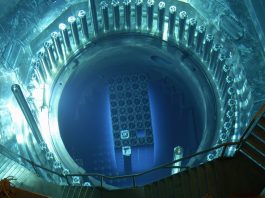
Generation-IV reactors are designed to optimise safety and efficiency, ultimately leading to a great reduction in the cost to license, build, operate and maintain nuclear power plants. The specific technologies that characterise Gen-IV reactors are a function of the different coolants and fuels used in these reactors, as compared to the current fleet of mainly pressurised and boiling light-water reactors.
When I say coolant, I refer to the fluid that absorbs heat from the core and transfers that thermal energy to a balance of plant, ultimately generating electricity. Generation IV designs use coolants such as liquid sodium, molten salt, lead, or helium. These coolants have a variety of advantages over conventional water-cooled reactors both from a safety and an efficiency perspective.
The use of some of these advanced coolants can also facilitate a ‘closed’ fuel cycle, where significantly more of the potential energy is utilised by recycling material from spent fuel, resulting in a net reduction in the total nuclear waste generation.
Argonne’s contribution to nuclear reactor technology
The roots of Argonne National Laboratory reach all the way back to the Manhattan Project at the University of Chicago. The scientists there developed the first self-sustaining nuclear reactor called Chicago Pile 1, and they would eventually move this reactor from under the squash courts at the university to found Argonne National Laboratory 30 miles west of the city.
Argonne continued to pave the way in peaceful uses of nuclear energy where they conceived of and tested nearly every reactor design in existence today at their Chicago site as well as Argonne National Laboratory-West in Idaho, which is now called Idaho National Laboratory.
I think one of the biggest key milestones in Argonne’s effort to commercialise Gen-IV reactors was with the construction of the Experimental Breeder Reactor (EBR) I and II out in Idaho. EBR-I was a liquid metal cooled reactor that demonstrated a fast reactor could create more fuel than was consumed in what’s known as breeding and was the first reactor to produce electricity.
This was followed by EBR-II, which was a sodium-cooled fast reactor which provided most of the electricity and heat requirements for Argonne–West while performing experiments demonstrating the exceptional safety and efficiency advantages of a Gen-IV reactor including the demonstration of a closed fuel cycle.
Enhancing efficiency and safety in nuclear energy production
The Gen-IV reactor type I am personally working to develop is the Sodium Fast Reactor, or SFR. The SFR uses liquid sodium as its process fluid – which has a boiling point of 882°C and a thermal conductivity around three times that of stainless steel. These properties mean that the reactor can operate at atmospheric pressure and is resilient to unexpected occurrences such as loss of coolant pump power.
Operating at atmospheric pressure drastically increases safety and reduces the capital cost associated with the thick vessel on a pressurised water reactor, which operates at over 2,000 PSI.
In addition, sodium does not moderate or slow down neutrons like water, so a fast neutron spectrum can be used to yield more nuclear fuel than what was put into the reactor.
The advantages of liquid sodium were put to the test with EBR-II, which underwent a great array of simulated accidents, including a scenario where the sodium coolant pumps were shut off while the reactor was operating at full power.
Sodium’s high thermal conductivity, boiling point, and heat capacity facilitated natural convection cooling through the core during the decay heat period, allowing the operators to restore the EBR-II to normal operations to continue testing.
This is an example of leveraging natural phenomena, in this case sodium’s favorable thermal hydraulic properties, to make the reactors walk-away safe. This passive safety is an important aspect of what defines a reactor as being ‘Generation-IV’.
Transitioning from first and second-generation light water reactors to Gen-IV reactors
Adopting any new technology involves growing pains, especially in the nuclear energy sector, where there is a stringent regulatory framework that can make it difficult to deploy next-generation reactors.
However, I am confident we will begin licensing commercial Gen-IV reactors in the coming decade as there aren’t any knowledge gaps in the actual engineering of these technologies, and they represent the safest commercially viable nuclear reactor technology we have. This is especially true for the sodium fast reactor, as we have built these reactors in the past and have operated them safely and reliably.
Driving the future of Gen-IV reactors
There is projected to be a continued increase in global energy demand, and I am certain Gen-IV reactors will play a role in meeting this requirement.
The high electrical power density needs of data centres that are deploying artificial intelligence represent an application where a next-generation reactor would be well suited.
Argonne has taken a leading role in the experimental development of Gen-IV reactors with the Mechanisms Engineering Test Loop, the largest sodium test facility in the US built to develop sensors and componentry for SFRs.
We also have a variety of molten salt facilities at Argonne, and we build and maintain computational systems codes that are used to design next-generation reactors.
With these facilities and our expertise, we are currently partnering with most of the Gen-IV reactor startups to bring their nuclear reactors to fruition.
Please note, this article will also appear in the 22nd edition of our quarterly publication.