EDUCATIONAL MATERIAL FROM THE SERENE PROJECT
The Horizon 2020 SERENE project demonstrated customer-centric solutions for the integration of diverse energy carriers to support sustainable regional communities. Coordinated by Aalborg University in Denmark, this project involved 13 partners from three EU countries: Denmark, the Netherlands, and Poland.

The project focused on activating locally available distributed generation, demand response resources, and energy storage technologies across various energy domains, including electricity, heat, water treatment, and transport. It also emphasized attractive citizen-centered business models and local economies.
Demonstration activities took place in real neighborhoods in Denmark, the Netherlands, and Poland, showcasing smart technological, socio-economic, institutional, and environmental solutions tailored to local needs.
By promoting energy islands and the decarbonization of local energy systems, SERENE aimed at enhanceing the environmental, social, and economic conditions of the citizens, reduce energy dependency, andsupport both urban and rural local communities.
One of the main goals of the SERENE project was to promote active consumer engagement and the local management of integrated energy systems and networks. To support replication of the approach, the project analyzed and evaluated the experiences gained at the demonstration sites. The idea behind this was to establish business models and technical benchmark solutions that could be shared and understood under different geographical, social, environmental, and economic conditions.
This educational material draws on those experiences and offers a comprehensive introduction to the main findings. These include technical, social, organizational, business, and stakeholder engagement solutions which are further broken down country by country. The pros and cons of the different solutions are also discussed. For more detailed explanations, please refer to the project results available on the project homepage.
13 PARTNERS FROM THREE EU COUNTRIES
TECHNICAL SOLUTIONS IN DENMARK
COMMUNITY ENERGY MANAGEMENT SYSTEM
A Community Energy Management System (CEMS) is developed by NEOGRID and is a cloud-based service that intelligently controls connected electricity components in buildings and communities. As heating systems grow more electricity-dependent, and with EV charging and smart planning, the CEMS optimises its interaction to meet user needs. It monitors local production and prices to time grid use, reducing costs, boosting self-consumption, and easing grid load. Despite benefits like optimization and scalability, it faces challenges such as high upfront costs, complexity, and limited user awareness. It connects to assets like heat pumps, batteries, PV systems, and EV chargers via APIs, hardware, or models.
FLEXIBLE EV CHARGING MANAGEMENT SYSTEM
The flexible EV charging management system from Aalborg University helps balance grid demand and user needs by adjusting charging based on real-time electricity prices and grid conditions. Installed at charging stations, it lets users set preferences via an app or manually, enabling remote or automated control. By shifting charging to low-price periods, it lowers costs, supports voltage regulation, and reduces the need for grid upgrades. It also facilitates renewable integration and sector coupling.
ENABLING MORE FLEXIBLE ENERGY SERVICE DEMAND BY CONSUMERS
To tackle the challenges of rising renewable electricity and shifting demand, Aalborg University has developed solutions that enable consumers to use more flexible energy. These tools help balance supply and demand in real-time, reduce grid congestion, and support voltage control,particularly as transport and heating become electrified. By encouraging users to shift consumption, like EV charging or heat pump use, to off-peak times, the system eases peak loads and improves grid stability. Apps and incentives support user engagement, while contracts and data protections ensure responsible use.
THERMAL ENERGY STORAGE BASED ON PHASE-CHANGE MATERIALS (PCM)
Thermal energy storage using Phase-Change Materials (PCM) provides a compact and efficient alternative to traditional hot water tanks by leveraging the high latent heat capacity of PCMs. These materials store and release heat during phase changes, increasing storage capacity without increasing system size. Suitable for use with heat pumps or electric boilers, PCM systems support flexible power-to-heat applications, grid balancing, and energy market participation. While they offer benefits like high energy density and safety, challenges include limited energy exchange rates, uncertain lifespan, and higher costs. Installations require suitable space, power capacity, and user consent, with support available in Denmark through legal and subsidy schemes.
THERMONET CONTROL SYSTEM
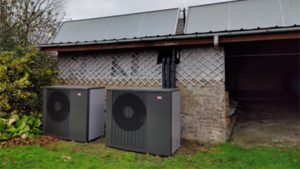
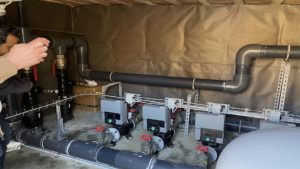
The Thermonet control system, managed by NEOGRID’s Community Energy Management System (CEMS), ensures efficient and cost-effective operation of heat pumps within a shared low-temperature district heating network. By monitoring, predicting, and scheduling energy production and consumption, the CEMS helps align heat pump operation with local PV generation and balances the load on the shared brine system. It also collects metering data for transparent billing. The system requires real-time data, controllable heat pumps, and live feedback from users. While offering benefits like increased self-consumption, implementation is complex and requires regulatory approvals for the Thermonet and local energy community setup.
SOFTWARE – AND HARDWARE-IN-THE-LOOP (SIL AND HIL) TESTING FOR DEMAND-RESPONSE VERIFICATION
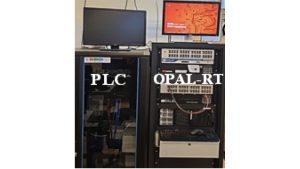
To validate control algorithms for devices like heat pumps, EVs, and batteries in the SERENE project, Aalborg University applies Software-in-the-Loop (SIL) and Hardware-in-the-Loop (HIL) testing. SIL uses simulation platforms like MATLAB/Simulink to detect issues early, while HIL incorporates real hardware to test performance under real-world conditions. Though these methods require technical expertise and upfront investment, they reduce field testing costs, allow safe scenario testing, and support scalable validation. SIL and HIL are key for managing complexity and verifying demand-response strategies in integrated local energy systems.
SOCIO-ECONOMIC SOLUTIONS IN DENMARK
PRACTICAL IMPLEMENTATION OF A THERMONET
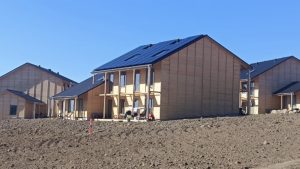
The Danish demo site Hyllegaard Høje showcases a practical implementation of a Thermonet-based local energy system designed for sustainable living aligned with the UN’s Sustainable Development Goals. The village uses a cold district heating system powered by geothermal energy and heat pumps combined with on-site PV electricity production. All households are required to connect to the Thermonet, install solar panels, and limit energy use to 50 kWh/m² per year. Communal spaces, shared facilities, and a strong focus on biodiversity and permaculture reinforce the community model. While the system optimizes energy use and supports renewable integration, it requires active participation, adherence to strict rules, and complex coordination.
PUBLIC MEETING TO ENGAGE CITIZENS FROM LOCAL VILLAGES
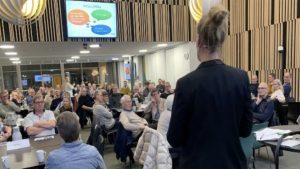
Skanderborg Municipality has held public meetings to engage citizens from local villages in the energy transition, focusing on shifting from oil and gas to collective heating solutions like district heating and community heat pumps. These meetings share municipal plans, technical options such as Termonet systems, and success stories from other villages while encouraging dialogue and building local networks. They are followed up by direct contact with engaged citizens in the larger villages. Though time- and resource-intensive, they effectively activate community action. The municipality supports villages with information, funding guidance, and regulatory advice. As a result, several villages have started developing shared heating projects backed by external and municipal funding.
TECHNICAL SOLUTIONS IN THE NETHERLANDS
BOILER CONTROL SYSTEM
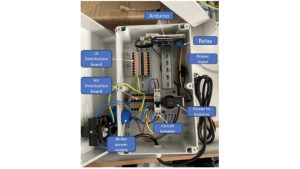
The E-boiler Control System developed by Saxion UAS enables standard electric boilers to act as flexible energy assets. By connecting to an energy management system (EMS), the control unit measures water temperature, flow, and energy use to determine optimal charging times, such as when solar PV is abundant or during low-demand periods. The system includes sensors and a relay for switching, all controlled wirelessly. While offering potential cost savings and improved renewable energy use, it requires installation into the water and electrical systems and should not be manually overridden to ensure experiment consistency. Data is encrypted, and user safety is ensured through CE-compliant design.
DECENTRALIZED MULTI-OBJECTIVE ENERGY MANAGEMENT SYSTEM (DMOEMS)
The Decentralized Multi-Objective Energy Management System (DMOEMS), developed by the University of Twente, enables both real-time and simulated management of decentralized energy communities. Designed as an agent-based digital twin, it optimizes flexibility towards multiple objectives simultaneously, such as cost, grid congestion, and CO₂ emissions, by leveraging local flexibility. DMOEMS supports integration with smart platforms and has been tested in the Aardehuizen demonstrator to control batteries, EV chargers, and e-boilers. While it improves grid adaptability and community resilience, it requires stable data input, technical expertise, and adherence to data privacy regulations.
SOCIO-ECONOMIC SOLUTIONS IN THE NETHERLANDS
EMPOWERING COMMUNITIES BY COLLABORATING ON ENERGY SOLUTIONS
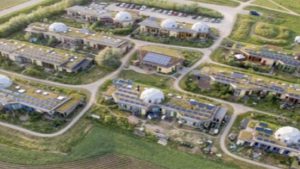
The Aardehuizen community serves as a unique demonstrator within the SERENE project, where resident collaboration is central to testing and refining energy solutions. The community is deeply committed to sustainability and energy self-sufficiency, even accepting reduced comfort, e.g., cold showers, when needed. Residents actively co-create tools like EMS dashboards and mobile apps, tailoring them to their needs through workshops with researchers. A local project coordinator, also a resident, ensures smooth communication between the community and the project team. While the setup may be hard to replicate elsewhere, the strong local ownership, personalized roles, and tech-savvy engagement enable the effective implementation of complex systems like boiler controllers and peak-shaving algorithms.
A HOLISTIC SOCIO-TECHNICAL LOCAL ENERGY SYSTEMS APPROACH
The holistic socio-technical local energy systems approach developed by the University of Twente emphasizes the need to integrate technical change with social, organizational, and regulatory factors. Rather than viewing social aspects as obstacles, this approach recognizes that changes in one part of the system, technical or social, affect others. It calls for a deep understanding of system interdependencies, including user behavior, governance structures, and regulatory frameworks. While offering a more realistic and inclusive path to the energy transition, the approach increases complexity and demands broad, interdisciplinary knowledge. It highlights the need for national or EU-level interventions, as current regulations are often not suited to decentralized, citizen-led energy models.
OPEN DYNAMIC ELECTRICITY COMPOSITION TRACKER (ODECT)
The Open Dynamic Electricity Composition Tracker (ODECT), developed by the University of Twente, helps users to quantify the CO₂ footprint of their electricity consumption pattern. Using publicly available data of the actual Dutch electricity generation mix, ODECT calculates emissions per kilowatt-hour, revealing how carbon intensity fluctuates daily and seasonally. The tool is open source and intended to raise awareness and inform environmentally conscious decisions. The provided data lags behind by 2 hours, but with machine learning models, it is able to estimate the real-time carbon emissions and day-ahead forecasts for optimal planning. It can support business case assessments, guide energy management strategies, e.g., heat pump or EV charging, and promote behavior change within energy communities.
ORGANIZATION AND OPERATION OF A SOLAR CARPORT, NEIGHBORHOOD BATTERY, AND EV-STATIONS BY AN ENERGY COMMUNITY
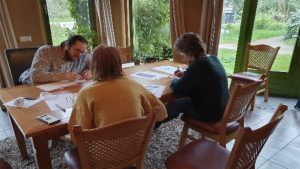
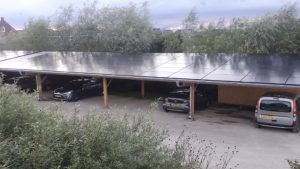
The Groene Dak Foundation manages a solar carport, neighborhood battery, and EV charging stations for an energy community in Olst (NL), aiming for annual energy neutrality. Established by residents, the Foundation oversees technical operations, financial management, and contracts with energy market actors. All installations are integrated via a single grid connection and controlled through an EMS to optimize usage, minimize costs, and support grid capacity. The setup enables dynamic pricing, car-sharing, and vehicle-to-grid functionality. While it offers practical, replicable benefits, it requires substantial investment, technical expertise, and voluntary time. Profits are reinvested in future sustainability projects.