The World Bank Group and the International Atomic Energy Agency (IAEA) are collaborating to bring nuclear power to the forefront of clean energy solutions for developing nations.
This agreement marks the World Bank’s first active involvement in nuclear energy in decades, signalling a dramatic shift in how international institutions are tackling the dual challenges of energy poverty and climate change.
As electricity demand across the developing world is expected to more than double by 2035, this partnership could unlock a new era of reliable, low-carbon power for billions of people, while positioning nuclear energy as a central pillar of sustainable development.
Why nuclear power matters for developing countries
For many developing nations, access to affordable, reliable electricity remains a persistent challenge.
Millions still face energy poverty, limiting progress in critical areas such as healthcare, education, manufacturing, and digital infrastructure.
As these countries seek to industrialise and lift populations out of poverty, their electricity demand is projected to more than double over the next decade.
Nuclear energy offers a compelling solution. It provides continuous baseload power, essential for operating hospitals, factories, and transport systems – sectors where energy interruptions can be costly or even life-threatening.
Unlike fossil fuels, nuclear energy produces near-zero carbon emissions, aligning with climate commitments while fuelling economic growth.
Energy needs are soaring: Solutions must be scalable
The World Bank’s broader approach to electrification now emphasises accessibility, affordability, and environmental responsibility.
Recognising that each country’s path to net zero will differ, the Bank is supporting energy solutions that best match national development goals and climate pledges.
As variable renewable sources like wind and solar expand, nuclear power’s ability to stabilise grids becomes increasingly valuable.
Its capacity to complement renewables through frequency regulation and predictable output makes it an essential piece of a modern, resilient energy mix.
Inside the World Bank–IAEA agreement
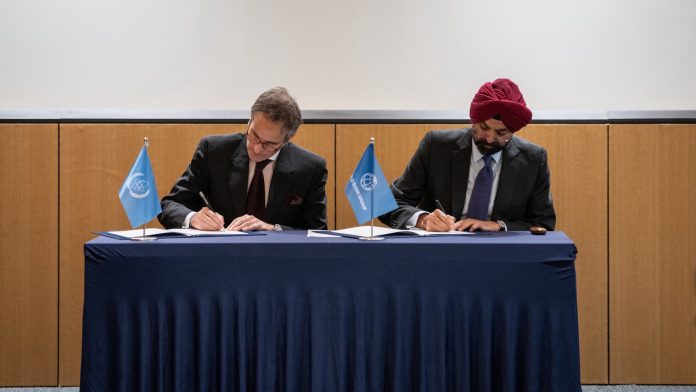
Signed by World Bank Group President Ajay Banga and IAEA Director General Rafael Mariano Grossi, the new memorandum of understanding formalises a year of growing collaboration between the two institutions.
It lays the groundwork for long-term support for nuclear power in developing countries, aiming to ensure it is deployed safely, securely, and sustainably.
Banga explained: “Jobs need electricity. So do factories, hospitals, schools, and water systems. And as demand surges – with AI and development alike – we must help countries deliver reliable, affordable power.
“That’s why we’re embracing nuclear energy as part of the solution – and reembracing it as part of the mix the World Bank Group can offer developing countries to achieve their ambitions.
“Importantly, nuclear delivers baseload power, which is essential to building modern economies.
“Our partnership with the IAEA marks an important step, and I’m grateful to Rafael for his personal commitment and leadership in making this possible.
“Together, we’ll deepen our expertise, support countries that choose nuclear, and ensure that safety, security, and sustainability guide every step forward.”
Three pillars of cooperation
The partnership will focus on three strategic areas:
- Knowledge development: The IAEA will support the World Bank in building institutional knowledge of nuclear energy, including safety, waste management, fuel cycles, new technologies, and energy planning.
- Extending reactor lifespans: Many of the world’s reactors are nearing their original 40-year design limit. Extending their life safely offers a cost-effective way for developing countries to maintain low-carbon power sources.
- Advancing Small Modular Reactors (SMRs): SMRs offer scalable, flexible, and lower-cost nuclear options. Their compact design makes them ideal for remote regions or smaller grids often found in developing nations.
Global implications and a path forward
Currently, 31 countries operate nuclear power plants, generating nearly 25% of the world’s low-carbon electricity.
Over 30 more – many in the developing world – are working with the IAEA to build the necessary infrastructure to introduce nuclear power.
This partnership signals a major shift in global energy strategy, where nuclear power is no longer reserved for advanced economies but embraced as a critical tool for developing countries seeking sustainable growth.
By unlocking the potential of nuclear energy, the World Bank and the IAEA are opening the door to a cleaner, more equitable energy future.