Ocean Energy Europe considers how ocean energy can complement other renewable sources like wind and solar to create a more stable, cost-effective, and emission-free electricity grid in Europe.
Europe is targeting an emission-free energy system by 2050, a critical and absolutely essential step to face the global climate crisis. A massive scale-up of renewable energy production is required to reach that goal. Wind and solar, currently the cheapest forms of electricity production, will be the backbone of our future energy systems. New solar PV projects were 41% cheaper than the lowest-cost fossil fuel alternatives in 2024, and onshore wind projects were 53% cheaper, according to the latest IRENA Power Generation Costs report. However, wind and solar power generation are variable, and the more we rely on them, the more we will need other renewables to balance the grid when the wind isn’t blowing, or the sun isn’t shining.
Balancing the grid with ocean energy
Wave and tidal energy are a perfect fit to complement variable renewables. They can advantageously replace fossil fuels, which are currently used to balance renewable production. Ocean energy will help transform the European electricity grid into a more secure, cheaper to manage, and 100% emission-free system.
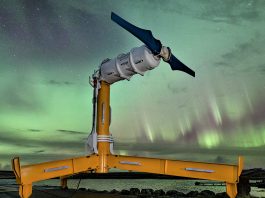
Tidal energy technologies use the flow of tidal streams to generate renewable electricity. By nature, their energy production only depends on the cycle of the tides, which we can predict with pinpoint accuracy hundreds of years in advance. This means that the exact output of a tidal device can be calculated for any point in time, a valuable advantage to balance an energy system based on variable sources.
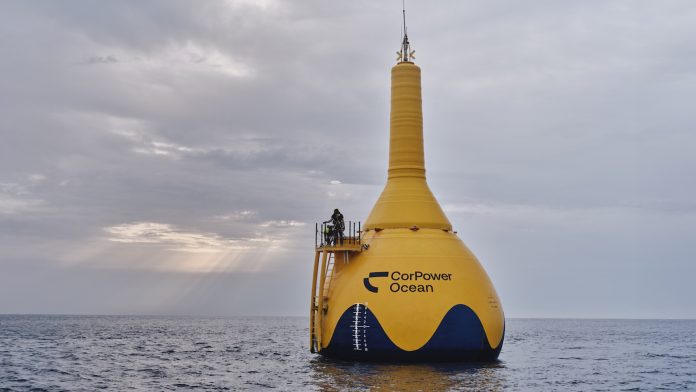
Wave energy technologies use a variety of designs to capture the motions of ocean waves and turn them into electricity. Waves are built up by the wind far offshore and can be precisely measured days before they reach production sites. Additionally, waves often persist for hours after the wind dies down. Wave energy devices also take up far less space than large offshore wind turbines. These benefits make wave energy the perfect partner to offshore wind. For example, adding wave devices within offshore wind farms could optimize the use of maritime space while smoothing the overall power generation curve, thus reducing the need for expensive flexibility and lowering systems costs.
Furthermore, wave energy generation in Europe is significantly higher in the winter, precisely when the demand for electricity is highest. It also means that wave energy production is highest when solar energy production is lowest, making the two technologies highly complementary over the year. Wave energy will help Europe match its electricity supply and demand much more closely, reducing the need for storage and fossil fuels, which will in turn reduce costs and lower emissions.

Saving money with ocean energy
The EVOLVE project, funded by Scottish Enterprise, the Swedish Energy Agency and the Fundação para a Ciéncia e a Tecnologia, studied the system benefits of ocean energy in Great Britain, Ireland and Portugal.
Ocean Energy Europe recently published a short report highlighting key results from the project, and added a fourth case study focused on the Faroe Islands based on research funded by the Faroese utility SEV. In these four cases, the benefits of ocean energy to the electricity grid have been quantified and modelled using scenarios produced by governments or Transmission System Operators (TSOs). All data show that even small portions of ocean energy on the grid will significantly reduce fossil fuel consumption, CO₂ emissions and dispatch costs.
Ireland has an impressive wave energy resource, with the potential to install nearly 19 GW of wave energy capacity. In total, this would produce three times Ireland’s current annual electricity demand. However, by adding only 1 GW of wave energy in the 2030 Irish energy mix, annual carbon emissions would already drop by 12%, saving €300m in dispatch costs.
Portugal’s wave energy potential is equivalent to 15.5 GW of installed capacity – which would also produce more energy than its current annual electricity consumption. If 1 GW of wave energy is installed in Portugal by 2030, it would reduce carbon emissions by 16.4% and dispatch costs by €230m.
Great Britain has both tidal and wave resources in abundance and could install around 11 GW of tidal energy and 25 GW of wave energy. However, the UK consumes a lot more electricity than Ireland or Portugal – 285 TWh compared to 30.4 TWh and 50.3 TWh respectively. This means that adding 1 GW of ocean energy into the 2030 British energy mix represents a much smaller proportion of the total production of the country. Even so, this comparatively small amount of ocean energy would already make a big impact by reducing carbon emissions by 2.6% and saving £100m. Another scenario, assuming a more decarbonised grid, includes 12 GW of ocean energy by 2030. In that case, annual savings in dispatch costs would reach £1.03bn.
Finally, the Faroe Islands are on track to reach a 100% renewable electricity sector by 2030 and are committed to developing their tidal energy potential. The geography of the 18 islands modifies and amplifies tidal streams, which means that tidal power could be generated continuously by producing it in different areas. Adding 72 MW of tidal energy would reduce the net generation capacity needed for the Islands by 83 MW and reduce total system costs from 2020-2030 by €33m, according to Faroese utility SEV.
The conclusion is crystal clear: ocean energy brings significant benefits for our future emission-free energy systems. This is true even for small amounts of ocean energy, but the more we install, the greater the benefits for the environment and the lower the electricity prices for consumers.
Scaling up ocean energy
Full-scale ocean energy devices have been proven at sea for years, and technology developers are ready to take the next step. However, as for any innovative sector, costs are still high and support is needed to trigger a full industrial roll-out.
Grant funding for R&D must be maintained to enable early-stage research, as well as demonstration devices and farms. Deployment targets and ring-fenced revenue support schemes for wave and tidal farms need to be implemented in national energy strategies to increase market visibility and attract private investors. Specific permitting processes for ocean energy need to be developed to accelerate deployments and reduce costs.
Ocean energy technologies are already delivering homegrown, renewable power to the European grid. The question is no longer if ocean energy will happen, but how can we accelerate its industrialisation? Financial and political support from all levels of government is needed to increase the deployment of ocean energy and unlock its full potential for Europeans.
Europe must press on and transform years of innovation support for ocean energy into a new industry that will lower electricity costs and replace polluting fossil fuels with emission-free, homegrown power.
Please note, this article will also appear in the 23rd edition of our quarterly publication.