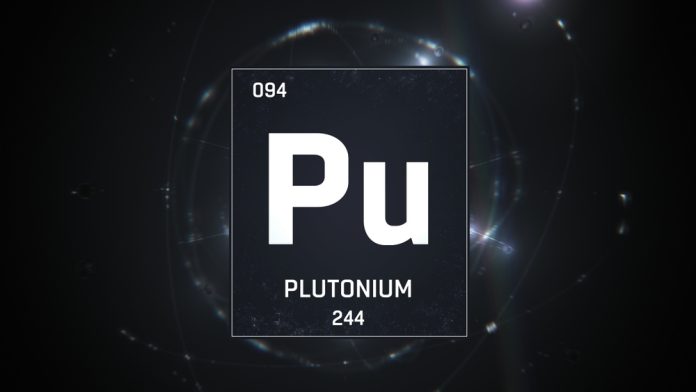
The Nuclear Decommissioning Authority (NDA) group has been allocated £154m in government funding to develop specialised capabilities to enable plutonium disposal.
More than 100 jobs will be supported, the majority in Cumbria, after the government decided to immobilise plutonium, a product of nuclear fuel reprocessing, which will mitigate the long-term security risks.
This major investment, spanning five years, will enable the NDA group, working in collaboration with supply-chain partners, to design, install, and operate specialist laboratory facilities at Sellafield.
These facilities will be used to test and prove the technology that will be used to immobilise plutonium, locking it away in a stable form.
Critical upskilling needed for nuclear decommissioning
In addition, £2.5m is being invested in establishing a £5m Plutonium Ceramics Academic Hub in partnership with the Universities of Manchester and Sheffield, which is crucial for developing the technical expertise and subject matter experts required for this unique work.
NDA Group CEO David Peattie explained: “The NDA group is already leading the way in nuclear decommissioning and safely managing the UK’s most hazardous radioactive materials.
“This government investment will allow us to drive forward this important national policy, building cutting-edge facilities and growing world-leading expertise and capability in plutonium immobilisation, providing a safe, secure and permanent solution.”
Various technologies are being explored for plutonium disposal
Currently, the UK’s civil separated plutonium inventory is safely and securely stored at Sellafield, in line with regulatory requirements.
There are two technologies for immobilisation being explored: Disposal MOX (DMOX), which creates ceramic pellets designed for disposal, and Hot Isostatic Pressing (HIP), where high pressures and temperatures are used to create a ‘rock-like’ ceramic material.
Progress is already underway, with two new state-of-the-art laboratories being installed at Sellafield to develop and prove the technologies.
Challenges associated with plutonium disposal
Plutonium work is uniquely challenging due to the material’s hazardous nature, which necessitates stringent arrangements for researchers to work safely and securely with the material and develop these technologies.
Improper storage or containment can lead to leaks, contaminating soil, water, and air, and posing long-term health threats, including cancer.
Safe disposal requires secure, long-term containment strategies, often deep geological repositories, which are expensive and technically complex. Without careful handling, plutonium disposal could have devastating consequences for both human populations and the environment.
This means that once immobilised, the material is intended for final disposal in a Geological Disposal Facility (GDF) and NDA group subsidiary, Nuclear Waste Services, is leading work to ensure the final waste form is suitable for a GDF.
The future of safe nuclear decommissioning
Alongside this research and development investment, the next phase involves seeking approval for a major plutonium disposition programme.
This will require the construction of a nuclear material processing plant and interim storage capability at Sellafield, bringing major investment to the area and supporting thousands of skilled jobs for decades to come.