Fusion energy – the process that powers the Sun – has long been considered the ultimate clean energy solution.
Unlike fossil fuels, it produces no greenhouse gases, and unlike nuclear fission, it doesn’t generate long-lived radioactive waste.
In theory, fusion reactors could provide virtually limitless electricity by fusing lightweight atomic nuclei at extremely high temperatures, releasing vast amounts of energy in the process.
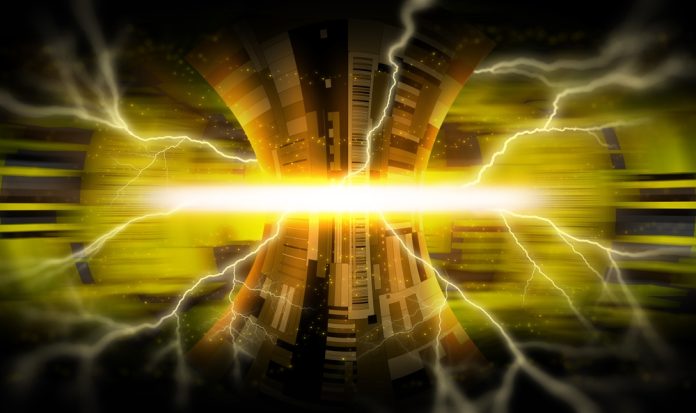
The challenge, however, lies in controlling the plasma – the ultra-hot, electrically charged gas where fusion occurs.
Keeping plasma stable and safe inside a reactor is one of the biggest hurdles in making fusion a reliable power source.
Now, an expert team of researchers from China are harnessing the potential of artificial intelligence (AI) to optimise fusion safety and performance.
Tackling plasma instabilities with AI
A research team led by Professor SUN Youwen at the Hefei Institutes of Physical Science, part of the Chinese Academy of Sciences, has made a breakthrough in this area by developing two AI systems to improve reactor performance and safety.
Their findings were recently published in Nuclear Fusion and Plasma Physics and Controlled Fusion.
The first system acts as a disruption predictor, focusing on plasma instabilities known as ‘locked modes.’
These instabilities can lead to sudden and damaging disruptions inside fusion reactors. Using decision tree models, the AI doesn’t just flag potential problems – it also explains the reasoning behind its predictions, making it more transparent than typical black-box AI systems.
Tests showed a 94% accuracy rate, with early warnings arriving 137 milliseconds before disruptions, giving operators critical time to react.
Smarter plasma state recognition
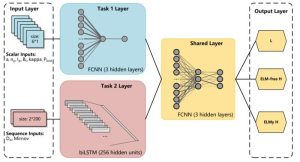
The second AI tool takes a different approach, monitoring the plasma’s operational states in real time.
Traditionally, different models were used to classify plasma conditions, such as the low-confinement (L-mode) and high-confinement (H-mode) states, and to detect dangerous edge-localised modes (ELMs).
The Hefei team combined these tasks into a multi-task learning model, which improved both accuracy and robustness. Results showed a 96.7% success rate in correctly identifying plasma conditions.
A foundation for next-generation fusion reactors
These innovations mark a significant step toward the intelligent control systems required for future fusion reactors.
By predicting disruptions before they occur and accurately identifying plasma states, the AI systems not only protect reactor equipment but also enhance scientists’ understanding of plasma behaviour.
As nations race to unlock the potential of fusion energy, breakthroughs like these bring the dream of safe, sustainable, and near-limitless power closer to reality.
With the integration of AI, fusion reactors could one day shift from experimental facilities to the backbone of global clean energy infrastructure.