About Elestor
Elestor is a company with a clear purpose. We are developing and delivering solutions to one of the most important challenges of this century: storing renewable energy on a very large scale. The transition to renewable power is no longer a distant ambition. It is the chosen path for governments, industries, and communities worldwide.
The ability to rely on solar and wind as primary sources of energy depends on technologies that can balance their intermittent nature. We must capture the electricity generated during moments of abundance and make it available at any time of demand. Elestor exists to make this possible.
Founded in 2014, Elestor has steadily grown into one of Europe’s leading innovators in flow battery technology. Our solution, the hydrogen-iron flow battery, is designed with the principle of abundance at its heart.
We utilise materials that are readily available, safe to handle, and cost-effective to deploy. In doing so, we bring to market an energy storage system that is technically sound, scalable and able to meet the needs of future societies.
This eBook offers a journey into our purpose, our technology, and the impact we aim to achieve.
Our purpose
At Elestor, we believe that the energy transition will only succeed if (electrical) energy is both sustainable and affordable. Clean energy must be accessible to all, not just those who can afford a premium. Energy security must be guaranteed for every country, irrespective of its access to specific resources.
Our purpose is therefore simple and ambitious: to accelerate the world’s shift to a carbon-free energy system by delivering scalable and affordable electricity storage.
This purpose is rooted in the conviction that innovation and economics must go hand in hand. Technologies that rely on scarce or costly materials cannot provide long-term solutions. Elestor, therefore, looks at the bigger picture. We select materials and designs that enable cost leadership, without compromising on safety or performance. By doing so, we support the growth of renewable energy and increase the resilience of societies and economies.
Our purpose is dynamic. It grows with the world around us. Geopolitical events add a strong dimension of urgency. Today, energy security is, next to being a climate priority, a strategic necessity. Elestor’s work stands at this intersection of climate action, economics, and security.
Since our foundation in 2014, Elestor has developed globally patented technology, secured over €40 million in funding, and delivered multiple pilot projects, including an industrial-scale pilot capable of up to 3MWh, demonstrating the hydrogen-iron technology at an industrial scale. These milestones mark our steady progress towards large-scale deployment.

Why long-duration energy storage (LDES) matters
The global energy system is undergoing a transformation of historic proportions. For over a century, electricity generation has relied on fossil fuels, thanks to their controllable output and extensive global infrastructure. Now we are replacing this system with renewable generation that is inherently variable. Solar and wind resources cannot be dispatched on demand. They depend on weather patterns, seasons, and geography.
This shift introduces both opportunities and challenges. On sunny and windy days, there may be more power than the grid can absorb, leading to curtailment. At night, or during long, calm periods known as Dunkelflaute, supplies may fall short for several days.
Without long-duration storage, the balance between supply and demand becomes fragile. This can lead to instability, inefficiency, or reliance on (imported) fossil backup systems. The need for large-scale storage is therefore not optional. It is essential.
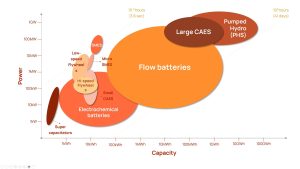
Elestor’s hydrogen-iron flow battery provides this missing link. By storing electricity for hours, days, and even weeks, our technology enables renewable generation to fully replace fossil fuel plants. This capability is what will make the energy transition possible in practice. Our system is designed specifically to economically bridge gaps of 8 hours to a week, making it the optimal solution for long-duration challenges.
The role of long-duration energy storage (LDES) in the energy system
Renewable energy has become the cornerstone of the modern energy system. Solar and wind provide clean electricity at low cost, but they do not follow the rhythm of demand.
The sun shines during the day, and the wind blows when it chooses, while homes, industries, and communities always need electricity. This mismatch cannot be solved by short-term storage alone. Batteries that store energy for minutes or a few hours are insufficient to sustain the grid through extended periods without sunlight or wind.
Long-duration energy storage ensures that renewable electricity can be used far beyond the moment it is generated. During periods of abundance, excess power is captured and stored. When the weather changes or demand remains high while generation falls, this stored electricity is returned to the grid. This process enables a grid, microgrid, or off-grid situation to operate solely on renewable sources.
The role of long-duration storage is to provide security of supply without relying on fossil fuel backup systems. It bridges the so-called Dunkelflaute periods, when solar and wind resources are both low for hours and even days. With long-duration storage, electricity supply remains stable, industries continue to operate, and communities can maintain their power.
Model your energy. Size your storage.
Designing a business case for long-duration energy storage isn’t straightforward. Renewable production is variable, demand shifts by the hour, and grid conditions differ by region. Getting to a robust Levelized Cost of Energy (LCOE), Levelized Cost of Storage (LCOS) and, where relevant, Levelized Cost of Hydrogen (LCOH) requires more than simple assumptions. It requires a thorough understanding of technology performance, lifetime, operating conditions, and integration with renewable energy assets. For many organisations, this complexity can make it difficult to clearly see the opportunities.
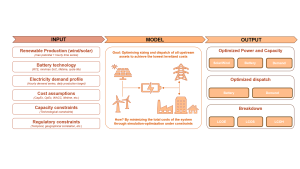
Elestor has therefore developed a dedicated, cost-focused business modelling method. With your own (time-series) data (solar, wind, demand, cost assumptions), our model simulates hour-by-hour operation over a full year to right-size the hydrogen-iron flow battery and any co-located renewables. The electrolyser and H₂ storage are fully optional: include them when hydrogen adds value; omit them for electricity-only use cases. The model enforces realistic constraints (battery efficiencies and SoC limits, curtailment, and storage sizing) and outputs clear, site-specific cost metrics, including LCOE, LCOS, and, if selected, LCOH, as well as utilisation and curtailment insights.
This method supports a range of applications:
• Power to X projects, combining solar, wind, battery, electrolysers and hydrogen (storage and) offtake
• Grid-connected projects optimising curtailment harvesting and firm capacity
• Microgrids and remote sites reducing/eliminating diesel and improving resilience
• Industrial facilities managing peaks and securing process power
• Hybrid PV-wind-storage plants optimised for high throughput
The result? A clear, reliable picture of the cost baseline and optimal sizing for your specific site, so you can make confident, data-driven decisions.
Elestor’s hydrogen-iron redox flow battery
Elestor’s hydrogen-iron flow battery is designed with simplicity and scalability in mind. It uses two of the most abundant and affordable materials available: hydrogen and iron. These are found in large quantities all over the world, and their use guarantees independence from scarce resources or vulnerable supply chains.
The system works by storing electricity in the liquid electrolyte that circulates between the tank and electrochemical cells. When electricity is fed into the system, hydrogen is produced and stored. When electricity is needed again, the process is reversed, releasing the stored energy back to the grid or the demand side. The tanks can be manufactured in any size, allowing the storage capacity to be scaled according to local needs.
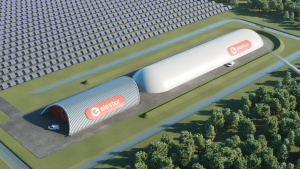
This design offers performance and robustness. The materials are safe to handle and abundantly available. The tanks can even be placed underground, with hydrogen storage above them, minimising land use. The result is a system that combines technical excellence with economic and environmental viability.
Key technical features include:
• Round-trip efficiency of 70–75%
• Less than 100ms reaction time
• 100% reversible reaction, without side reactions
• Unlimited cycles without capacity degradation
• A system lifetime exceeding 25 years
• More than 90% of components capable of being sourced locally
• More than 99% of the system and electrolyte are fully recyclable
These characteristics ensure long-term performance, affordability, and independence from geopolitical influences.
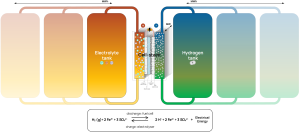
Unlimited scalability of power (MW) and capacity (MWh)
Flow batteries, particularly Elestor’s hydrogen-iron flow battery, are fully scalable technologies.
Unlike conventional storage systems, where power and capacity are coupled, a flow battery allows the power and energy parts to be scaled independently.
Power, measured in megawatts, is defined by the number of electrochemical cell stacks. These stacks are connected through the balance of plant to the electrolyte tanks and hydrogen storage. Energy capacity, measured in megawatt hours, is determined by the volume of electrolyte and the amount of hydrogen stored. This architecture enables the system to be precisely tailored to the needs of each project.
Because power and capacity can be configured separately, Elestor’s technology can provide virtually unlimited power and storage ratios. A project may require only a modest level of power but very large amounts of stored energy, or conversely, high power output with (relatively) limited duration. Both scenarios can be delivered efficiently, using the same standardised technology.
To optimise design and deployment, Elestor uses standardised building blocks. The power component is scaled per half-megawatt unit, ensuring cost efficiency and reliability. At the same time, the energy capacity can be configured to virtually any number of megawatt-hours by adjusting the size and content of the tanks. This flexible combination of standardisation and scalability makes the hydrogen-iron flow battery uniquely suited for projects ranging from local storage to national infrastructure.
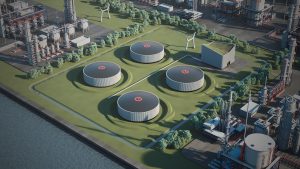
Key advantages of the hydrogen-iron flow battery
Elestor’s hydrogen-iron flow battery offers a range of advantages that make it uniquely suited for the challenges ahead:
• Cost efficiency: With the levelised cost of storage reaching levels below €50 per megawatt-hour, our system is positioned as one of the most affordable solutions for long-duration storage. The abundance of the materials ensures that this cost advantage is sustainable over time.
• Safety: Non-toxic and stable electrolyte, engineered to be an intrinsically safe system for operators and the environment alike. Held to the highest safety standards, ensuring deployment, compliance, and permitting is easy and fast. Both in remote as well as populated areas.
• Resilience: With no capacity degradation, unlimited cycles, and no self-discharge, the system offers reliability throughout its full 25-year lifetime, even in high-ambient temperature conditions.
• Scalability: The intrinsic scalable design allows for storage capacities ranging from megawatt-hours to gigawatt-hours. By simply enlarging the tanks, we can adapt to any scale of demand. This flexibility makes the technology suitable for both local grids and large national projects.
• Independence: Because iron is abundant, countries and regions can develop energy storage infrastructure without relying on imports of scarce or expensive resources.
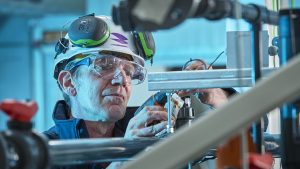
Energy security and resilience
The events of recent years have underlined how vulnerable societies can be when energy supply depends on external actors. Disruptions to fossil fuel markets have had immediate consequences for households, industries, and governments. The call for energy independence has therefore become stronger than ever.
Elestor contributes to this independence by providing a storage technology that can be built anywhere. Hydrogen and iron are readily available worldwide, meaning that no country is excluded from implementing this solution. By deploying our systems, regions can ensure that locally generated renewable power remains available, regardless of political or economic pressures.
Energy resilience is more than technical stability. It is the assurance that societies can withstand shocks, whether they come from natural, economic, or political sources.
Elestor’s hydrogen-iron flow battery strengthens this resilience at every level, from local communities to entire nations. It reduces dependence on fossil fuel imports, ensures clean air, and contributes to climate stability.
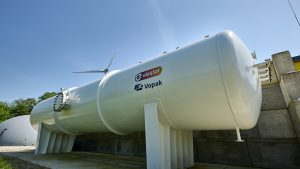
Democratising energy
Energy is not only a technical resource. It is also a foundation for prosperity and equality. Access to affordable and clean electricity enables education, healthcare, and economic growth. In many parts of the world, a lack of reliable energy remains a barrier to development.
By offering storage systems based on abundant materials, Elestor enables the creation of energy systems that are accessible to all. Our technology lowers barriers to entry and reduces dependence on costly imports. It opens the door to community-based renewable projects and strengthens national independence.
This democratisation of energy is part of our purpose. It reflects the conviction that clean energy is not a privilege but a right that must be secured for everyone, everywhere. With hydrogen-iron flow batteries, developing nations can leapfrog to clean and resilient energy systems without repeating the fossil fuel path of industrialised economies.