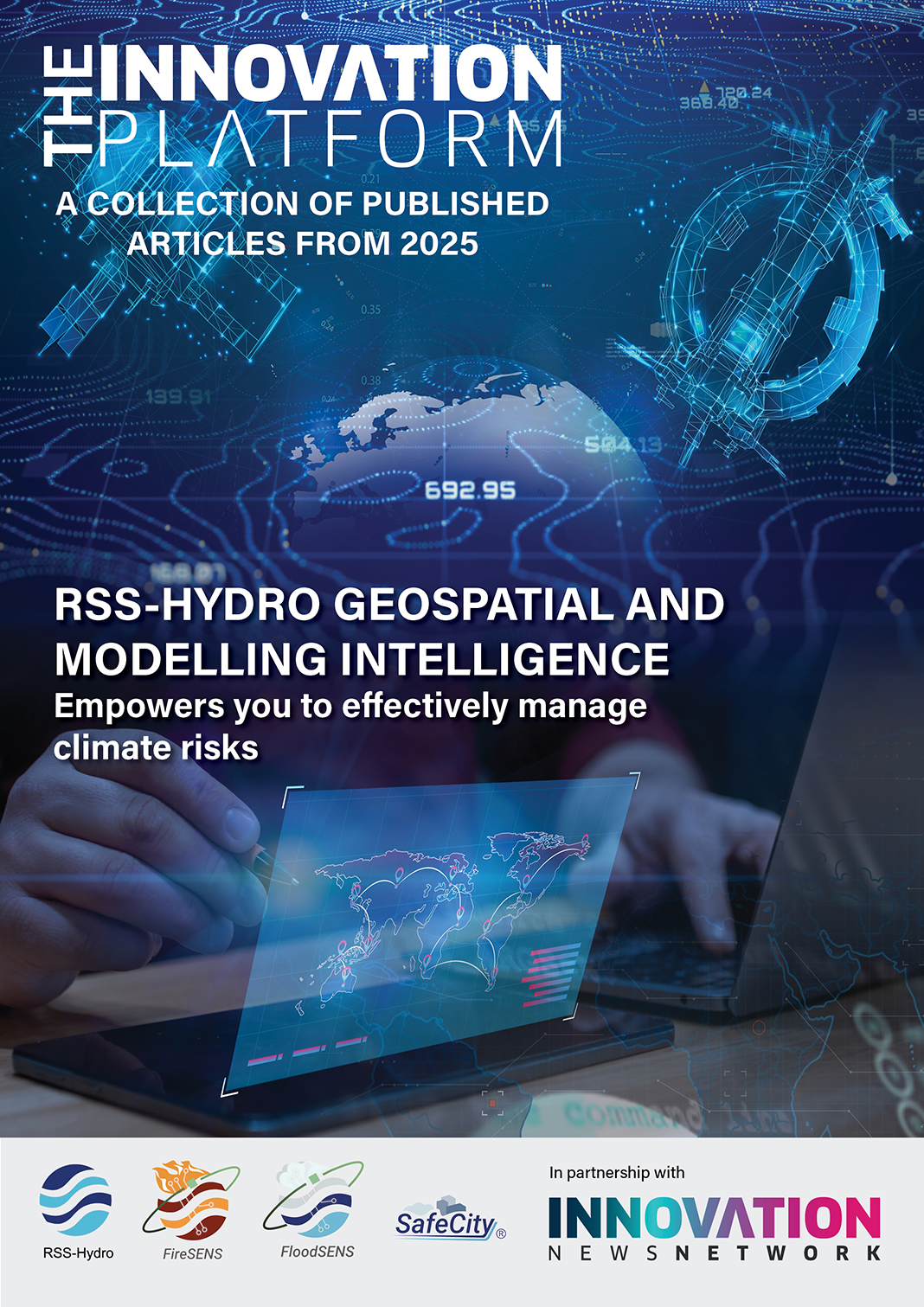
Welcome to RSS-Hydro’s 2025 collection of articles, an eBook showcasing groundbreaking work that is driving a more sustainable future.
This special eBook brings together a series of thought-leading articles that explore the company’s pioneering work in Earth observation, space technology, and data-driven climate resilience. Each piece captures the essence of RSS-Hydro’s mission – to push geospatial innovation to the next level for a more sustainable future.
As natural disasters intensify and the effects of climate change ripple through economies and ecosystems, the ability to transform space-based data into actionable intelligence has never been more vital. RSS-Hydro’s commitment to developing solutions that are transparent, open, and community-focused underscores its belief that science should serve everyone.
What to expect in this eBook
This eBook presents five insightful articles that showcase RSS-Hydro’s expertise, its evolving relationship with the space sector, and its vision for a sustainable future.
How feasible are dual-use space technologies?
CEO and Founder Dr Guy Schumann examines the opportunities and challenges of technologies that serve both civilian and defence purposes. The article highlights RSS-Hydro’s civil-use innovations, like CeDaRS and FloodPin, while discussing how dual-use systems could enhance disaster management, national security, and resilience against natural hazards.
The role of space tech and AI in building climate resilience
This feature explores how AI and advanced satellite systems are revolutionising Earth observation to support climate resilience. From predicting floods to improving urban planning, RSS-Hydro demonstrates how all-in-space solutions – where processing happens directly in orbit – can deliver near real-time insights to communities on the ground.
How space tech innovations are revolutionising Earth observation
Focusing on projects like FloodSENS and CeDaRS, this article details how ESA-backed innovations are reshaping Earth observation with smaller satellites, hyperspectral imaging, and in-orbit processing. The piece paints a compelling vision of a smarter, data-rich world where science and technology converge to save lives and protect ecosystems.
Simplicity: The unsung hero of the new space economy
RSS-Hydro makes a powerful case for simplicity as the foundation of reliability, accessibility, and sustainability. The article argues that the future of Earth observation depends not just on cutting-edge technology but on intuitive, user-friendly tools that democratise access to space data for policymakers, scientists, and first responders alike.
Leveraging public data and grants in the new space and satellite Earth observation market
Concluding the collection, this article highlights the transformative potential of public data and open funding in stimulating innovation. By reducing barriers to entry, these initiatives encourage collaboration, competition, and creativity – paving the way for startups and research organisations to deliver real-world impact.
Why you must read
This eBook offers a glimpse into how innovation and collaboration are changing the way we understand and protect our planet. Through these articles, RSS-Hydro demonstrates how geospatial intelligence transforms data into real-world solutions – from enhancing flood preparedness to supporting sustainable decision-making.
Whether you’re a researcher, policymaker, or simply curious about the impact of space technology on our planet, this publication offers valuable insights into how it can be applied across sectors to build a more resilient and sustainable future.