The Department of Energy’s Oak Ridge National Laboratory (ORNL) has launched a major four-year research collaboration aimed at transforming how scientists understand nonequilibrium quantum materials.
The initiative brings together national laboratories and academic partners to harness the power of high-performance computing (HPC) and exascale supercomputers to explore quantum systems pushed far from equilibrium.
Known as Controlled Numerics for Emergent Transients in Nonequilibrium Quantum Matter (CONNEQT), the programme is designed to overcome long-standing barriers in modelling and predicting the dynamic behaviour of quantum materials under real-world conditions.
The importance of nonequilibrium quantum materials
In practical environments, materials are rarely at rest. They are constantly exposed to light, heat, electric currents, magnetic fields, or energy flow, all of which drive them out of equilibrium.
For quantum materials, these disturbances can dramatically alter electronic and magnetic behaviour, sometimes revealing properties that remain hidden when the system is stable.
Understanding nonequilibrium quantum materials is therefore essential for advancing technologies such as quantum computing, microelectronics, sensing, and information processing.
By deliberately driving materials out of balance, scientists can potentially engineer new quantum states and control exotic phenomena on demand.
A national collaboration with global ambitions
ORNL is leading the CONNEQT effort alongside researchers from Los Alamos National Laboratory, Lawrence Berkeley National Laboratory, SLAC National Accelerator Laboratory, and the University of Tennessee, Knoxville.
Together, the team is building an interdisciplinary framework that blends physics, applied mathematics, and computer science.
This collaboration aims to address a critical challenge: while experimental tools have advanced rapidly, theoretical models and simulations still struggle to describe nonequilibrium quantum behaviour across realistic time and length scales.
Bridging that gap is essential for turning laboratory discoveries into practical technologies.
Exascale computing as a scientific engine
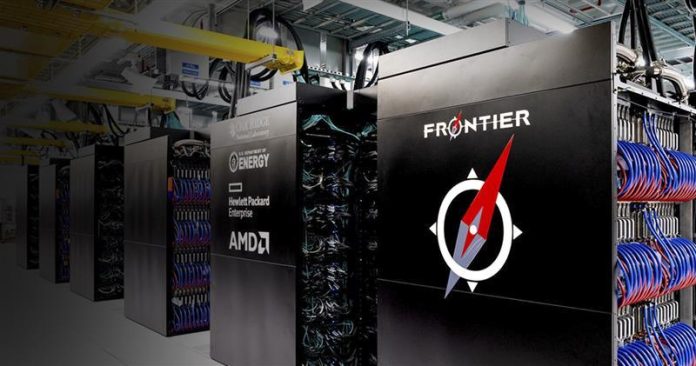
Central to the project is the use of leadership-class supercomputers, including Frontier at ORNL, the world’s first system to exceed the exascale threshold.
These machines can perform more than a billion-billion calculations per second, enabling simulations that were previously impossible.
By exploiting this computational power, CONNEQT researchers will model strongly interacting quantum systems such as unconventional superconductors and quantum spin liquids.
These materials exhibit complex many-body effects that demand massive computational resources to simulate accurately, especially when driven far from equilibrium.
Three research pillars
Over the next four years, the team will pursue three core objectives. First, they will develop controlled and unbiased computational frameworks to study interacting electrons subjected to external forces.
Second, they will apply advanced mathematical and computer science techniques to accelerate simulations of highly complex dynamical systems.
Third, they will use exascale platforms to uncover how collective electronic interactions give rise to transient patterns and emergent behaviour in nonequilibrium quantum materials.
Together, these efforts aim to redefine the state of the art in quantum materials modelling.
Implications for energy and innovation
The research is supported by the DOE’s Scientific Discovery through Advanced Computing programme, with funding from the Office of Science’s Advanced Scientific Computing Research and Basic Energy Sciences divisions.
It also aligns with the DOE’s Genesis Mission, which seeks to build the world’s most powerful scientific ecosystem for discovery and innovation.
By combining AI-ready exascale computing with cutting-edge physics, the CONNEQT collaboration has the potential to accelerate breakthroughs in energy-relevant technologies, strengthen national competitiveness, and open new frontiers in the study of nonequilibrium quantum materials.