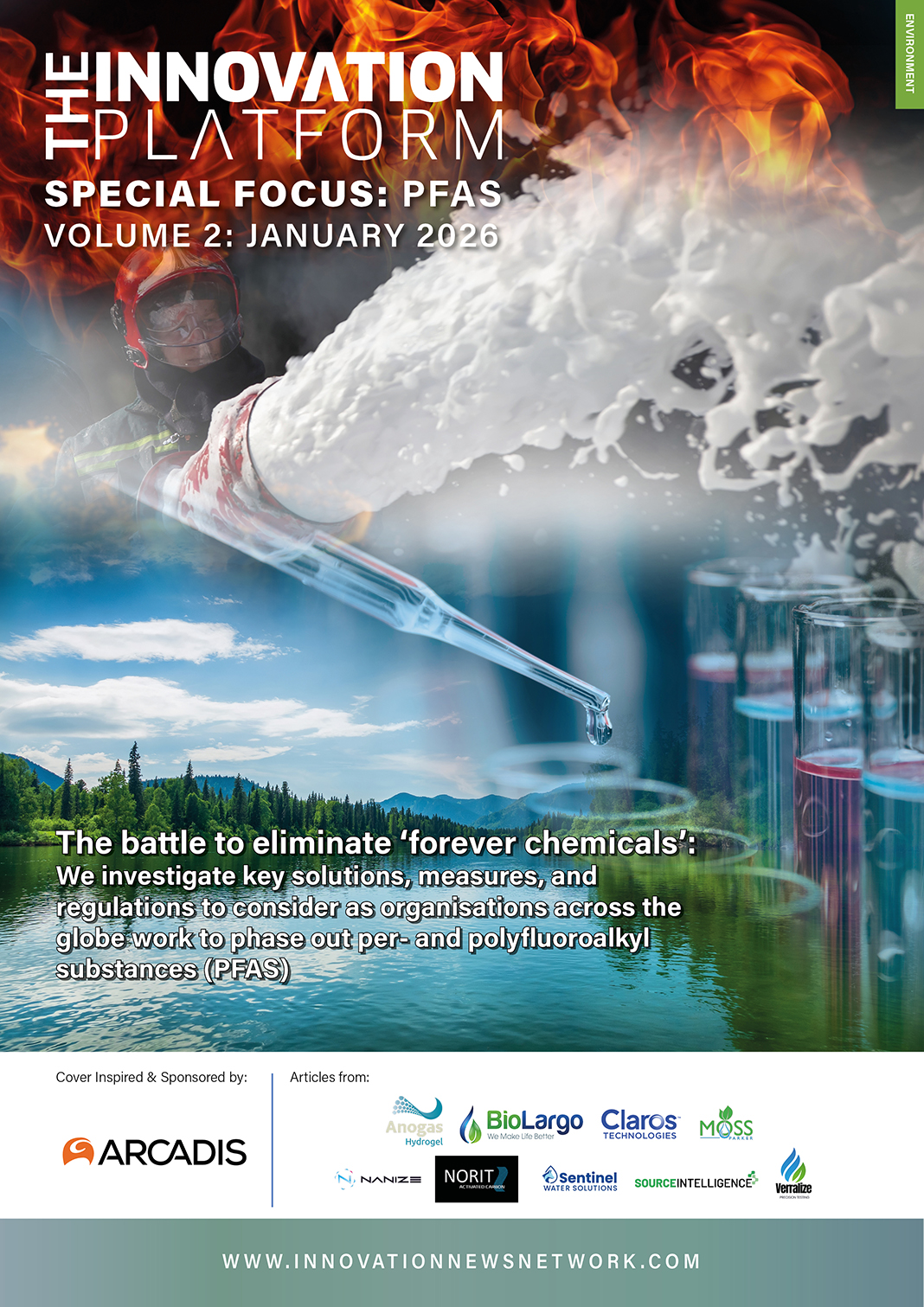
Welcome to this special focus publication, examining the global PFAS challenge, from health and environmental impacts to regulation, remediation and safer alternatives, with insights from leading experts across water, fire safety and environmental sectors.
Found in a wide range of common products, from textiles and food packaging to firefighting foam, per- and polyfluoroalkyl substances (PFAS) are a group of manmade chemicals that are popular because of their beneficial properties, such as being water-, grease-, and stain-repellent.
However, the same properties that make these ‘forever chemicals’ useful also make them a great hazard to the health of humans, animals, and the environment. PFAS do not break down easily, meaning they can accumulate in the environment and in living things. Various studies have linked PFAS consumption with a variety of health issues, including fertility problems, increased risk of certain cancers, liver damage, and a reduced immune system.
Due to the rising threat of PFAS to our health and environment, governments and organisations across the globe are taking action to reduce and prevent our exposure to PFAS. This special focus edition examines this multifaceted challenge in greater detail, focusing on the key areas and industries most affected by PFAS.
Firefighting foam: Rethinking a longstanding industry standard
As previously mentioned, PFAS have been commonly used in firefighting foams for many years due to their exceptional fire-suppressing properties. Historically, one of the most popular firefighting foams was aqueous film-forming foam (AFFF), which is used to suppress flammable liquid fires.
As awareness has grown around the environmental and health concerns related to these chemicals, so too have regulatory actions and efforts to transition toward safer alternatives within the fire protection industry. Jerry Back is a Senior Fire Protection Engineer at fire protection consultancy Jensen Hughes, with a wealth of experience in assessing the capabilities of fluorine-free foams. In this issue, Jerry discusses how the fire protection industry can adapt to PFAS-free alternatives.
Drinking water: A critical pathway of human exposure
Drinking water is one of the most significant sources of PFAS exposure for many people, because these chemicals can leach into groundwater, rivers, and reservoirs used for public water supplies. Once PFAS enter drinking water, they are difficult to remove with conventional treatment methods and can persist for many years, leading to continuous, low-level exposure through daily consumption. As a result, drinking water has become a primary focus of PFAS monitoring, regulation, and clean-up efforts aimed at reducing long-term human exposure.
National responses to a global problem
In this issue, we take a look at how the Drinking Water Inspectorate’s extensive research is helping to equip water treatment professionals with the tools and knowledge needed to battle the challenge of PFAS in drinking water. In addition, The U.S. Environmental Protection Agency (EPA) discusses how it is strengthening national and international efforts to combat PFAS contamination through science-based regulation, global partnerships, community outreach, and innovative technologies to protect human health and the environment.
Elsewhere in the issue, we venture to Australia to look at the ongoing efforts to tackle PFAS pollution in the country. Anthony Amis, Land Use Researcher from Friends of the Earth Australia, summarises the current state of the PFAS challenge in Australia, examining cases of PFAS occurrence across Australia and measures to combat it. We also have an explainer from scientists at CSIRO, reflecting on their research in the PFAS field.
Environmental, health and policy perspectives
Other interesting features within the publication include comments from The Marine Conservation Society addressing the impact of PFAS chemicals on our health, environment and marine ecosystems; as well as insights from Dr Shubhi Sharma from CHEM Trust, stressing the need for the UK to address its widespread PFAS pollution crisis.
This is just a brief look at the many aspects of the complex PFAS challenge that we cover in this dedicated edition. We hope you find the issue as impactful and insightful to read as we did to produce.
Click here to read and download this PFAS special focus publication for free.
Georgie Purcell
Editor
The Innovation Platform
Maddie Hall
Editor
The Innovation Platform