Sweden is taking a major step towards a climate-neutral future with the launch of the High Coast to West Coast Hydrogen Valley.
This major EU-funded initiative is designed to build regional value chains for renewable hydrogen.
The six-year project, coordinated by RISE, aims to transform Västernorrland and Western Sweden into a hub for sustainable hydrogen production, distribution, and usage.
With a total budget of nearly €20m, the project unites 45 partners from industry, research, and public institutions.
Magnus Hallberg, Head of the Bioeconomy Division at RISE, believes Sweden can spearhead Europe’s hydrogen boom: “Sweden has a unique opportunity to produce hydrogen at low cost, which can give us a real competitive advantage and strengthen Sweden’s and Europe’s energy independence.”
Building a regional hydrogen ecosystem
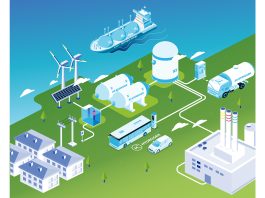
A hydrogen valley connects the entire hydrogen value chain within a region, linking production, storage, transport, and end-use across multiple sectors.
By bringing together industrial, research, and public stakeholders, the project seeks to demonstrate hydrogen systems at a commercial scale.
This collaborative approach is expected to drive technological maturity, reduce costs, and lay the foundation for scalable solutions that can be replicated across Europe.
Strong Swedish conditions for hydrogen production
Sweden is uniquely positioned to lead the hydrogen transition. With abundant renewable energy resources, established industrial clusters, and a vibrant innovation ecosystem, the country offers ideal conditions for competitively producing green hydrogen.
The project aims to produce at least 4,000 tonnes of renewable hydrogen by 2030, reinforcing Sweden’s role as a key player in Europe’s clean energy transition.
European collaboration and knowledge exchange
The hydrogen valley initiative is not limited to Sweden. By collaborating with partners from Spain, Greece, and Germany, the project facilitates cross-border knowledge sharing and experience exchange.
This cooperation strengthens the potential for replication, ensuring that successful hydrogen solutions developed in Sweden can be applied to other European regions.
Driving energy independence and climate goals
The High Coast to West Coast Hydrogen Valley aligns with the EU Hydrogen Strategy and broader goals for climate neutrality by 2050.
By reducing reliance on imported fossil fuels, the project contributes to a more resilient and energy-independent Europe.
The initiative’s integrated approach – from industrial applications and transport to e-fuel production – ensures that the benefits of hydrogen reach multiple sectors, reinforcing the EU’s competitive edge in clean energy technology.
Over the next six years, the High Coast to West Coast Hydrogen Valley will not only demonstrate the viability of hydrogen at a commercial scale but also pave the way for a new European hydrogen economy, driving innovation, sustainability, and economic growth.