Véronique Rouyer and Didier Jacquemain from the Nuclear Energy Agency highlight the need to increase and better coordinate nuclear safety research around the world.
The expected increase in global nuclear energy capacity in coming years will require a concerted effort to address nuclear safety challenges that might emerge from the deployment of new designs, including a wide range of small modular reactor (SMR) designs. This need is amplified by the closure in recent years of significant nuclear safety research infrastructure, such as experimental reactors, which has reduced the available expertise and capacity. Without co-ordinated global action, the gap between research needs and available capabilities will widen further, challenging the ability to ensure safety in both existing and next-generation nuclear reactors.
To address this challenge, the Nuclear Energy Agency (NEA) has created comprehensive and detailed guidance for international nuclear safety research by identifying the top priorities and outlining strategic directions in this area. The Strategic Roadmap for Nuclear Reactor Safety Research (NEA, 2025) focuses specifically on reactor safety and presents a comprehensive assessment of existing technological capabilities, research infrastructure needs, stakeholder engagement, and funding challenges. It outlines the technical areas that require the most rapid attention and provides recommendations to support safety research with input from governments, regulators, industry, and international organisations.
This roadmap, whose main points are also outlined in a brochure (NEA, 2025a), can be used by policymakers and other key stakeholders to make sure that research initiatives effectively support the safe acceleration in the deployment of new nuclear energy facilities, including in countries that have not previously had nuclear energy programmes. This new deployment will be influenced by several topics that cut across different reactor types and applications, including advanced manufacturing (e.g. 3D printing), state-of-the-art modelling and simulation, and artificial intelligence (AI) and machine learning. The cross-cutting nature of these topics underscores the importance of collaborative research to optimise resources and accelerate results. Crucially, their safety implications must be well understood before integration into plant operations.
Co-ordinated research is also needed to support innovative ways of applying nuclear energy beyond electricity production – including for industrial heat, hydrogen generation, desalination, and district heating. The safety aspects of these new applications must be addressed early in technology development and regulatory processes. Once again, strong co-operation between government, industry, regulators and their technical support organisations (TSOs) is required to provide the needed research by leveraging global expertise, optimising resource use and supporting harmonised regulatory decisions, even as national regulatory frameworks differ. Meanwhile, if new nuclear technologies and applications are to be developed and deployed in a timely manner, industry must be engaged swiftly on emerging safety issues, even while protecting proprietary interests and supporting timely regulatory reviews.
The specialised facilities and knowhow required for nuclear safety research can often be costly for individual countries to maintain, highlighting the importance of international collaboration. The NEA has conducted joint nuclear safety research projects since the 1960s that demonstrate the value of such coordinated efforts. These projects encompass experimental research, code development and validation, infrastructure support, and training and knowledge management. Further widening the global research networks will accelerate safety research and facilitate reactor licensing and deployment.
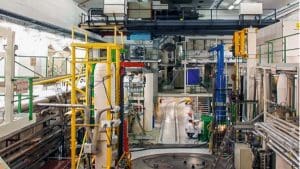
Given the wide array of reactor technologies in use and development, no single country can afford to conduct safety research across all designs. Therefore, setting clear priorities is essential, both at the national level and through international consensus. These priorities should be informed by a range of factors, including national needs, timeframes to resolve safety gaps, infrastructure availability, funding, workforce skills, and the commercial readiness of technologies. A balanced approach is required, integrating national interests with international coordination.
The NEA Strategic Roadmap for Nuclear Safety Research outlines the main research needs and challenges for the key areas described below.
General recommendations
Countries should bolster collaboration to ensure funding for: research infrastructure development and maintenance, ensuring the availability of essential facilities for advanced nuclear safety research; research that can independently validate the safety claims of reactor designers and operators; research carried out at the early stages of reactor concept development to support the definition of preliminary safety requirements and to promote capacity building within the nuclear safety community. The active involvement of industry is important to ensure real-world experience is addressed.
Fuels and cladding materials
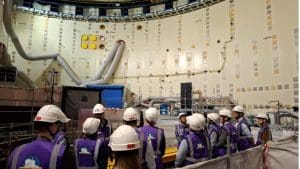
As new nuclear technologies focus more on higher burnups, high-assay low-enriched uranium (HALEU) fuel and accident-tolerant fuels (ATFs), the following strategic actions are recommended:
- Establish collaboration programmes, with industry support, to build libraries of fuel and cladding materials of generic and cross-cutting interest to enable meaningful experimental and modelling studies across a range of reactor technologies.
- Invest in advanced fuel testing infrastructure, including in-reactor testing under both normal and off-normal conditions, as well as commercial reactor trials using lead test fuels. These capabilities are indispensable for demonstrating safety margins and validating performance claims of both current-generation and next-generation fuels and claddings under real-world operating conditions.
- Advance research on accelerated fuel qualification (AFQ) to facilitate the introduction of innovative fuels and claddings into the market while maintaining rigorous safety standards.
- Evaluate the applicability of existing modelling and simulation tools to new fuel and cladding materials and identify critical gaps. These tools are essential for predicting material behaviour across a range of operational and accident scenarios, and enhancing their predictive capability is vital to inform regulatory decision-making.
Advanced materials
Because new nuclear technologies can feature extreme temperatures, high radiation fluxes and corrosive interactions, it is recommended that:
- Advanced materials, particularly those intended for molten salt reactor applications, be further tested to establish the technical basis for assessing long-term safety and performance.
- The NEA establish expert groups to identify safety research gaps, outline required experimental capabilities, and formulate long-term strategic research plans.
- Enhanced research be conducted to advance modelling and simulation tools for predicting the long-term behaviour of materials in advanced reactors.
Thermal-hydraulics
The safety case of a nuclear reactor system depends on thermal-hydraulic analysis. To generate high-quality experimental data to support code validation and uncertainty quantification, it is recommended that:
- The NEA establish a collaborative framework for scaled experimental projects, focusing on advanced reactor concepts, including SMRs, and passive safety systems.
- Stakeholders prioritise the maintenance, modernisation, and expansion of experimental infrastructure, particularly those identified by the NEA Senior Expert Group on Safety Research (SESAR).
- Legacy thermal-hydraulic data be preserved, updated, and enhanced with new data relevant to advanced reactors and SMRs.
- Stakeholders continue benchmarking computational tools, particularly computational fluid dynamics (CFD) codes, against high-resolution experimental data, with an emphasis on complex two-phase flow, passive systems, and accident-tolerant fuel.
Severe accidents
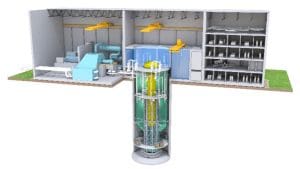
There is a need to establish the technical basis to demonstrate that severe accidents leading to significant radiological releases can be practically eliminated, as well as to improve accident management strategies. As such, it is recommended that:
- Comprehensive, risk-informed analyses be conducted and shared internationally for advanced reactor designs to identify and characterise credible accident scenarios that could challenge containment integrity and radioactive release barriers.
- The NEA organise a global collaborative framework to coordinate experimental projects, support code development and validation, provide training, and preserve significant data for long-term use.
- Stakeholders support both the modernisation of existing facilities and the development of new experimental capabilities, within a collaborative framework tailored for the safety demonstration of advanced reactor designs and systems.
- Pre-deployment testing of advanced fuels, claddings and materials include dedicated severe accident experiments, enabling more accurate modelling of core degradation, fission product behaviour, and source term estimation.
Long-term and flexible operations
The extension of the operating periods of existing nuclear energy facilities is a key part of efforts to make energy grids flexible. It is therefore recommended that:
- International collaborative efforts build upon the NEA SMILE project to collect and study aged materials from operational and decommissioned plants, expanding the global knowledge base on long-term degradation mechanisms.
- Realistic, data-informed degradation models are developed, capable of supporting risk-informed decision-making throughout the extended life of nuclear components.
- Research into the safety impacts of flexible operation are expanded.
New disruptive methods and technologies
Innovative technologies (like AI and digital twins) and methods (like 3D printing and cybersecurity measures) can help ensure nuclear safety but also require a deep understanding of their risks. It is recommended that:
- The NEA convene an expert group to define the technical requirements for the safe integration of disruptive technologies and methods to guide the nuclear sector in proactively managing potential safety implications.
- Stakeholders invest in the development of high-quality, structured, and secure datasets, which are essential for training and validating AI and machine learning models, while embedding strong security and data integrity protocols.
References
- NEA (2025), Strategic Roadmap for Nuclear Reactor Safety Research, OECD Publishing, Paris
- NEA (2025a), ‘Safety Research for Nuclear Reactors: Enabling Safe Deployment’, OECD Publishing, Paris
Please note, this article will also appear in the 25th edition of our quarterly publication.