Thomas Garabetian, Head of Research & Innovation at SolarPower Europe, discusses the highlights and lessons learned from the annual EU PVSEC, which took place in September.
This year’s European Photovoltaic Solar Energy Conference (EU PVSEC) took place from September 22 to 26, 2025, continuing to be a pivotal event in the solar energy sector. Bringing together an extensive network of researchers, industry leaders, and policymakers from around the globe, this year’s conference showcased not only the latest advancements in photovoltaic technology but also the evolving dynamics of the solar market in response to growing demands for sustainable energy solutions.
To explore the insights and takeaways from the conference, The Innovation Platform Editor, Maddie Hall, spoke with Thomas Garabetian, Head of Research & Innovation at SolarPower Europe.
Highlights and key takeaways
As usual, the EU PVSEC had a strong turnout from the entire PV research community, alongside a significant presence from the industry.
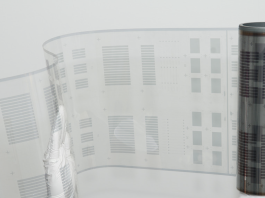
One key takeaway was a noticeable shift in the approach of the research community. Previously, the focus has been on proving the viability of new technologies; now, the emphasis has shifted to understanding how to make these technologies work commercially and how PV technologies can be integrated into different business models. We have moved beyond simply determining whether this technology is feasible to actively working on how to develop commercial products that can reliably last and generate electricity when needed. This next step is crucial for allowing these innovations to grow, as they need to be understood by a broader audience beyond just the PV sector. This is especially seen in the case of perovskite solar cells; fully realising the potential of this cell technology will require more funding to facilitate its mass production.
There has also been a growing focus within the sector on the quality of installations. Following a boom in installations and the increasing capacity of gigawatts deployed across Europe and globally, the market appears to be stabilising. As a result, there is a heightened interest in ensuring the quality and reliability of what we are installing, with a commitment to ensuring that these systems can perform reliably. Research is delving into specifics, such as how PV cells behave when exposed to UV light over 20 years and the integration of PV systems into the grid, as well as their hybridisation with flexible resources like batteries. Innovation in this area is crucial for ensuring that PV systems can consistently generate electricity and remain profitable over time, allowing the sector to grow.
Lastly, the topic of circularity is always an important talking point, and this year was no exception. The conference saw discussions about circularity at the manufacturing stage, particularly regarding how to create products that can be recycled, as well as implementing operating systems for sustainability – aligning with our focus on reliability and quality.
End-of-life considerations and material recovery are now transitioning from purely theoretical discussions to practical processes. As part of the conference, we explored how these aspects can be optimised both commercially and technically.
Plans, studies and initiatives
One of our main priorities for the coming months, as highlighted through the conference and other recent events, is the issue of grid integration and the deployment of flexible resources. Specifically, we aim to increase flexibility, meaning we need to multiply battery capacity in Europe tenfold over the next few years, a core ask of our Battery Storage Europe Platform. The Platform is an initiative to drive forward the business case and regulatory framework for battery storage across the European Union.
During EU PVSEC, we launched a study, ‘Reshoring Solar Manufacturing to Europe,’ aimed at facilitating solar PV manufacturing in Europe. This was a comprehensive report, from SolarPower Europe and Fraunhofer ISE, which models how solar systems that support supply chain resilience can be competitive with imports from China. It also includes concrete recommendations for implementing the Net Zero Industry Act.
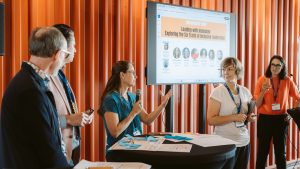
On the research innovation front, collaboration is crucial. SolarPower Europe collaborates extensively with the European Commission, PV industry and research communities, primarily through the European Partnership for Innovation in Solar PV (EUPI-PV), to streamline the process of bringing innovations from the laboratory to the market. Our work ensures that all stakeholders are involved with the right support, skills, priorities, and efforts from the private sector to translate research into tangible benefits for Europe. This year at EU PVSEC, we organised a workshop on delivering this partnership with WIP Renewable Energies. During the session, industry stakeholders, researchers, and policymakers discussed what the industry needs in terms of funding schemes to scale up innovation and how to enhance collaboration within EUPI-PV.
Women in PV
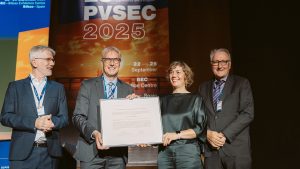
Part of the conference highlighted the significance of women in PV and the impact of inclusive leadership, with SolarPower Europe CEO Walburga Hemetsberger receiving the 2025 Becquerel Prize for Outstanding Merits in Photovoltaics. This award is given annually to an individual who demonstrates significant contributions to PV development and recognises Walburga’s key achievements in leadership, championing innovation, and influencing policies such as the Solar Energy Strategy and the EU Solar Standard.
While solar is ahead of the game when it comes to diversity and inclusion, there is still a lot of work to do.
to make the solar PV sector fully accessible and open to all. Currently, women represent 32% of the full-time equivalent workforce in the renewable energy sector, a figure that has remained unchanged since 2019, and much of the female workforce works in administrative or support roles rather than in deployment or technical functions. One positive takeaway from this event, as well as the broader developments in the PV industry regarding diversity and inclusion, is that the industry recognises these issues and is actively working to create a more inclusive environment.
Challenges identified
The conference felt less international in comparison with previous years, likely a reflection of some of the global challenges faced by the industry. The clean energy landscape in the US is facing a particularly challenging time, making attending conferences a lower priority. However, this poses a challenge because the PV sector is inherently global. Photovoltaic technology is being deployed worldwide, and traditionally, international collaboration has facilitated extensive global knowledge sharing and scientific exchange. It’s essential to maintain this openness, as fragmenting our research efforts risks slowing down progress toward achieving energy transition goals and meeting our future energy needs.
Additionally, there is a crunch in research and innovation budgets globally, especially in clean energy sectors – including in Europe. If we do not invest in the research and innovation of technologies that will drive the next decade and beyond, we will struggle to remain competitive.
Furthermore, we need to tackle topics such as market integration and flexibility, which currently act as bottlenecks for PV. However, the conference proved that this is a top priority as a sector. We are developing effective solutions, and there appears to be an increasing willingness in the market to adopt them.
Strategic priorities for 2026 and beyond
We must continue to deploy PV systems at the current pace – reaching the European Commission’s goal of 750 gigawatts of direct current PV connected to the grid. To do this, we must have the appropriate infrastructure in place, including expanding the grid and accelerating the permitting process, which are now key priorities for SolarPower Europe.
In addition to this, we are focused on implementing the priorities set by the European Commission and SolarPower Europe regarding PV manufacturing within Europe. The European Union has set a goal of at least 30 GW of European solar manufacturing at each stage of the value chain by 2030. Europe’s solar industry faces challenging market conditions in which to sell its products and scale up. With our #MakeSolarEU campaign, we are pushing our urgent calls to support these critical links in the solar-led energy transition. By providing tools and mechanisms that support European manufacturers of solar PV, we can enable them to contribute to the energy transition and enhance the competitiveness of the European economy.
Integral to this is securing adequate funding for PV innovation. This can hopefully be supported by continued collaboration and the upcoming Competitiveness Fund, which the Commission is introducing, alongside a new phase of European research and innovation funding through the Horizon Europe programme. Getting this right will be crucial to support our objectives for the energy transition and global competitiveness through a robust research and innovation environment.
Please note, this article will also appear in the 24th edition of our quarterly publication.