The future of North Wales’ energy landscape has just received a major boost, as the Prime Minister confirmed that Wylfa on Anglesey will host the UK’s first small modular reactors (SMRs).
The announcement marks a historic step for the region, promising thousands of new jobs, billions of pounds in investment, and a renewed role for North Wales in the nation’s nuclear energy ambitions.
Commenting on the landmark energy initiative, UK Prime Minister Keir Starmer said: “Britain was once a world-leader in nuclear power, but years of neglect and inertia have meant places like Anglesey have been let down and left behind.
“Today, that changes. We’re using all the tools in our armoury – cutting red tape, changing planning laws, and backing growth – to deliver the country’s first SMR in North Wales.”
What are small modular reactors?
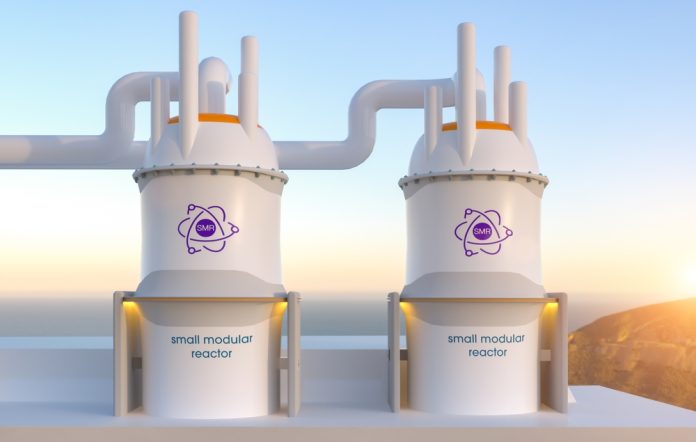
Small modular reactors are a new generation of nuclear power technology.
Unlike traditional nuclear power stations, which can take a decade or more to construct, SMRs are smaller, quicker to build, and highly scalable.
Each unit generates enough electricity to power hundreds of thousands of homes, with multiple units able to supply millions.
SMRs are designed for flexibility, enhanced safety, and potential export opportunities, making them a cornerstone of the UK’s strategy to achieve energy independence, support national infrastructure, and establish a global competitive edge in advanced nuclear technology.
Wylfa’s nuclear renaissance
Wylfa has a long-standing nuclear heritage dating back to the 1960s. Today, that legacy is being revitalised with the selection of the site for the country’s first SMR development.
The project is being delivered by publicly owned Great British Energy-Nuclear (GBE-N), with Rolls-Royce SMR expected to provide the design.
At peak construction, the SMR project is anticipated to support up to 3,000 local jobs, spanning skilled trades, engineering, and long-term operational roles.
Infrastructure improvements linked to the project could inject billions of pounds into the local economy, creating opportunities for a generation of young people across Anglesey and North Wales.
First Minister of Wales Eluned Morgan added: “This is the moment Ynys Môn and the whole of Wales have been waiting for. New nuclear is a step into the future with secure jobs and secure energy guaranteed for the next generation.
“We have been pressing the case at every opportunity for Wylfa’s incredible benefits as a site, and I warmly welcome this major decision to invest in North West Wales. Wales is once again leading the way.”
A national clean energy initiative
The UK Government is positioning SMRs as a key element in its ‘clean energy superpower’ mission.
Once operational, Wylfa’s small modular reactors could supply electricity for approximately 3 million homes, powering essential services like the NHS, national security infrastructure, and supporting British innovation.
Funding for the initiative has been secured through the 2025 Spending Review, with over £2.5bn earmarked for the country’s first SMR programme.
The broader strategy also includes the Sizewell C nuclear project, which will deliver power for 6 million homes and 10,000 jobs, highlighting the government’s commitment to modern industrial growth and energy security.
A gateway to global nuclear innovation
SMRs are not just a domestic priority. The UK is actively exploring export potential, notably through partnerships such as the UK-Czech civil nuclear agreement.
Rolls-Royce SMR has already partnered with Czech energy giant ČEZ, which has acquired a 20% stake in the venture.
In addition, collaboration with the US on regulatory alignment is expected to accelerate global deployment of advanced nuclear technologies, including commercial projects like X-Energy and Centrica’s planned modular reactors in Hartlepool.
What’s next for Wylfa
GBE-N plans to begin activity on the Wylfa site in 2026. The initial phase will involve the construction of three SMR units, with the site having the potential to host up to eight units, delivering power to the national grid by the mid-2030s.
Beyond Wylfa, GBE-N has been tasked with identifying additional sites for potential large-scale nuclear projects, with findings expected by Autumn 2026.
These sites could host future projects similar in scale to Hinkley Point C or Sizewell C, each capable of powering around 6 million homes.
For Anglesey and the wider region, the SMR announcement represents a turning point. It corrects past disappointments in nuclear development, revitalises the local economy, and positions North Wales as a key player in the UK’s energy independence and clean energy ambitions.
With cutting-edge technology, international partnerships, and billions in investment, Wylfa is set to become a beacon of the UK’s nuclear future.