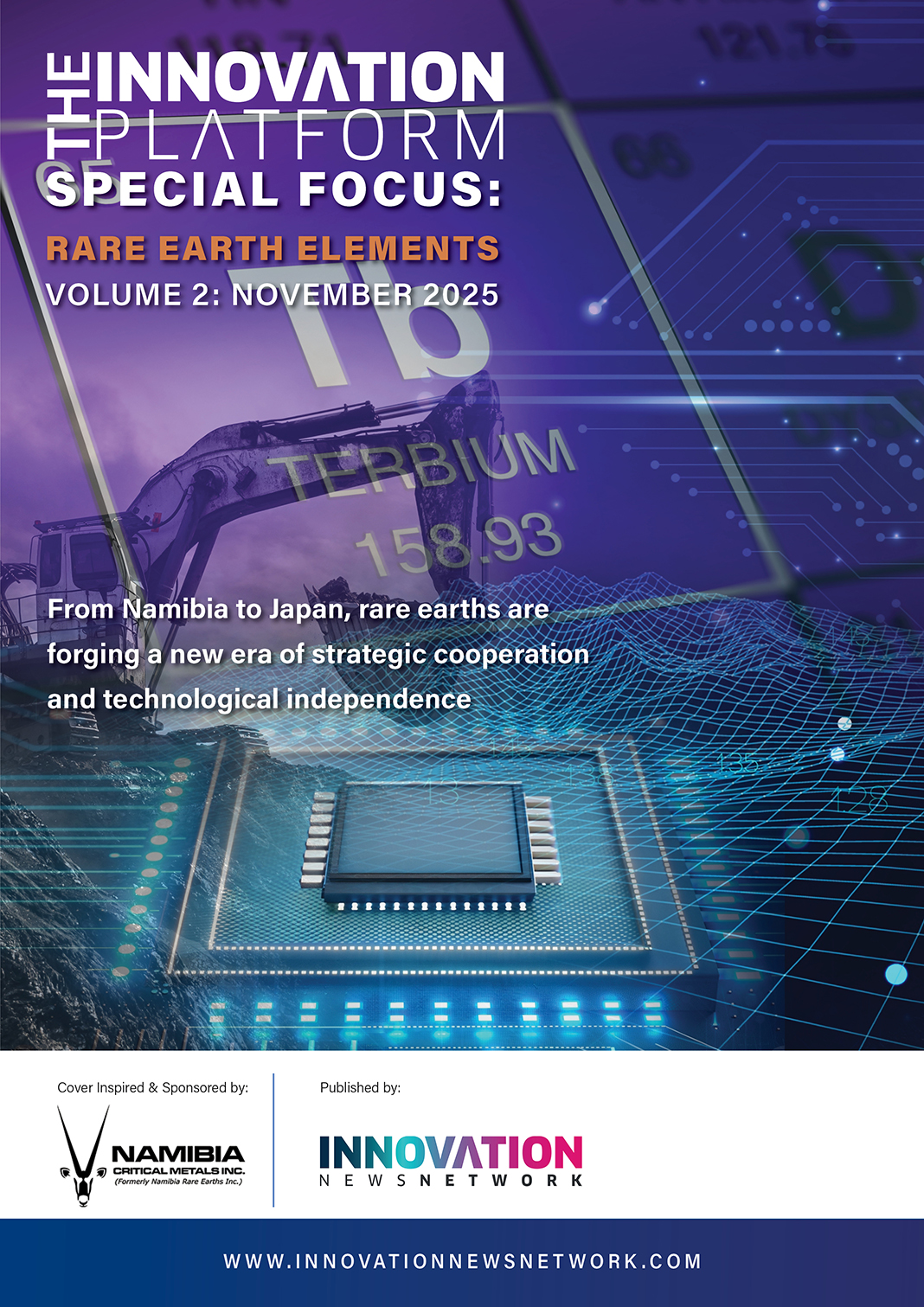
Welcome to this special focus publication, a strategic exploration of rare earth elements that highlights global supply security, pioneering projects like Lofdal, and Japan’s forward-looking resource strategy, which is shaping the future of clean energy and advanced technology.
The global race to secure the minerals underpinning modern economies has never been more intense. Among them, rare earth elements stand at the heart of the transition to cleaner energy, digital innovation, and advanced manufacturing. As governments and industries navigate shifting geopolitics and rising demand, supply chain resilience has become a defining strategic priority.
Why rare earth elements matter
Rare earth elements are a group of 17 metallic elements essential to high-tech applications. They possess unique magnetic, electronic, and optical properties, making them critical for cutting-edge technologies. While not truly scarce in the Earth’s crust, these elements are difficult to extract and refine, and global production is highly concentrated.
From electric vehicle motors and wind turbine generators to smartphones, defence systems, semiconductors, and medical technologies, rare earth elements form the backbone of the 21st-century innovation economy. In particular, heavy rare earths like dysprosium and terbium are indispensable for high-performance permanent magnets – the hidden enablers of global electrification and digitalisation.
Japan’s strategy for rare earth independence: Inside JOGMEC’s vision
Our first article explores how Japan, one of the world’s most resource-dependent nations, is implementing a bold and strategic approach to securing rare earth elements. Through the Japan Organization for Metals and Energy Security (JOGMEC), the country has deployed a multifaceted plan combining stockpiling, international partnerships, recycling innovation, advanced refining technologies, and targeted exploration support.
You will gain insight into how JOGMEC’s initiatives – ranging from global joint ventures to cutting-edge urban mining – ensure stable supplies for Japan’s automotive, electronics, defence, and renewable energy sectors. This section offers a compelling look at how future-facing policy, technology, and international cooperation are redefining national resource security.
Securing a new global supply: Spotlight on Namibia Critical Metals
Our second feature turns to Namibia, home to one of the world’s most significant heavy rare earth deposits. Namibia Critical Metals‘ Lofdal Project stands out for its enrichment in dysprosium and terbium, two of the highest-value rare earth elements vital for high-performance permanent magnets.
Supported by a long-standing partnership with JOGMEC, the Lofdal Project represents a rare non-Chinese source of heavy rare earths and a potential pillar of global supply diversification. This article reveals how Namibia’s mining expertise, policy stability, and resource potential are positioning the country as a critical contributor to worldwide mineral independence.
Securing a sustainable future
Together, these articles reveal a rare earth elements landscape entering a pivotal new era – one defined not only by the race for resources, but by the pursuit of technological sovereignty, responsible supply chains, and global industrial resilience.
As the world accelerates toward electrification and digital transformation, the success of projects like Lofdal and the strategic foresight of organisations like JOGMEC will help shape the balance of innovation, security, and sustainability for decades to come.
Explore the insights within this publication, deepen your understanding of the rare earth ecosystem, and join the movement to secure a cleaner, smarter, and more resilient future powered by responsible mineral development and international collaboration.