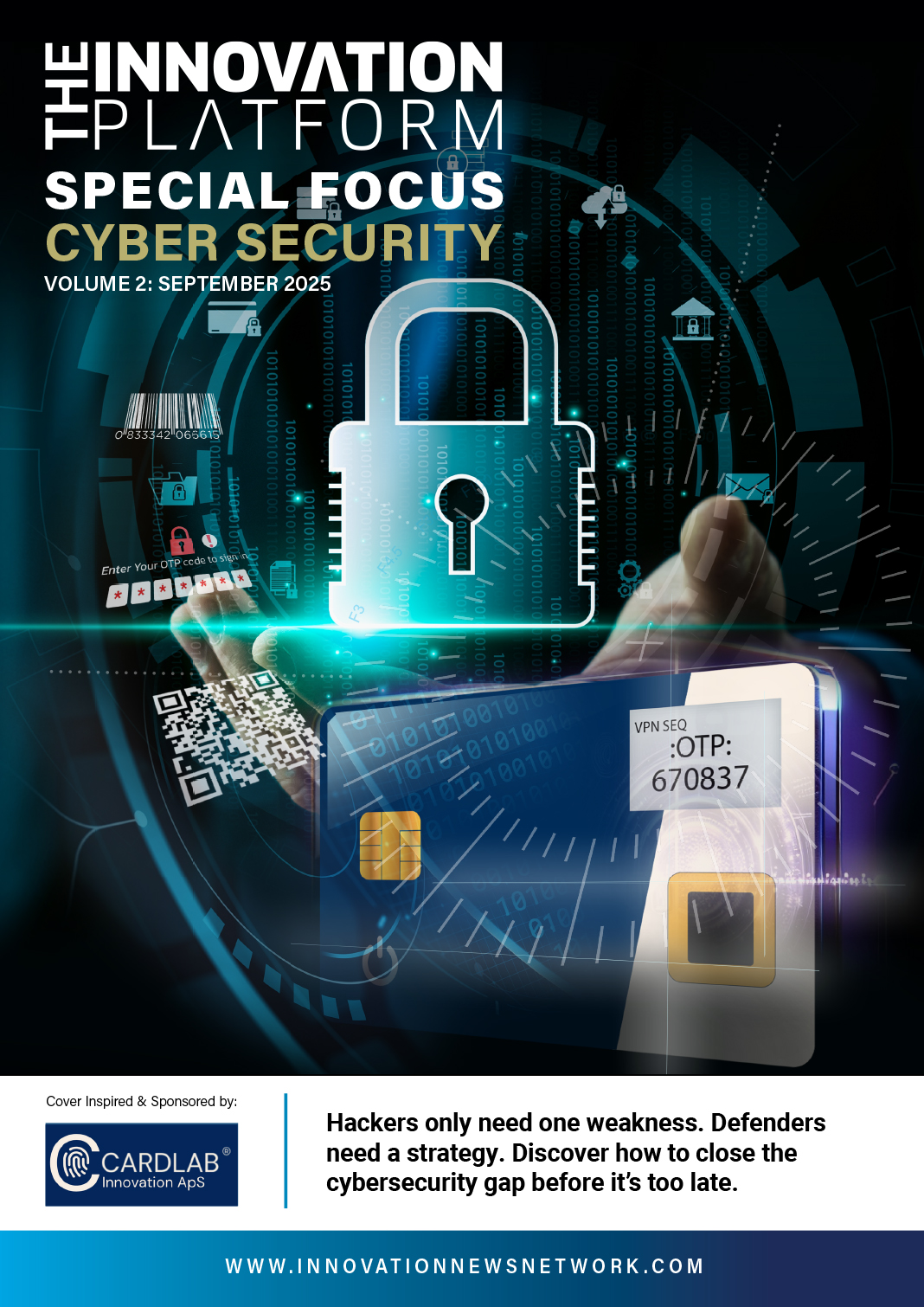
Welcome to the second volume of our cybersecurity special focus publications, exploring how biometrics, tokenisation, and next-gen cybersecurity strategies are reshaping digital payments and protecting identities in a cashless economy.
As the global economy becomes increasingly digital, online payments have emerged as a cornerstone of modern commerce.
From e-commerce platforms to peer-to-peer transfers and subscription services, the ability to pay electronically has transformed the way consumers and businesses interact. Convenience, speed, and accessibility make online payments a preferred option for millions worldwide.
However, as transactions grow, so do concerns around security, fraud, and user authentication.
This Special Focus Publication examines the benefits and challenges of online payments and how we can secure them now for a digital future.
How biometrics enhance online payments
Biometric authentication adds a powerful layer of security to online payment systems. Unlike passwords, biometric data is extremely difficult to replicate or steal.
When integrated with digital wallets, banking apps, or e-commerce platforms, biometrics enable users to authorise transactions quickly and securely. This not only enhances the customer experience but also reduces the risk of fraud and identity theft.
Solving the cyber skills challenge to secure digital transactions
The rapid growth of digital payments has broadened the attack surface in ways unimaginable even a decade ago. While digital transactions offer speed and efficiency, they also create new opportunities for fraudsters to exploit.
Therefore, training the next generation of cyber professionals is urgent. Universities, employers, and governments all play a role in developing pathways into the sector.
Our first article, written by Dr Ismini Vasileiou, Associate Professor at De Montfort University and Director of the East Midlands Cyber Security Cluster, explores this possibility. A paper co-authored by Dr Vasileiou sets out the case for a unified cyber skills taxonomy and new approaches to education and training.
She highlights how apprenticeships, work-based learning, and short professional courses can complement traditional degree programmes, providing multiple entry routes into cybersecurity careers.
To secure payments, organisations must move beyond compliance to embed robust cybersecurity measures, including strong authentication, continuous monitoring, and tested response plans.
Yet none of this is sustainable without addressing the cyber skills shortage that threatens the sector’s ability to defend itself.
A safer, more seamless future
As biometric technologies continue to advance and become more affordable, their adoption across the digital economy is expected to grow.
Elsewhere in the eBook, CardLab Aps highlights their offline biometric verification and tokenisation, addressing key challenges in cybersecurity, including identity, credential, and access management (ICAM), while integrating with existing software solutions.
Passwords, static credentials, online tokens, and even multi-factor authentication (MFA) remain constant targets for attackers and have introduced complexity that fosters unsecure user workarounds.
CardLab’s biometric card is never visible to hackers and remains under the user’s full control. Biometric verification occurs entirely offline, outside the reach of online attack vectors.
In collaboration with its partners and suppliers, CardLab delivers a solution that combines convenience with advanced cybersecurity, empowering users to take control of their digital lives with full authority over their own data.
Soon, online payments secured by biometrics will likely become the norm, offering both businesses and consumers a seamless and secure way to engage in the digital economy.
How to protect biometric payment infrastructure
To ensure the integrity of biometric data, organisations should implement robust encryption protocols and secure storage solutions, minimising the risk of unauthorised access.
The final article emphasises the need for financial institutions, merchants, and consumers to implement comprehensive measures to protect their infrastructure against potential fraud.
Merchants should employ multi-factor authentication processes that combine biometrics with traditional security measures, reinforcing overall security.
As biometric payments, particularly fingerprint authentication, gain traction in the evolving cashless economy, the imperative to safeguard biometric data becomes increasingly urgent.
The irreversible nature of biometric credentials presents unique cybersecurity challenges that require stringent protective measures.
By understanding common threats and implementing best practices for data storage and security, institutions and consumers can work together to mitigate risks.