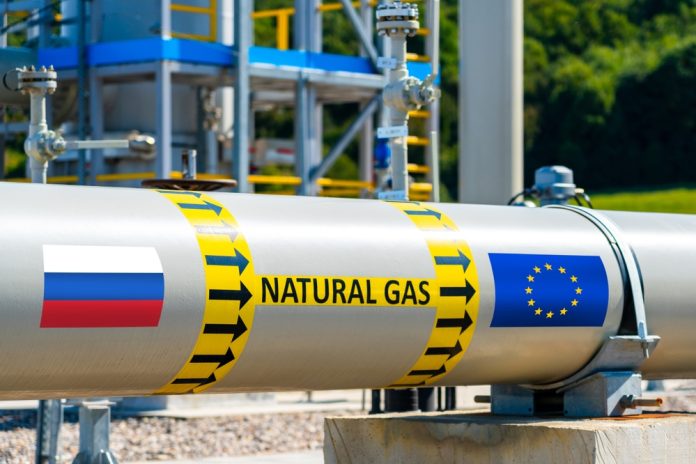
In a decisive move to secure its long-term energy sovereignty, the European Union has announced a comprehensive roadmap to eliminate its reliance on Russian energy.
The REPowerEU Roadmap lays out a phased and coordinated plan to stop importing Russian gas, oil, and nuclear materials while maintaining stable energy supplies and prices across the bloc.
This shift marks one of the most significant geopolitical and economic turning points in the EU’s energy history as it seeks to safeguard itself from the vulnerabilities exposed by Russia’s 2022 invasion of Ukraine.
EU Commission President Ursula von der Leyen explained: “The war in Ukraine has brutally exposed the risks of blackmail, economic coercion and price shocks. With REPowerEU, we have diversified our energy supply and drastically reduced Europe’s former dependency on Russian fossil fuels.
“It is now time for Europe to completely cut off its energy ties with an unreliable supplier. And the energy that comes to our continent should not pay for a war of aggression against Ukraine. We owe this to our citizens, to our companies, and to our brave Ukrainian friends.”
How the EU began severing ties with Russian energy
The foundations of the current roadmap were set in May 2022 with the launch of the REPowerEU Plan, developed in response to Russia’s aggression in Ukraine.
The plan aimed to drastically reduce the EU’s dependency on Russian energy by accelerating the rollout of renewable energy, improving energy efficiency, and diversifying supply sources.
Since then, the EU has made substantial progress. Russian gas imports have dropped sharply from 150 billion cubic metres in 2021 to 52 billion cubic metres in 2024, reducing the EU’s dependency from 45% to just 19%.
Russian oil imports have plummeted from 27% to 3%, while Russian coal has been completely banned under sanctions.
Progress has also been made in the nuclear sector, where EU countries using Russian-designed VVER reactors have begun switching to alternative fuel providers.
A coordinated phase-out
Despite these advances, 2024 saw a temporary rebound in Russian gas imports, prompting renewed urgency.
The Commission’s new roadmap sets out clear measures to permanently sever energy ties with Russia in a secure and coordinated way.
Each EU Member State will be required to submit national plans by the end of 2025 outlining how they will contribute to ending imports of Russian gas, oil, and nuclear fuel.
To reinforce this process, the Commission will introduce binding measures in the coming months. These include banning new contracts for Russian gas – both via pipeline and in liquefied natural gas (LNG) form – by the end of this year and ending all existing spot contracts by 2025.
The goal is to halt all Russian gas imports by the end of 2027. Meanwhile, further restrictions on Russian nuclear materials, including enriched uranium, are expected, along with new controls over contracts managed through the Euratom Supply Agency.
Building a resilient, diversified energy future
The roadmap also outlines how the EU will ensure energy stability during this transition. Global LNG capacity is forecast to rise significantly by 2028, and the EU expects to reduce its natural gas demand by up to 100 billion cubic metres by 2030.
Together, these developments will help replace Russian gas without jeopardising the reliability or affordability of the energy supply.
The EU will also continue investing in renewable energy, improving infrastructure, and aggregating gas demand across member states.
These steps are designed to maintain market stability and prevent disruptions during the transition away from Russian energy.
Nuclear and oil: Cutting off remaining links
In addition to fossil fuels, the EU will target the remaining links in its nuclear supply chain with Russia.
This includes proposed measures to limit imports of enriched uranium and the establishment of a European Radioisotopes Valley Initiative to increase the bloc’s self-sufficiency in critical medical isotopes.
The Commission also intends to crack down on Russia’s so-called shadow fleet, which has been used to circumvent oil sanctions.
A turning point for EU energy policy
The European Commission’s roadmap represents a strategic and irreversible shift away from Russian energy, reinforcing the EU’s commitment to energy independence, climate goals, and geopolitical resilience.
Legislative proposals are expected next month, setting the stage for what could be a historic transformation of Europe’s energy landscape.