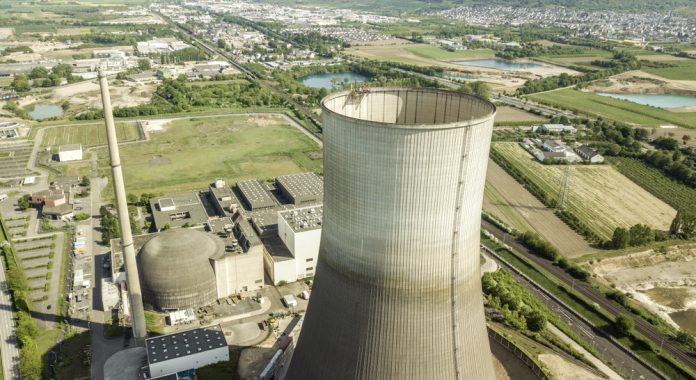
Europe is entering an unprecedented era of nuclear decommissioning, as ageing reactors, oil and gas facilities, and early renewable energy projects reach the end of their operational lives.
With more than 130 nuclear sites slated for dismantling and billions already earmarked for contracts, the region faces a multi-decade challenge that will reshape its industrial and energy landscape.
From the UK’s sprawling Sellafield complex to Germany and France’s reactors, these projects highlight both the scale and complexity of safely retiring old infrastructure while navigating the demands of a rapidly evolving energy transition.
According to a new report by the Energy Industries Council (EIC) and Decom Mission, the region’s nuclear decommissioning pipeline is valued at over $120bn, with a substantial portion of contracts already awarded.
These projects underscore nuclear dismantling as Europe’s largest end-of-life market, ahead of other energy sectors such as oil and gas, coal, and renewables.
Oil & gas decommissioning expands across continental Europe
While nuclear assets dominate long-term planning, oil and gas decommissioning is expected to drive the near-term workload.
Across continental Europe, total expenditure on dismantling oil and gas infrastructure is estimated at $16.5bn, with about $7bn of contracts already finalised.
Plug and abandonment (P&A) operations – permanently sealing wells – make up roughly half of this spend, followed by the removal of subsea equipment and topsides.
The UK North Sea alone is projected to see approximately $34bn in decommissioning outlays through 2032.
Much of this activity is tightly linked to the availability of specialised vessels and rigs, highlighting the critical role of supply chain logistics in ensuring timely project execution.
Renewable energy enters the decommissioning cycle
Decommissioning is no longer exclusive to fossil fuels and nuclear power. Early-stage dismantling of onshore and offshore wind farms is now underway in Northern Europe, particularly in Germany, Denmark, and the UK.
As the first generation of wind installations reaches the end of its operational life, ports, heavy-lift vessels, and skilled crews face competing demands from both new construction and retirement projects.
This emerging overlap demonstrates how the energy transition is beginning to intersect with traditional asset retirement, raising concerns about potential bottlenecks in equipment, workforce, and waste management capacity.
Coal and refinery closures add complexity
Beyond nuclear, oil, and wind, Europe is witnessing a surge in coal and refinery decommissioning.
Plant closures across Southern and Eastern Europe, including Austria, the Czech Republic, Denmark, and Poland, are accelerating, while refinery dismantling in the UK and Western Europe involves complex demolition of interconnected units and handling of contaminated materials.
These technically demanding operations further diversify the continent’s decommissioning portfolio.
Strategic planning becomes essential
The report highlights the growing complexity of coordinating nuclear decommissioning alongside other end-of-life projects across Europe.
Timing, supply chain capacity, and access to specialised equipment and skilled personnel are becoming increasingly critical factors in project planning.
With multiple sectors – nuclear, oil and gas, renewables, and coal – converging on simultaneous retirement schedules, operators face logistical and technical challenges that could affect costs and timelines.
This multi-billion-dollar wave of decommissioning reflects a broader shift in Europe’s energy landscape, as ageing infrastructure is dismantled while new low-carbon assets are being deployed.
The careful management of nuclear decommissioning, alongside other retirements, is therefore not only a matter of safety and compliance but also a key element in maintaining continuity and efficiency across the continent’s evolving energy system.