Helium is an essential element in various technological advancements. Its unique properties provide critical support in fields such as cryogenics, aerospace, and semiconductor manufacturing.
From cooling superconducting magnets to pressurising rocket fuel tanks, helium’s applications are extensive and impactful. The significance of helium in these areas raises questions about its future role and availability.

Understanding these implications may reveal even more about how this noble gas shapes modern innovation.
Cryogenic coolant of the future: Helium in MRI, NMR, and quantum computing
As advancements in technology continue to emerge, helium has established itself as an indispensable cryogenic coolant in various fields, notably in Magnetic Resonance Imaging (MRI), Nuclear Magnetic Resonance (NMR), and quantum computing.
Its unique properties, including a low boiling point and high thermal conductivity, make it ideal for maintaining the necessary temperatures in these applications.
In MRI, helium cools the superconducting magnets, allowing for high-resolution imaging, essential for accurate diagnoses.
Similarly, in NMR, helium ensures the stability of the magnetic field, enhancing the sensitivity and precision of molecular analysis.
In quantum computing, helium’s ability to create ultra-cold environments is crucial for the operation of qubits, which are the building blocks of quantum information processing.
As research and innovation continue to progress, helium’s role as a cryogenic coolant is poised to expand, further solidifying its significance in modern technological advancements.
Fuelling rockets and space exploration
Helium plays a critical role in the realm of rocket propulsion and space exploration, particularly in the processes of pressurisation and purging.
As rockets are prepared for launch, helium is used to pressurise fuel tanks, ensuring that propellants flow smoothly into the combustion chamber. This pressurisation is essential for maintaining the integrity of the fuel system and optimising performance during ignition.
Furthermore, helium is utilised in purging operations to remove any contaminants or unwanted gases from the fuel lines and tanks. This purging process, conducted before fuelling, enhances safety and efficiency by preventing potential combustion issues.
The inert nature of helium minimises the risk of chemical reactions, making it an ideal choice for these critical applications.
The semiconductor secret: Helium in electronics and chip manufacturing
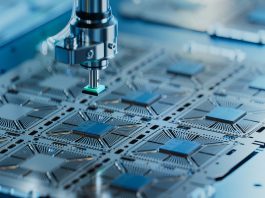
While the spotlight often shines on silicon in the world of electronics, helium quietly plays a vital role in the manufacturing of semiconductors and integrated circuits.
Used primarily as a cooling agent, helium ensures the efficient operation of various processes during chip production. Its low boiling point enables precise temperature control, which is critical for maintaining the integrity of materials and minimising defects.
Helium is also employed in the plasma etching and deposition processes essential for creating intricate microstructures on semiconductor wafers. In these applications, helium provides an inert atmosphere that prevents unwanted chemical reactions, thereby enhancing the quality of the final product.
Additionally, its non-toxic and non-reactive properties make it a preferred choice in environments where contamination must be avoided.
As semiconductor technology continues to advance, helium remains an indispensable asset, enabling the development of faster, more efficient electronic devices.
Helium in advanced research and laboratory applications
The role of helium extends beyond electronics, finding significant application in advanced research and laboratory settings.
In environments where precise temperature control is crucial, helium serves as an efficient coolant, particularly in cryogenics and superconducting experiments. Its low boiling point enables researchers to achieve and maintain the ultra-cold temperatures necessary for investigating quantum phenomena.
Additionally, helium’s inert nature makes it an ideal atmosphere for various analytical techniques, including mass spectrometry and gas chromatography. By preventing unwanted chemical reactions, helium ensures the integrity of sensitive samples during analysis.
Furthermore, in particle physics, helium is utilised in detectors and gas-filled chambers, providing essential shielding against radiation.
Medical and diving uses of helium
In the realm of medicine and diving, helium plays a vital role in enhancing safety and efficiency.
In medical applications, helium is often utilised in combination with oxygen to create a breathing gas known as heliox.
This mixture reduces airway resistance and improves gas exchange, making it particularly beneficial for patients with respiratory conditions, such as asthma or chronic obstructive pulmonary disease (COPD). By allowing for easier breathing, heliox can significantly aid in patient recovery.
In the diving industry, helium is crucial for deep-sea divers. Due to its low solubility in body tissues, helium reduces the risks of nitrogen narcosis and decompression sickness.
Divers use helium-based gas mixtures, like trimix, to sustain longer and safer underwater operations. By incorporating helium into their breathing gases, both medical professionals and divers can ensure better outcomes, showcasing helium’s indispensable role in promoting health and safety in high-pressure environments.
Welding, leak detection, and fusion research
Helium’s versatility extends beyond medical and diving applications into industrial and energy sectors, where it is instrumental in various innovative processes.
In welding, helium is often used as a shielding gas, providing a clean and stable environment that enhances the quality of the weld while preventing contamination. Its high thermal conductivity allows for greater heat transfer, resulting in improved welding speeds and efficiencies.
Furthermore, helium plays a crucial role in leak detection systems. Its small atomic size enables it to easily escape through even the tiniest of leaks, making it an effective tracer gas for identifying faults in pipelines and equipment.
In the realm of fusion research, helium is generated as a byproduct of nuclear fusion reactions, providing insights into clean energy solutions.
Researchers utilise helium cooling systems to maintain optimal temperatures in experimental reactors, underscoring their significance in advancing sustainable energy technologies.
In conclusion, helium’s unique properties make it indispensable across a multitude of modern technological applications.
From its role as a cryogenic coolant in medical imaging and quantum computing to its critical function in aerospace and semiconductor manufacturing, helium significantly enhances efficiency and safety.
Additionally, its applications in advanced research, medical fields, and industrial processes underscore its versatility. As technology continues to evolve, helium remains a vital resource, driving innovation and facilitating groundbreaking advancements in various sectors.