A new prototype facility has been switched on to manufacture green ammonia using renewable electricity, marking a significant advancement in the UK’s clean energy landscape.
The new process enables previously unused energy to be stored as hydrogen molecules within green ammonia. The hydrogen can later be extracted and used to generate electricity at a more convenient time.
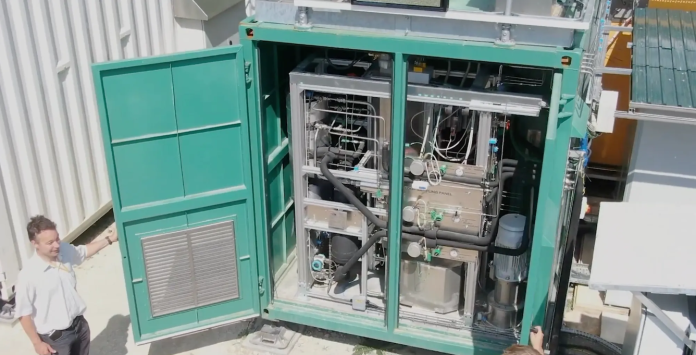
Developed by engineers at the Science and Technology Facilities Council’s (STFC) Energy Research Unit, the plant is an innovative demonstration of technology that is capable of the flexible generation of green ammonia and hydrogen storage for future extraction.
Known as the ASPIRE project, the green ammonia plant was funded as part of the £1 billion Net Zero Innovation Portfolio. This provides funding for low-carbon technologies and systems and aims to reduce the costs of decarbonisation, helping the UK end its contribution to climate change.
Can green ammonia compete commercially with fossil fuels?
The new technology facilitates green ammonia synthesis from otherwise unused wind energy through a flexible approach that aligns ammonia generation with the fluctuating availability and cost of the renewable energy supply.
Data collected from the operational plant will be crucial for future scaling efforts, ultimately enabling green ammonia to compete commercially with traditional fossil fuel-based production.
This development comes at a critical time as the UK invests £1.1bn for offshore wind to create a zero-carbon electricity system by 2030, part of the UK’s broader commitment to reduce emissions by 81% by 2035.
ASPIRE vs traditional ammonia production
Green ammonia presents significant climate change mitigation through these applications, potentially delivering 10-15% of global CO2 emissions reductions.
ASPIRE also brings significant advantages over traditional ammonia production methods, including:
- Reduces 90% of the carbon emissions relative to conventional ‘grey’ ammonia production
- Reduces 70% of the carbon emissions of ‘blue’ ammonia production
- Scalable technology that can operate directly from renewable sources
- Ideal for integration with the UK’s expanding renewable energy infrastructure
- Utilises low-cost electricity during periods of excess renewable generation
- Avoids carbon emissions penalties
- Not subject to volatile gas prices that affect conventional ammonia production
Tackling energy storage challenges by harnessing unused wind power
In 2024, around one-tenth of all wind-generated power in Great Britain was produced but not used, highlighting the opportunity for innovative energy storage solutions.
Grid infrastructure continues to develop alongside the pace of wind expansion, and there are practical considerations around moving electricity from generation locations like Scotland to areas of high demand.
Additionally, periods of low electricity demand during periods of high wind output, and the current limited energy storage options, all contribute to the challenge.
The green ammonia plant offers a versatile solution that not only addresses energy efficiency by utilising otherwise unused wind energy but also has the potential to:
- Decarbonise shipping and fertiliser manufacturing
- Provide grid resilience by converting this stored ammonia back to electricity during peak demand or when energy supply is low
- Supply low-carbon hydrogen for fuel via ammonia cracking
Tristan Davenne, Principal Engineer at the STFC Energy Research Unit and ASPIRE project lead, explained: “What makes ASPIRE notable is its ability to produce ammonia at variable rates and its readiness for scalability in industry.
“ASPIRE is not just a technical achievement; it is a practical solution that can transform unused wind energy from a challenge into a valuable resource.
“The data we gather from this operational plant will be invaluable as we work towards scaling this technology to make green ammonia compete with fossil-fuel-based production.”