
East Tennessee is emerging as a national epicentre for US fusion energy innovation, following the announcement of a powerful new research facility designed to push fusion materials closer to commercial reality.
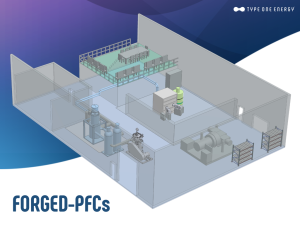
A partnership between the US Department of Energy’s Oak Ridge National Laboratory (ORNL), Type One Energy, and the University of Tennessee, Knoxville (UT) will establish a cutting-edge high-heat flux (HHF) facility that addresses one of fusion energy’s most critical challenges: how materials perform under extreme conditions.
Located at the Tennessee Valley Authority’s (TVA) Bull Run Energy Complex in Clinton, the facility is expected to play a pivotal role in qualifying materials for future fusion power plants while reinforcing the region’s growing reputation as a fusion research and manufacturing hub.
ORNL Director Stephen Streiffer believes the facility will transform the US fusion landscape: “This unique collaboration of breakthrough science, industry innovation and academic leadership will result in the creation of a national facility critical to the success of realising commercial fusion.”
Tackling the toughest conditions in fusion energy
Fusion energy systems operate under some of the most punishing environments ever engineered, with plasma-facing components (PFCs) bearing the brunt of intense heat and particle bombardment inside fusion devices – exposed to temperatures hotter than the surface of the Sun.
Understanding how fusion materials respond to these conditions is essential for building devices that can operate reliably for long periods.
By recreating these extreme heat loads in a controlled setting, researchers can evaluate performance, identify lifetime limits, and accelerate the validation of materials for fusion pilot plant designs.
Capable of delivering steady-state heat loads exceeding 10 megawatts per square metre – comparable to the heat flux inside rocket engines – the facility will use advanced electron-beam technology to replicate real fusion conditions with unprecedented fidelity.
A rare and powerful national asset
Once completed, the Bull Run HHF facility will be only the second of its kind in the United States, and by far the most powerful. It will also stand out as the only domestic facility equipped with pressurised helium gas cooling, a key feature for next-generation fusion concepts.
Helium is widely considered a leading coolant for fusion energy systems due to its chemical inertness, stability under irradiation, and ability to operate at very high temperatures.
These characteristics make it especially attractive for advanced fusion materials and reactor blanket designs, including Type One Energy’s planned Infinity Two fusion power plant concept.
By integrating helium cooling into high-heat flux testing, the facility will provide uniquely relevant data for US-based fusion developers.
Building on a strong regional foundation
The project draws strength from East Tennessee’s deep expertise and existing investments in fusion science.
ORNL brings decades of leadership in fusion materials development, world-class materials characterisation capabilities, and access to its Manufacturing Demonstration Facility.
UT contributes advanced research in fusion materials design and workforce development, while Type One Energy anchors the effort with its commercial fusion vision.
The Bull Run site is already home to Type One Energy’s Infinity One stellarator testbed and is a candidate location for the first Infinity Two power plant. Together with the new HHF facility, these projects will transform the area into a fully integrated fusion development campus.
Supporting the national fusion roadmap
The facility directly addresses a critical gap identified in the Department of Energy’s Fusion Science & Technology Roadmap: the need for robust, domestic high-heat flux testing capabilities.
It also complements ORNL’s Materials Plasma Exposure Experiment (MPEX), currently under construction, which will focus on plasma-material interaction science.
Together, these efforts will provide a comprehensive platform for advancing fusion materials from laboratory concepts to reactor-ready components.
Project timeline
Funding for the project comes from a combination of DOE Fusion Energy Sciences investments, contributions from Type One Energy, and support from the state of Tennessee.
TVA is already preparing the Bull Run site, while project partners finalise the facility design and begin procurement.
Assembly is expected to follow shortly, with the HHF facility targeted for completion by the end of 2027.
As the global race toward practical fusion energy accelerates, East Tennessee’s new high-heat flux facility positions the US at the forefront of fusion materials research – turning extreme heat into actionable knowledge and bringing the promise of fusion power one step closer to reality.