


Innovation News Network brings you the latest research and innovation news from the fields of science, environment, energy, critical raw materials, technology, and electric vehicles.

Crimp pin connectors in EV charging: A key to high-efficiency power transfer
Discover how crimp pin connectors play a crucial role in powering electric vehicles by ensuring safe, efficient, and high-quality connections

EU unveils sweeping reforms to boost road safety amid electric vehicle boom
EU proposes major road safety reforms to modernise vehicle inspections, cut emissions, and combat fraud across member states.

Refining critical minerals to advance battery recycling capabilities
Cirba Solutions highlights the importance of battery recycling and how it must be scaled up to meet the global demand for critical minerals.

Researchers advance search for ice on the Moon
The presence of ice on the Moon could be used to support humans or be broken down to hydrogen and oxygen, key components of rocket fuel.

New material promises flexible thermoelectric semiconductors
Researchers have created synthesised flexible thermoelectric semiconductors through a simple and cost-effective melting method.

UK Government pledges £300m boost for offshore wind industry
The UK Government has announced a £300m investment to strengthen domestic supply chains for offshore wind. Find out more.

TU Graz opens Europe’s premier hydrogen electrolysis test centre
Discover how TU Graz’s new hydrogen electrolysis test centre is positioning Austria as a leader in sustainable energy.

ReLEAF: Revolutionising bio-based fertiliser production from waste streams across Europe
ReLEAF aims to produce controlled-release bio-based fertilisers from alternative sources and demonstrate their agronomic potential.
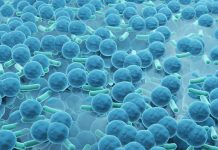
Bacteria killing material creates antimicrobial coating
A new antimicrobial coating has trialled a paint that can effectively kill bacteria and viruses, including difficult to kill species.
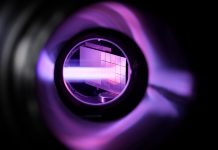
Creating a box for the Sun with fusion reactors
Fusion reactors hold great promise as a future energy source, but can we design materials to withstand the power of such an artificial star?