


Innovation News Network brings you the latest research and innovation news from the fields of science, environment, energy, critical raw materials, technology, and electric vehicles.

The Université de Sherbrooke’s interdisciplinary approach for studying cancer in all its complexity
The Université de Sherbrooke's IRCUS is developing innovative interdisciplinary research to reduce the impact of cancer on affected people.

UK’s ban on single-use vapes will help reach circular economy goals
The UK has laid new legislation to ban the sale of single-use vapes from 1 June 2025, Circular Economy Minister Mary Creagh has confirmed.

Strengthening Canadian research and innovation on the world stage
Canada's association to Horizon Europe will drive research and innovation in Canada and beyond. Read more here.

Can the bulk photovoltaic effect advance better solar cells?
Researchers have explored the bulk photovoltaic effect in a promising material for next-generation solar cell harvesting technologies.

Floor swabbing could help prevent COVID-19 outbreaks in hospitals
New research discovers how we can monitor, predict, and prevent COVID-19 outbreaks, especially among vulnerable groups.

Electrochemical impedance spectroscopy method boosts EV battery monitoring
KAIST has developed electrochemical impedance spectroscopy technology that enhances the diagnosis and monitoring of EV batteries.

The touch of germs: Contaminated surfaces and their risk of infection
Spectrum Blue explores the contamination of surfaces and the risk they pose for spreading infection. Read more.

Cutting-edge transport projects receive £1.4m to encourage clean travel
Innovative ideas could win up to £45,000 in funding to contribute to the government’s aim of efficient and clean travel networks.
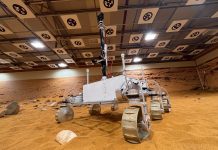
Opteran and Airbus team up to enhance navigation of Mars rovers with nature-inspired software
Opteran and Airbus are testing revolutionary neuromorphic software in Mars rovers, enhancing their autonomy and navigation.

Quantum entanglement decoded: How ultrafast events unfold in attoseconds
Researchers from TU Wien have developed advanced computer simulations that reveal how quantum entanglement occurs within attoseconds.