


Innovation News Network brings you the latest research and innovation news from the fields of science, environment, energy, critical raw materials, technology, and electric vehicles.

EU launches strategy to strengthen research and technology infrastructures
The European Commission has unveiled a new strategy designed to reinforce research and technology infrastructures. Find out more.

Nofence secures £26m Series B funding to expand virtual fencing tech
Nofence raises £26M to expand its virtual fencing tech, driving sustainable livestock management across the UK, Europe, and North America.

Nuclear-powered ammonia production spearheaded by US university
Learn how Utah State University and US National Labs are poised to transform ammonia production with SMR technology.

Leading Europe’s digital connectivity journey
Discover how the EU is working to boost digital connectivity in Europe and meet the goals of the Digital Decade.

UK invests in 6 satellite technology projects to tackle net zero
Satellite technology is set to play a bigger role in everyday life as the UK backs six innovative projects with £1.5m in new funding.
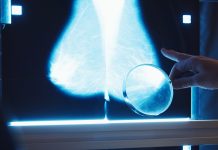
Sona: The importance of breast density monitoring
Dan Sarno, Founder and CTO at Sona, introduces the mobile breast density monitoring device aiming to enhance breast cancer detection.

EU Data Act comes into force: A new era of data control and innovation
The EU Data Act is now in force, giving users control of connected device data and boosting innovation, competition, and fairness.

UK and US strike landmark deal to build new nuclear power stations
UK and US sign landmark deal to accelerate new nuclear power stations, creating jobs, boosting growth and strengthening energy security.

Cerakote: The highest performing PFAS-free thin film ceramic coating
The Cerakote F-Series offers high-performance PFAS-free coatings known for their durability and resistance, ideal for various applications.

New neutron spin echo spectrometer (ν-NSE) at the NIST Center for Neutron Research
An international collaboration has led to the development of a next-generation neutron spin echo spectrometer at NIST. Find out more.