


Innovation News Network brings you the latest research and innovation news from the fields of science, environment, energy, critical raw materials, technology, and electric vehicles.

Scientists find evidence of pristine quantum criticality
Researchers investigating pristine quantum criticality in topological materials have discovered one of the greatest examples detected so far.

Discussing the global importance of the aquaculture industry
Dr Adam Hughes from SAMS discusses how aquaculture is evolving and the industry’s potential to contribute positively to the environment.

Rubisco enzyme investigation may improve crop yields
A novel investigation into the Rubisco enzyme that is vital in plant photosynthesis may lead to methods that enhance crop yields and growth.

UK companies unite to build innovative beam-hopping satellite
A consortium of UK space technology companies is developing a new beam-hopping satellite that will enable satellites to shift which part of the world they cover.

Dwarf galaxies had simultaneous ‘baby boom’ of new stars
In a groundbreaking discovery that challenges current notions of how galaxies grow, 36 dwarf galaxies light-years apart have had a simultaneous ‘baby boom’ of new stars.
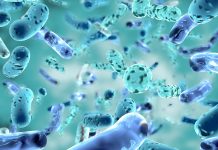
Investigating the behaviour of cable bacteria with CEM
The team at the Center for Electromicrobiology explain how they are directing their research to unravel the functions of cable bacteria.

Shifting policy towards a zero emission transport sector
Caterina Brandmayr, Green Alliance’s Head of Climate Policy, discusses what is needed from the policy sphere to foster a zero emission transport sector.

Plasma jets reveal magnetic fields in galaxy clusters
Researchers at Nagoya University have discovered plasma jets interacting with magnetic fields in a gigantic galaxy cluster 600 million light-years away, utilising radio telescopes and supercomputer simulations.

Researchers create the world’s fastest ADC microchip technology
A team of researchers has manufactured the world’s fastest and most power-efficient analogue-to-digital converter (ADC) microchip.
Sustainable Materials Research and Technologies
The SMaRT research group at the KTH Royal Institute of Technology runs a comprehensive programme for the development sustainable materials and technologies, including energy...