


Innovation News Network brings you the latest research and innovation news from the fields of science, environment, energy, critical raw materials, technology, and electric vehicles.
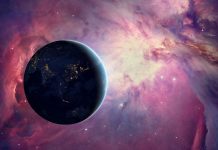
Novel observation method shows promise in imaging Earth-like planets
New technique for reducing light interference during telescope observations enables imaging of Earth-like planets in nearby solar systems.

Intelligent turbines to produce green energy from tidal waterpower
Engineers from the University Otto von Guericke of Magdeburg are developing intelligent turbines for green energy from tidal waterpower.
Particle physics confronts its data legacy
Professor Michael Hildreth from the University of Notre Dame argues that while efforts are underway to ensure that the results of particle physics experiments (and the knowledge behind them) are preserved, the future will ultimately require a new way of working.
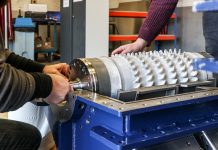
Renewable fuels and the Flameless Ceramic Turbine: towards the net-zero future
Toby Gill, CEO of Intelligent Power Generation, explains how the Flameless Ceramic Turbine can unlock the roadmap to renewable fuels and enable businesses to end their reliance on the diesel generator.

Towards a precise measurement of the CP violation phase
Dr Vincent Tisserand, Research Director at Clermont Ferrand Physics Laboratory (LPC PLUS), looks at the past, present, and future of efforts to make a precise measurement of the CP violation phase to challenge the Standard Model of Particle Physics.

4D material could help scientists bioengineer organs
New hydrogel-based 4D material changes shape in response to psychological stimuli and could be used to bioengineer organs.
As published in the journal Advanced Functional...
Detecting time dilation with anti-neutrinos and atomic clocks
Australian physicists are currently using anti-neutrinos and atomic clocks to understand time dilation and the nature of time itself.
Tackling the big data challenge of particle physics experiments
A team of UK scientists are developing software to utilise big data sets collected from particle physics experiments, particularly those at the Large Hadron Collider.
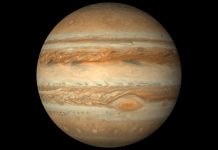
Juno space probe detects extremely bright meteoroid explosion
Researchers have identified a bright flash, detected by the Juno space probe above Jupiter's clouds, as a bolide, a meteoroid explosion.
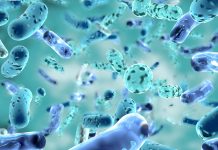
How climate warming influences the stability of microbial networks
A new study analyses the impacts of climate warming on the complexity and stability of microbial networks.