


Innovation News Network brings you the latest research and innovation news from the fields of science, environment, energy, critical raw materials, technology, and electric vehicles.

UK-US trade deal cuts tariffs for UK auto and aerospace sectors
Automotive and aerospace manufacturers will benefit from huge tariff reductions when exporting to the US, helping save thousands of jobs.
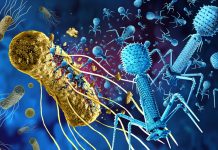
Southampton project invites public to battle AMR with phage therapy
Southampton scientists are enlisting the public to help discover phages in a phage therapy initiative to combat the global threat of AMR.

How effective is AI-enhanced quality assurance in manufacturing?
AI-enhanced quality assurance revolutionises manufacturing through defect detection, automated processes and predictive maintenance.

The role of Earth observation in environmental protection
Learn how Earth observation uses satellites to track environmental change, protect forests, oceans, and biodiversity on a global scale.

Charting the expansion of the Universe with gravitational waves
Ghent University is exploring how gravitational-wave observations are paving the way toward a deeper understanding of the cosmos.
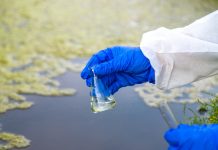
Water quality under pressure: Climate, pollution, and the fight for clean rivers and lakes
Explore the growing threats to water quality from climate change and pollution, and discover nature-based solutions and success stories.
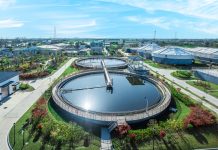
The future of water treatment: Innovations in filtration and purification
Discover how innovations in filtration and purification are emerging as critical responses to growing global water challenges.

World Bank and IAEA join forces to boost nuclear power in developing countries
World Bank and IAEA partner to support safe, sustainable nuclear power in developing countries, aiming to boost energy access.

ORNL current collector innovation enables 10-minute EV charging
A new ORNL current collector design enables faster EV charging, higher energy density, and reduced reliance on critical metals.

Bacteria unearthed in Italian soil offer hope against PFAS chemicals
Scientists from Italy's Catholic University of Piacenza have discovered a group of soil-dwelling bacteria capable of breaking down PFAS.