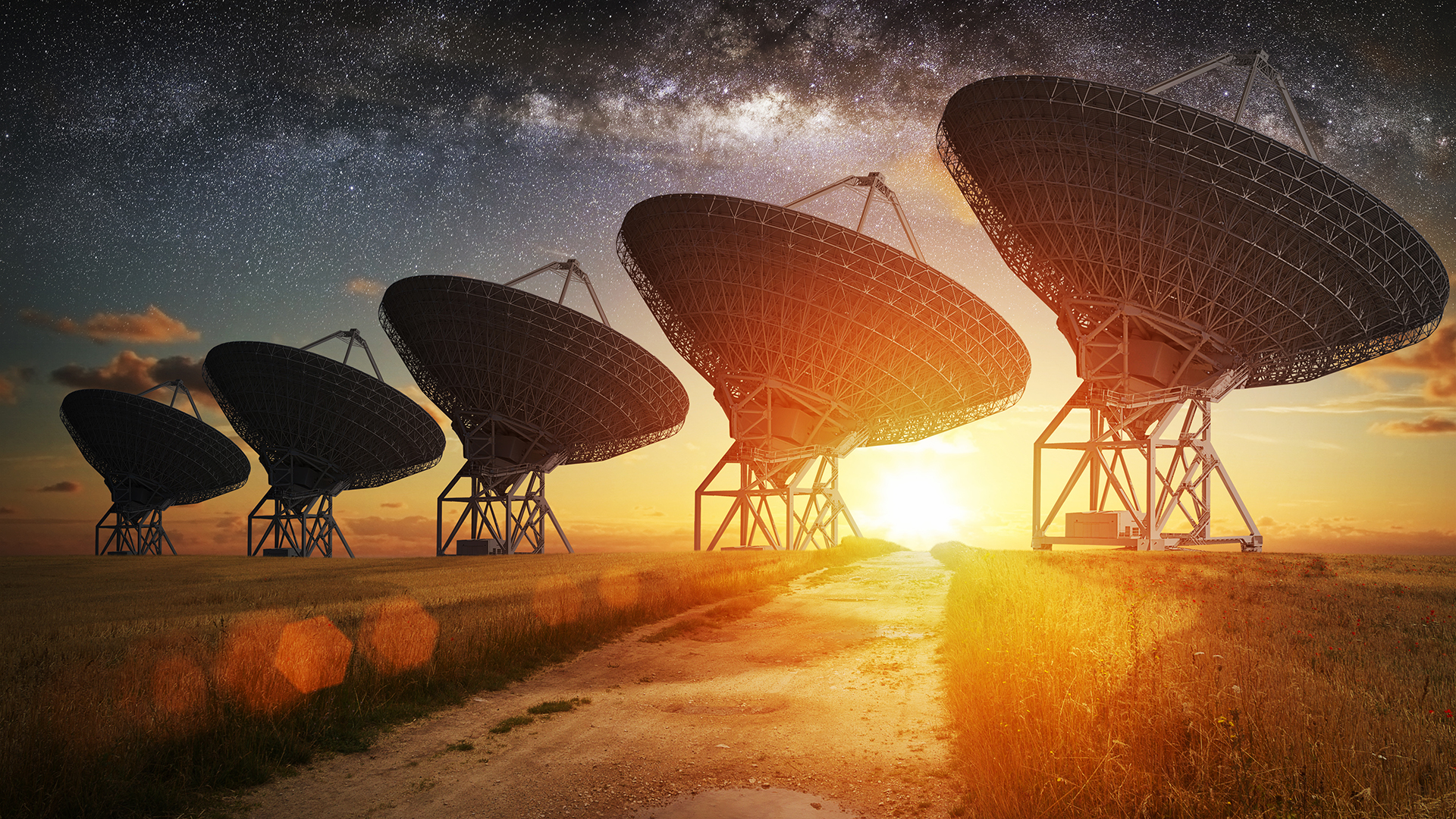
The Center for Multimessenger Astrophysics at the University of Mississippi looks at electromagnetic radiation, listens to gravitational waves, and interacts with high energy particles the cosmos sends that reveal its deepest secrets.
The UM Center for Multimessenger Astrophysics (UMCMA) was founded within the Department of Physics and Astronomy in 2019.
The Center brings together a long-established high-energy physics group, a strong team studying gravitational waves, and a dynamic cohort of electromagnetic radiation astrophysicists.
These diverse disciplines are combined to bring a comprehensive Multimessenger approach to understanding the most cataclysmic cosmic events and most powerful processes in nature.
Gravitational waves
At the UMCMA, gravity is studied using both theoretical and experimental approaches. Mathematical modelling of black hole dynamics is used to identify means of testing Einstein’s General Relativity and other competing theories of gravity.
The predictions are compared with experimental observations of gravitational wave signals produced by sources such as neutron star and black hole binary systems. These measurements are made in collaboration with the LIGO and LISA gravitational wave observatories.
Electromagnetic radiation
The Center’s observational and theoretical electromagnetic astrophysics is focused on the study of blazars, which are jets of high-energy plasma streaming from supermassive black holes far outside our galaxy.
The Blazar Group studies span the full range of the electromagnetic spectrum from radio waves to gamma rays and a wide range of cosmic distances from sub-parsec to kilo-parsec scales. The Blazar team collaborates with several other institutions and telescope facilities worldwide.
High-energy particles
The experimental high-energy physics group has a long record of work ranging from fixed target flavour physics to collider-based electroweak studies to storage ring precision measurements.
More recently, the group established a neutrino programme on the NOvA and DUNE experiments, including efforts to observe astrophysical neutrinos from a core-collapse supernova producing a neutron star or black hole.
Somewhat stretching the definition of Multimessenger astrophysics, the group also searches for CPT and Lorentz Invariance Violation and dark matter in Muon g-2 data to elucidate the fundamental structure of spacetime.
About the UMCMA
The Center was established to provide a coordinated and collaborative approach to study the most extreme events in the cosmos. In doing so, the UMCMA will help to build a comprehensive understanding of how the Universe works at the most fundamental level.
To further that mission, the UMCMA is structured to work towards a set of primary goals: increase the competitiveness of our researchers’ external funding proposals, promote the growth of UMCMA membership in numbers and quality of educational and professional experience, and serve the community and state that supports our Center.
In its first five years of operation, the UMCMA has quintupled the level of its external funding, including a Sloan Fellowship and NSF CAREER and EPSCoR awards, due in significant part to the infrastructure and support the Center provides to its researchers. A center is a place to which people are attracted.
The Center’s membership has grown to include six faculty, three postdoctoral researchers, fourteen graduate students, and several undergraduate students, with nine graduate students earning their degrees within the last year.
UMCMA regularly hosts colleagues for short- and long-term collaborative visits, as well as regional and international conferences. A center is also a place from which things can radiate in all directions. A key mission of the UMCMA is to serve others, particularly our neighbours in the state of Mississippi, through community engagement. The Center members actively promote and share their research throughout the state and partner with groups to help them achieve their educational and community goals.
AREAS OF EXPERTISE
- Experimental and theoretical gravity
- Experimental high-energy physics
- Observational and theoretical electromagnetic astrophysics
- Computational modelling and simulation
- High throughput computing
RESEARCH INTERESTS
- General relativity and other gravity theory
- Black hole and neutron star dynamics
- Gravitational waves
- Blazars from supermassive black holes
- Astrophysical neutrino production and propagation
- Nature and structure of spacetime