For decades, scientists have chased the promise of fusion power: a clean, virtually limitless energy source that could transform the global power grid.
But controlling the superheated plasma inside a fusion reactor remains one of the toughest scientific challenges of our time. A single faulty sensor or missing data stream can disrupt experiments, slow progress, and raise costs.
Now, a new artificial intelligence system known as Diag2Diag may offer a breakthrough. By generating detailed, synthetic sensor data in real-time, researchers can see more of the plasma than ever before – paving the way for smarter, more reliable fusion systems that could one day power our world around the clock.
How Diag2Diag strengthens fusion systems
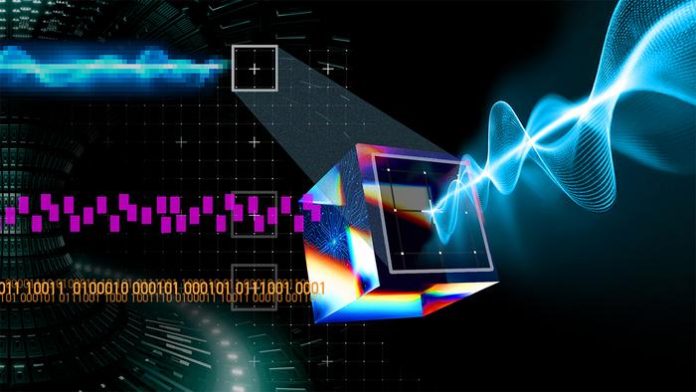
Developed through an international collaboration led by Princeton University and the U.S. Department of Energy’s Princeton Plasma Physics Laboratory (PPPL), Diag2Diag analyses input from multiple plasma diagnostics and generates new, higher-resolution data streams.
By doing so, it increases the robustness of control while reducing costs and complexity – two critical hurdles in commercial fusion development.
For today’s experimental reactors, a faulty sensor may only mean lost time. But in tomorrow’s commercial fusion systems, downtime is unacceptable.
Continuous, 24/7 operation will be essential for fusion to become a major energy source, and AI-driven redundancy like Diag2Diag could make this possible.
Diagnosing the plasma pedestal
Fusion devices known as tokamaks rely on a diagnostic method called Thomson scattering to measure electron density and temperature.
While fast, this diagnostic is not quick enough to capture sudden plasma instabilities. Compounding the challenge, it struggles to monitor the plasma’s outer layer – the pedestal – where performance is most sensitive.
Diag2Diag effectively enhances this diagnostic without requiring expensive new hardware. Producing detailed synthetic data, it provides researchers with a clearer view of the pedestal, enabling them to fine-tune plasma stability and maximise energy output.
This is especially valuable as future reactors are expected to operate with fewer built-in diagnostics, both to save space and reduce maintenance costs.
Toward compact, reliable fusion reactors
One of the biggest advantages of Diag2Diag is that it supports the design of smaller, more economical fusion systems.
Experimental machines are currently filled with diagnostics, but commercial versions must be leaner and more reliable. AI-driven data reconstruction means fewer sensors are needed, reducing complexity and freeing up space for energy-producing components.
This approach could lower operational costs, simplify maintenance, and make reactors less vulnerable to errors. In effect, Diag2Diag gives scientists the benefits of extra diagnostics without physically adding them.
Unlocking new insights into plasma stability
Beyond sensor replacement, Diag2Diag has already provided critical support for fusion science. One of the toughest challenges in plasma physics is controlling edge-localised modes (ELMs) – intense bursts of energy that can damage a reactor’s inner walls.
A leading method to suppress ELMs involves applying resonant magnetic perturbations (RMPs), small adjustments to the magnetic fields that confine the plasma.
Until now, scientists lacked the data to confirm exactly how RMPs stabilise the plasma edge. With Diag2Diag, researchers observed detailed evidence that RMPs create ‘magnetic islands’ in the pedestal, flattening both temperature and density.
This finding strongly supports a key theory for ELM suppression, opening new pathways toward safer, more stable reactors.
Broader impact beyond fusion systems
Although designed for fusion energy, the potential of Diag2Diag extends far wider.
The ability to reconstruct degraded or missing data could improve reliability in fields as diverse as spacecraft monitoring, robotic surgery, and other high-risk environments.
In each case, the AI acts as a safeguard, ensuring that critical systems continue to function even when sensors fail.
A future powered by AI-enhanced fusion
The fusion community sees Diag2Diag as a step toward making fusion energy practical and sustainable.
By replacing and enhancing diagnostics, lowering system costs, and advancing plasma stability research, this AI tool could accelerate the transition from experimental reactors to commercial power plants.
Fusion promises clean, virtually limitless energy. But for it to deliver on that promise, it must operate reliably and economically.
With innovations like Diag2Diag, AI is poised to play a central role in achieving that goal, turning futuristic dreams of fusion systems into a viable cornerstone of tomorrow’s power grid.