Particle physics stands on the brink of a transformative era.
As next-generation colliders promise to smash particles together at unprecedented energies, researchers face a daunting challenge: how to track and analyse the vast storms of subatomic debris these collisions will unleash.
To meet this need, scientists are turning to quantum sensors – a revolutionary technology that could redefine how we explore the fundamental forces of nature, search for dark matter, and probe the origins of space and time.
New detectors are essential
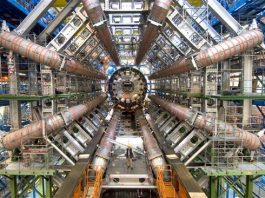
Modern particle accelerators like the Large Hadron Collider (LHC) have already expanded our understanding of the Universe, but future machines will operate at even higher energies and intensities.
These advanced colliders could produce entirely new particles not predicted by the current Standard Model of physics.
However, with millions of particle interactions happening every second, traditional detectors may struggle to keep pace.
Researchers must now develop technologies capable of sifting through this chaotic data with far greater precision than ever before.
Quantum sensors: A breakthrough in detection technology
In response to this growing need, an international team of scientists from Fermilab, Caltech, NASA’s Jet Propulsion Laboratory (JPL), the University of Geneva, and Universidad Santa María have successfully demonstrated a groundbreaking approach utilising quantum sensors.
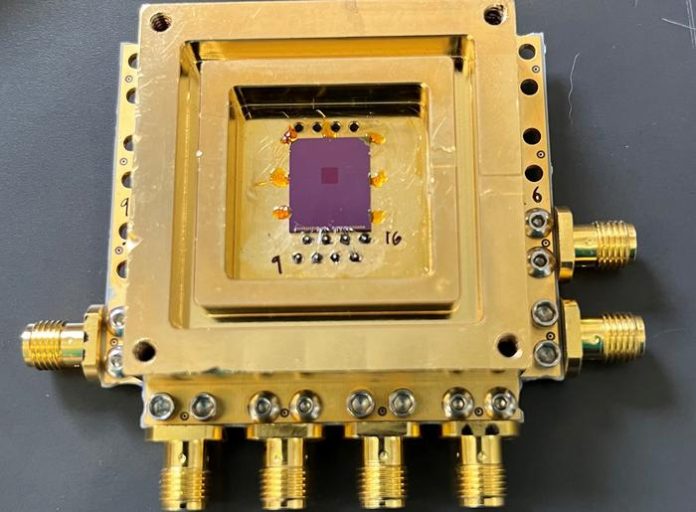
Specifically, the team tested a new class of devices known as superconducting microwire single-photon detectors (SMSPDs).
During experiments at Fermilab, these quantum sensors were exposed to beams of high-energy protons, electrons, and pions.
The results were remarkable – SMSPDs detected individual particles with unprecedented time and spatial resolution, outperforming conventional detection technologies.
Maria Spiropulu, the Shang-Yi Ch’en Professor of Physics at Caltech, explained: “In the next 20 to 30 years, we will see a paradigm shift in particle colliders as they become more powerful in energy and intensity.
“And that means we need more precise detectors. This is why we are developing the quantum technology today.
“We want to include quantum sensing in our toolbox to optimise next-generation searches for new particles and dark matter and to study the origins of space and time.”
What sets quantum sensors apart?
Quantum sensors such as SMSPDs offer a powerful combination of features:
- 4D tracking: SMSPDs provide simultaneous precision in both space and time. This dual capability is critical for tracing the trajectories of individual particles amid the chaotic aftermath of a collision.
- Charged particle detection: For the first time, quantum sensors have been proven capable of efficiently detecting charged particles – a fundamental requirement for particle physics experiments.
Traditional detectors often force scientists to choose between better spatial or temporal resolution. SMSPDs eliminate this trade-off, offering high accuracy across both dimensions at once.
This innovation could dramatically improve the ability to identify rare or exotic particles in complex events.
Building on existing quantum technologies
The success of SMSPDs builds on earlier breakthroughs with superconducting nanowire single-photon detectors (SNSPDs), which have already found applications in fields like quantum networking and space-based optical communications.
At JPL, SNSPDs have enabled projects like the Deep Space Optical Communications experiment, which transmitted high-definition data across vast distances in space using laser technology.
Meanwhile, initiatives such as the Intelligent Quantum Networks and Technologies (INQNET) programme founded by Caltech and AT&T have employed SNSPDs to achieve quantum teleportation of information across long distances, advancing the dream of a quantum internet.
By adapting these quantum technologies for particle physics, researchers are opening new frontiers in fundamental science.
Next-generation colliders and quantum sensors
Looking forward, the role of quantum sensors will be critical in future experiments at proposed facilities like the Future Circular Collider (FCC) and next-generation muon colliders.
As particle collisions become more intense, producing ever more complex particle showers, the ability to precisely track millions of interactions per second will be essential.
With quantum sensors leading the way, the next wave of discoveries about our Universe could be closer than ever before.