Discover how manufacturing operations are evolving from basic automation to smart, self-learning systems with fully-fledged smart factories.
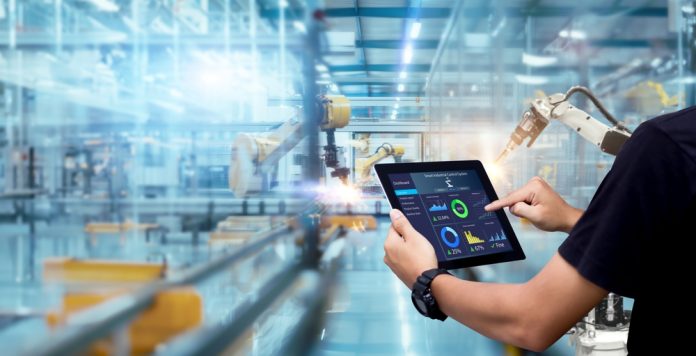
The manufacturing sector is undergoing a profound transformation—from traditional automation to intelligent, adaptive, cyber-physical systems. The concept of smart factories embodies this shift, where machines, sensors, and systems communicate and learn autonomously.

According to James et al. (2025), smart factories integrate AI, IoT, and advanced control systems to create a self-aware production environment. These environments continually optimise operations by learning from real-time data, moving far beyond static automation.
How AI is helping factories make faster, better decisions
AI in smart factory manufacturing is used for:
- Real-time analytics to guide decisions on the production line
- Quality prediction using machine learning
- Automated scheduling and rescheduling based on demand
Islam et al. (2025) describe how AI models integrated with digital supply networks enable factories to predict demand spikes, manage bottlenecks, and adapt without human intervention.
A recent study in Applied Energy also highlights AI’s role in optimising energy management in smart factories, reducing both emissions and costs.
Connected machines and sensors improve efficiency on the factory floor
The Industrial Internet of Things (IIoT) forms the digital nervous system of smart factories. With embedded sensors on every asset, factories:
- Monitor machine health in real-time
- Collect granular production metrics
- Enable self-regulation and inter-device communication
Gheorghita & Abaza (2025) demonstrate how connected CNC machinery in turning operations improved yield and reduced waste by over 30%, thanks to continuous sensor feedback loops.
Using digital twins and predictive maintenance to reduce downtime and costs
Digital twins—virtual replicas of physical systems—allow manufacturers to:
- Simulate performance under varying conditions
- Predict failure points before breakdowns
- Implement data-driven preventive maintenance
Research from Rajkolhe & Bhagwat (2024) found that factories using digital twins and AI-based predictive maintenance saw up to 40% reduction in unplanned downtime.
These virtual systems are increasingly tied to AI-driven control loops, enabling factories to adjust operations proactively.
Smart technologies support and enhance the roles of factory workers
Contrary to fears of job displacement, smart factory tech is enhancing human roles in several ways:
- AI systems assist technicians in diagnosing faults faster
- Augmented reality (AR) tools support training and assembly
- Collaborative robots (cobots) reduce physical strain
Several studies emphasise human-centric Industry 5.0 principles, where workers are empowered by intelligent interfaces, not replaced by them.
Cybersecurity is critical for protecting smart factories
As smart factories become more data-rich and hyperconnected, cyber threats become a critical concern. A breach could paralyse operations or lead to data theft.
A study by Mitra et al. explores AI-enhanced intrusion detection systems for IIoT networks, capable of identifying anomalies before malicious access. Their research stresses:
- Multi-layered defences
- AI-driven threat modelling
- Secure edge computing
- Cyber resilience is now a foundational requirement for any smart manufacturing implementation