Saxony is betting big on the future of clean power.
With the launch of SAXFUSION, the German state has established its first-ever competence network dedicated to fusion energy – a technology often described as the ‘holy grail’ of sustainable power generation.
Coordinated by the Helmholtz-Zentrum Dresden-Rossendorf (HZDR) and co-led by the Fraunhofer Institute for Material and Beam Technology (IWS), the new alliance brings together cutting-edge research institutions, industry partners, and international projects to accelerate the path toward a clean and reliable energy source.
A new era for fusion energy in Saxony
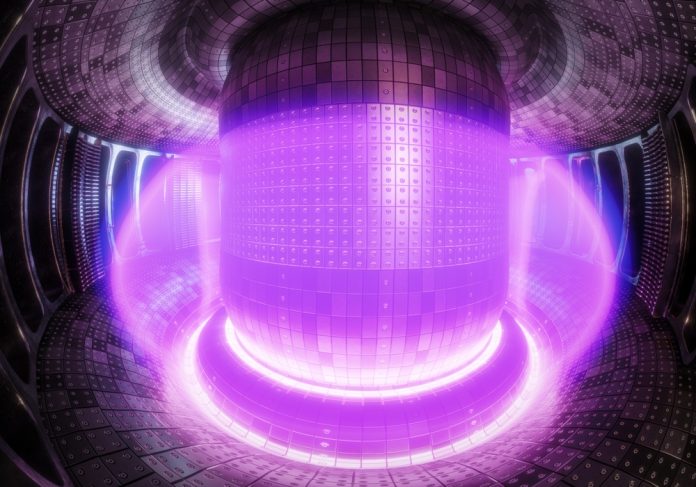
Fusion energy, the process that powers the sun, promises an almost limitless and carbon-free source of electricity.
By fusing atomic nuclei at extreme temperatures, scientists can release vast amounts of energy without producing greenhouse gases or long-lived radioactive waste.
Yet, despite decades of research and major milestones from projects like ITER in France or Wendelstein 7-X in Germany, the technology still faces critical challenges – particularly around plasma control, material durability, and energy efficiency.
This is where SAXFUSION steps in. The network’s goal is to turn Saxony into a central hub for fusion energy research and development, helping Germany and Europe build the expertise needed to move from experimental physics to commercial-scale power plants.
Over the next three years, SAXFUSION will map existing know-how, strengthen partnerships, and develop new capabilities in four key areas: laser and optical technologies, fusion fuel capsule development, reactor materials research, and advanced simulations and data analysis.
Building bridges between science and industry
SAXFUSION isn’t just another research consortium – it’s a bridge between scientific discovery and industrial application.
The initiative aims to serve as a central point of contact for companies, universities, and government bodies interested in fusion technology and its economic potential.
By connecting regional strengths in high-tech manufacturing, materials science, and digital engineering, Saxony hopes to position itself at the forefront of the global fusion race.
The project’s co-leader, Fraunhofer IWS, plays a crucial role in translating scientific progress into practical innovation.
Known for its expertise in advanced manufacturing and materials processing, the institute will focus on technology transfer, ensuring that the breakthroughs made in laboratories can be scaled and adopted by industry.
This approach will particularly benefit small and medium-sized enterprises (SMEs), helping them access new markets and integrate into the emerging fusion energy supply chain.
HZDR takes the helm
Strategic management and coordination of SAXFUSION are handled by the HZDR.
Through its Center for Advanced Systems Understanding (CASUS) in Görlitz and the Institute of Radiation Physics in Dresden, HZDR contributes decades of experience in plasma physics, high-power lasers, and computational modelling.
The centre’s researchers are already known for their pioneering work in simulating plasma behaviour and testing materials that can withstand the extreme conditions of a fusion reactor.
HZDR’s involvement also ensures strong links to major European and international projects. SAXFUSION connects Saxony directly to world-leading research infrastructures such as the European XFEL, the Extreme Light Infrastructure, and international fusion centres like ITER and the Lawrence Livermore National Laboratory (LLNL) in the United States.
These partnerships will allow Saxony’s researchers to collaborate on global challenges while showcasing their contributions on an international stage.
Supporting Germany’s national fusion agenda
SAXFUSION supports the broader German Government strategy to accelerate the commercial deployment of fusion energy.
The Federal Ministry of Research, Technology, and Space recently unveiled an action plan to strengthen the fusion ecosystem – from building large-scale research infrastructure to developing a full industrial value chain and training the next generation of fusion experts. SAXFUSION fits directly into this vision by combining academic research with industrial innovation.
SAXFUSION is funded by the European Regional Development Fund (ERDF) and by public resources based on the budget approved by the Saxon State Parliament.
The ERDF contributes to economic, social, and territorial cohesion by helping to reduce regional disparities within the European Union. For Saxony, this offers a unique opportunity to reinvent itself as a clean-energy powerhouse.
A vision for a sustainable future
By uniting academia, industry, and international partners under one banner, SAXFUSION marks a turning point for Saxony’s scientific landscape.
The network’s collaborative model ensures that breakthroughs in plasma research, laser technology, and materials science can translate into real-world energy solutions.
While the road to practical fusion power remains challenging, SAXFUSION positions Saxony – and Germany – at the forefront of a transformative global effort.
If successful, the initiative could do more than advance science; it could redefine how Europe generates its energy – cleanly, safely, and sustainably.