Namibia Critical Metals, alongside its strategic partner JOGMEC, is rapidly accelerating the development of its flagship Lofdal heavy rare earth deposit in Namibia.
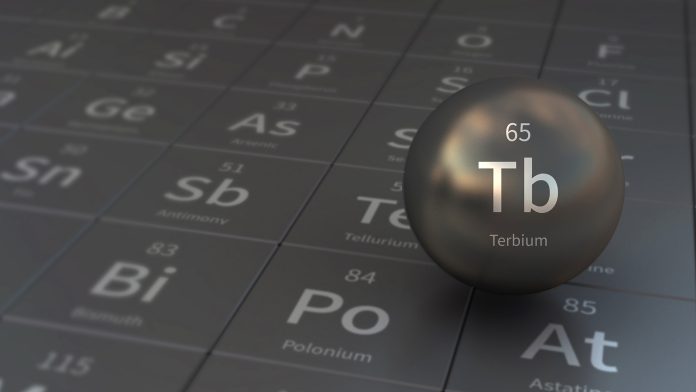
Namibia Critical Metals is developing the Tier-1 Heavy Rare Earth Project, Lofdal, which is a globally significant deposit of the heavy rare earth metals dysprosium and terbium.
Lofdal is the most advanced project in the company’s portfolio, with a 43-101 mineral resource estimate established in 2012, updated in 2021 and 2024, and a Preliminary Economic Assessment completed in 2014 and updated in 2022.
On 27 January 2020, the Company announced that it had signed an agreement with the Japan Organization for Metals and Energy Security (JOGMEC) to jointly explore, develop, exploit, refine and/or distribute mineral products from Lofdal.
This article examines the potential of the Lofdal deposit for rare earths and the significance of the JOGMEC partnership in ensuring a stable supply chain.
Why is Lofdal significant and how does it contribute to a steady supply of rare earths?
Most rare earth deposits worldwide are dominated by light rare earths such as cerium, lanthanum, and neodymium. Lofdal stands out because it is uniquely enriched in heavy rare earth elements (HREEs), particularly dysprosium and terbium. These two metals are among the most critical for high-performance permanent magnets, which are indispensable in electric vehicles, wind turbines, and defence systems.
The scarcity of HREE deposits makes Lofdal one of the few large-scale potential suppliers outside China. The project’s unusually high dysprosium-to-terbium ratio is another strategic advantage, as these elements are among the highest-value rare earths and are officially classified as critical by the EU, the United States, and Japan.
Equally important is Namibia’s role as a mining-friendly jurisdiction. While more than 90% of global HREE supply currently comes from China – where exports have been restricted in the past – Lofdal represents a geopolitically secure alternative in Africa.
As the project advances, Lofdal is expected to play a significant role in diversifying global supply chains. A new, non-Chinese source of HREEs will help reduce dependency on a single country, while providing downstream security for industries that rely heavily on dysprosium and terbium.
With large-scale tonnage and high-grade HREE zones already demonstrated, Lofdal has the potential for multi-decade production. Ongoing drilling and feasibility work are designed to scale resources further, ensuring the deposit can meet long-term demand growth. Namibia’s established infrastructure and track record in mining uranium and lithium further support the project’s stability.
What is the current development stage for the Lofdal deposit (e.g. licenses, resource estimates, feasibility studies), and what are the upcoming milestones?
The Lofdal Project is fully permitted, holding a 25-year mining license and possessing all necessary environmental permits. NCMI is currently finalising a Pre-Feasibility Study, which it expects to deliver in late November 2025. The company then plans to proceed immediately with delivering a Definitive Feasibility Study in 2026.
What role does the joint venture with JOGMEC play in developing the Lofdal deposit, and why might that partnership be significant for supply chains?
The Lofdal project is being advanced through a joint venture between Namibia Critical Metals and JOGMEC. This partnership is not simply about financing a mine – it is about securing and stabilising global supply chains for critical minerals.
JOGMEC contributes phased funding for exploration and development, which reduces financial risk for NCMI and ensures steady progress through drilling, feasibility studies, and eventually, mine construction. Beyond capital, JOGMEC provides technical expertise in geology, metallurgy, and processing – areas that are particularly complex in heavy rare earth projects.
The involvement of a Japanese government-backed entity also brings geopolitical weight. It provides a guaranteed offtake pathway for dysprosium and terbium into Japan, one of the world’s largest consumers of rare earths for EVs and advanced manufacturing.
This, in turn, enhances Namibia’s role as a reliable supplier to allied nations seeking to diversify away from Chinese dominance.
A model for global cooperation
For supply chains, the JOGMEC partnership underscores the importance of diversification. With nearly 90% of the world’s dysprosium and terbium sourced from China, Lofdal represents one of the few non-Chinese heavy rare earth projects with a clear route to market.
The joint venture ensures Japan has a direct, long-term supply while also validating the project for other potential offtakers and financiers in Europe and North America.
This model, linking a resource-rich country with a project developer and a major industrial nation, could serve as a blueprint for future collaborations in securing critical minerals for the clean energy transition.
What’s next for the partnership between Namibia Critical Metals and JOGMEC?
The business model of JOGMEC involves investing in early-stage exploration and development projects to identify strategically important resources for the Japanese industry and mitigate risk. They then bring in Japanese industrial companies to ultimately take over all or a portion of their interest in the projects.
Upon completion of the PFS, JOGMEC and NCMI plan to identify a potential Japanese Industrial partner to participate in the project. This is a significant milestone that could unlock rapid acceleration of development funding from the Japanese government, enabling Lofdal to move into production and secure an exclusive supply of heavy rare earths outside of China.