In a major stride toward securing Britain’s energy independence, Prime Minister Keir Starmer and Czech Prime Minister Petr Fiala have signed a historic nuclear agreement.
The deal will kickstart a new era of cooperation in nuclear energy, focusing on the development and export of small modular reactors (SMRs) across Europe.
This strategic partnership positions the UK and Czechia at the forefront of the burgeoning SMR industry – an emerging clean energy technology with the potential to reshape global energy production.
The agreement will also open new doors for investment and collaboration between British and Czech industries, bringing substantial economic benefits and thousands of high-skilled jobs to both nations.
Starmer commented: “This agreement is about delivering for Britain – cleaner energy, better jobs, and greater security.
“By working with our Czech partners on small modular reactors, we’re backing British engineering, strengthening our industrial base, and putting the UK in a leading position to export the technologies of the future.”
Fuelling the energy transition with SMRs
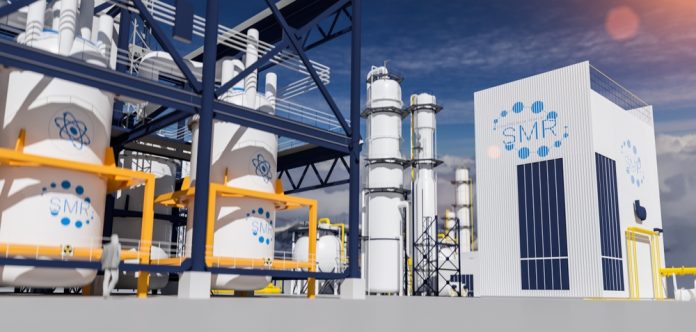
Small modular reactors are a new class of nuclear power technology that offers a compact, cost-effective alternative to traditional large-scale nuclear plants.
As the name suggests, these reactors are smaller in size, typically generating between 50 and 300 megawatts of electricity per unit, and are modular in design, allowing them to be manufactured off-site and assembled on location.
Their flexibility means SMRs can be deployed in a variety of locations, including remote areas and existing industrial sites, and scaled up as needed.
They also boast enhanced safety features and faster build times. Crucially, as the technology matures and production scales up, costs are expected to fall significantly.
According to the International Energy Agency (IEA), the global SMR market could grow to nearly £500bn by 2050.
This new UK-Czech collaboration places both nations in a prime position to benefit economically and strategically from this energy revolution.
Rolls-Royce SMR takes centre stage
Today’s agreement will build on an existing partnership between Rolls-Royce SMR and Czech energy giant ČEZ.
ČEZ acquired a 20% stake in the British SMR developer last year, signalling strong mutual confidence in the technology and its potential deployment across Europe.
The UK’s pledge to support the delivery of up to six new reactors in Czechia could result in contracts worth billions of pounds for British industry.
These projects form part of a wider plan to export British-made SMRs to countries seeking clean, reliable alternatives to fossil fuels.
Rolls-Royce SMR was recently selected as the preferred bidder to partner with Great British Energy – Nuclear.
Subject to final approvals, this move is expected to unlock the next phase of the UK’s ‘golden age of nuclear.’
Powering homes, creating jobs
The UK Government has committed over £2.5bn to support the development and deployment of SMRs. Once operational, each SMR could power around half a million homes.
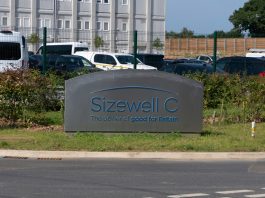
Together with new large-scale projects like Hinkley Point C and Sizewell C, SMRs will ensure that nuclear energy plays a central role in the UK’s clean energy transition.
The combined impact of these projects is expected to create over 3,000 skilled jobs in the UK’s industrial regions and deliver nuclear power to the grid on a scale not seen in over 50 years.
Great British Energy – Nuclear is aiming to select a site for its first SMR deployment later this year, with grid connection planned for the mid-2030s.
The future of British nuclear is bright
The UK-Czech agreement marks more than just a diplomatic handshake – it signals a bold vision for clean energy leadership, industrial revival, and global export potential.
With SMRs poised to become a cornerstone of modern nuclear energy, Britain is lighting the way in innovation and sustainability.
By investing in small modular reactors today, the UK is not only future-proofing its energy supply but also creating a new wave of opportunity for British workers, industry, and global influence.