The UK Government has unveiled a record-breaking £2.5bn investment to build a world-first prototype fusion power plant – a project that could transform the global energy landscape and position Britain as a leader in next-generation power.
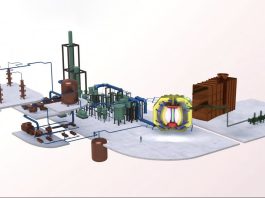
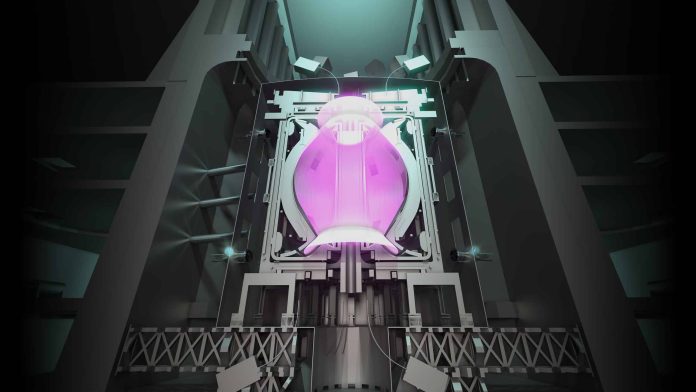
This landmark investment, announced by Chancellor Rachel Reeves, will see the construction of a cutting-edge fusion facility known as STEP (Spherical Tokamak for Energy Production) on the site of a former coal plant in Nottinghamshire.
With the potential to generate virtually limitless clean energy, STEP marks a historic turning point in the UK’s transition from fossil fuels to sustainable power, paving the way for a global fusion-powered future.
West Burton to lead global fusion energy efforts
STEP will rise from the site of the former West Burton A coal power station in Nottinghamshire, near Retford and Gainsborough.
The government selected this historic location in 2022, and the redevelopment marks a symbolic transformation from fossil fuels to future-proof energy solutions.
Expected to create more than 10,000 high-skilled jobs across construction, engineering, and operations, STEP will be a cornerstone of regional economic development and a beacon for technological innovation.
First operations are targeted for 2040, with the goal of producing at least 100MW of net energy.
How the STEP fusion power plant works
Unlike traditional power stations, fusion power plants generate electricity by fusing hydrogen isotopes – deuterium and tritium – under extreme heat exceeding 150 million degrees Celsius.
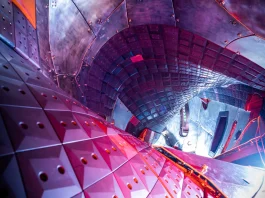
These reactions occur within a powerful magnetic confinement system, forming a superheated plasma inside a spherical tokamak reactor.
The resulting energy produces steam, which turns turbines in the same way as conventional plants, but without carbon emissions or long-lived radioactive waste.
Nottinghamshire’s green energy transformation
The East Midlands region, once dubbed “Megawatt Valley” for its coal-powered heritage, is undergoing a dramatic transformation.
Following the recent closure of the Ratcliffe-on-Soar coal station in 2024, West Burton’s rebirth as a fusion hub ensures the area retains its legacy as the heart of UK power generation — only now through green, renewable sources.
By repurposing a former coal site, the project underscores the UK’s commitment to transitioning away from carbon-intensive energy while supporting communities historically reliant on fossil fuel infrastructure.
Why the UK must lead in fusion energy
STEP represents more than a single engineering feat; it is the UK’s flagship programme for building a commercially viable fusion power plant that delivers net energy output, achieves fuel self-sufficiency, and enables scalable maintenance.
It is a crucial step toward the eventual global deployment of fusion power stations, offering the potential for unlimited clean energy.
Developing home-grown fusion capabilities is critical to ensuring national energy security and resilience.
As global energy demands grow and climate targets tighten, fusion offers a long-term, low-carbon alternative to fossil fuels and intermittent renewables.
Investing in fusion today will protect future generations from energy volatility and climate disruption.
Moreover, achieving leadership in this technology opens up the vast export potential for the UK in design, engineering, and intellectual property – cementing its status as a clean energy superpower on the world stage.
A vision for 2040 and beyond
With STEP poised to begin operations in 2040, the project represents a long-term commitment to pioneering a new era in energy.
The government’s record £2.5bn funding package is not only a vote of confidence in fusion but a resounding declaration that the UK intends to lead the global clean energy transformation – starting in the heart of Nottinghamshire.