The United States Department of Energy (DOE) has selected two companies – Westinghouse and Radiant – to lead reactor experiments at the soon-to-be-operational DOME (Demonstration of Microreactor Experiments) facility.
Starting as early as spring 2026 at Idaho National Laboratory, these tests will mark the world’s first fuelled microreactor experiments and could dramatically accelerate the commercial rollout of nuclear microreactor technologies.
The DOE’s initiative is a signal that the US is ready to lead the next generation of nuclear energy. As global demand for resilient, low-carbon power increases, microreactors provide a scalable and transportable solution to deliver reliable energy where and when it’s needed most.
Mike Goff, the Acting Assistant Secretary for Nuclear Energy, emphasised the significance of the technology: “Microreactors will play a big role in expanding the use of nuclear power in the United States.
“These DOME experiments will test new reactor designs that will be counted on in the future to reliably power our homes, military bases, and mission-critical infrastructure.”
Nuclear microreactors explained
Nuclear microreactors are compact, factory-built energy systems designed to generate between 1 and 20 megawatts of thermal energy.
What sets them apart is not their fuel or coolant, but their revolutionary design philosophy. Each nuclear microreactor is fully fabricated off-site and built for transport, allowing them to be delivered by truck, rail, or air to remote or rapidly changing locations.
Unlike traditional reactors, these systems are self-regulating and use passive safety mechanisms that reduce the risk of overheating or meltdown.
Once deployed, they can operate autonomously for up to 10 years without refuelling, making them ideal for powering off-grid communities, disaster zones, or isolated facilities such as mining operations and military bases.
With the flexibility to generate electricity or supply direct heat, microreactors are also being explored for desalination, hydrogen production, and integration with renewable microgrids. Their modular design and long core life make them a game-changer for decentralising clean power.
Westinghouse and Radiant to pioneer the first microreactor experiments
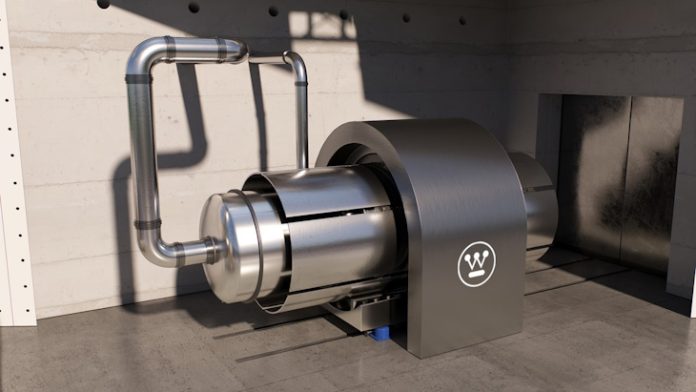
Westinghouse, based in Pennsylvania, will test its eVinci Nuclear Test Reactor at DOME. This innovative design uses advanced heat pipe technology for passive cooling and is expected to deliver up to 5 megawatts of electricity.
Designed to fit within just two acres, the eVinci reactor could power critical operations in off-grid areas, from data centres to remote villages.
Meanwhile, California-based Radiant will test its Kaleidos Development Unit, a high-temperature gas-cooled microreactor expected to produce 1.2 megawatts of electricity.
Designed as a clean replacement for diesel generators, Kaleidos is optimised for emergency backup power and could serve hospitals, military installations, and other critical infrastructure.
With a five-year fuel cycle and compact design, it presents a reliable solution for decarbonising essential services.
Both companies were selected through a competitive process in 2023 and are now navigating a rigorous, phased DOE authorisation process to ready their designs for experimental operation.
Each experiment at DOME is expected to last up to six months, with testing campaigns self-funded and sequenced according to technology readiness, regulatory planning, and fuel availability.
DOME: A first-of-its-kind test bed
The DOME facility, currently under construction at Idaho National Laboratory, represents the first dedicated nuclear microreactor test bed in the world.
Operated by the DOE’s National Reactor Innovation Center, DOME leverages world-class research infrastructure to test real-world reactor performance in a secure and controlled environment.
The facility is designed to handle microreactors generating up to 20 megawatts of thermal energy, providing crucial data to support commercialisation and regulatory certification.
By enabling safe, accelerated testing, DOME removes significant barriers for private industry and helps de-risk investment in next-generation nuclear technologies.
DOE officials have already closed the first round of applications for DOME scheduling, with the next opportunity expected in summer 2026. As more reactor designs enter the pipeline, DOME is set to become a cornerstone in America’s clean energy strategy.
The future is small, safe, and scalable
With climate goals looming and the need for dependable, off-grid power on the rise, nuclear microreactors could become a vital pillar of the US energy landscape.
The launch of DOME signals a shift in how the country approaches nuclear power, moving from massive infrastructure projects to agile, deployable systems that deliver energy security without a carbon footprint.
As Westinghouse and Radiant prepare for their 2026 experiments, the world is watching. If successful, these tests will not only validate the promise of nuclear microreactors but also position the United States as a global leader in compact, clean, and reliable power.