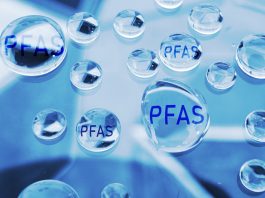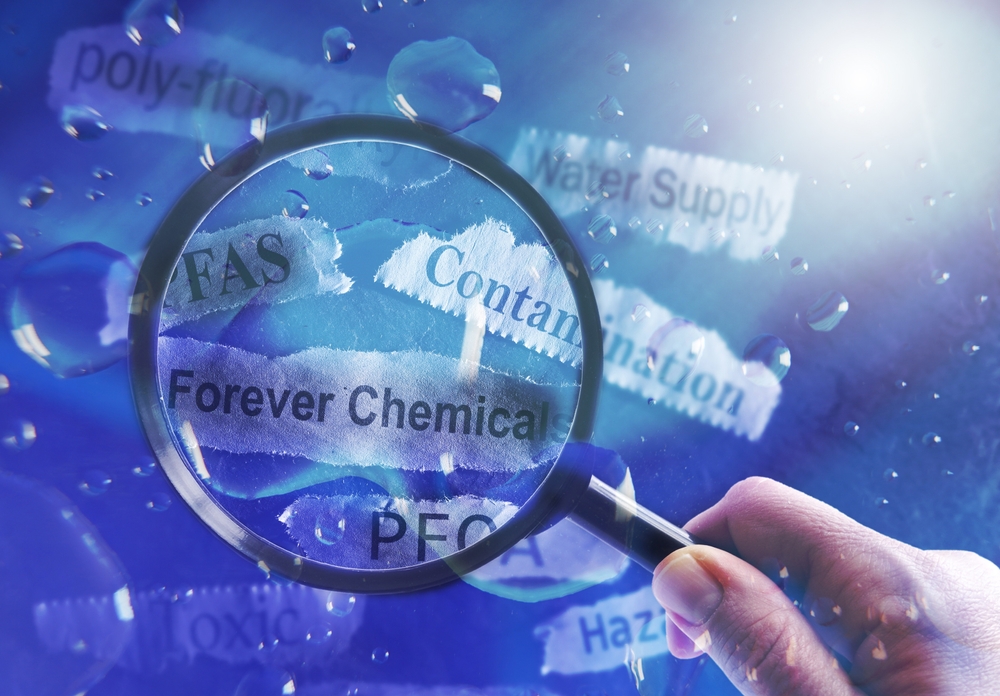
A global team of researchers has unveiled a bold new strategy to permanently eliminate per- and polyfluoroalkyl substances (PFAS) – notorious pollutants known as “forever chemicals” – from water supplies using heterogeneous catalysis.
These toxic compounds, found in everything from firefighting foam to non-stick cookware, have proven resistant to conventional treatment methods and continue to pose serious risks to public health and ecosystems worldwide.
Now, scientists from Rice University, Carnegie Mellon, and other leading institutions have mapped out an innovative, multi-step approach that could transform PFAS from indestructible contaminants into harmless by-products, marking a significant leap toward cleaner, safer water for all.
Michael Wong, co-author and chair of the Department of Chemical and Biomolecular Engineering at Rice, commented: “PFAS is a generational challenge.
“We owe it to future generations to find smart, sustainable solutions, and heterogeneous catalysis can be one of them.”
Redefining PFAS destruction
PFAS are synthetic chemicals with incredibly strong carbon-fluorine bonds, making them nearly impossible to degrade in the environment.
Traditional water purification techniques such as reverse osmosis and activated carbon filtration only succeed in removing these substances from water temporarily, creating toxic waste that must still be managed.
The pressing need for a method that not only removes PFAS but completely destroys them has driven researchers to explore the potential of heterogeneous catalysis – a chemical process that uses solid materials to accelerate reactions without being consumed.
The newly proposed strategy doesn’t just improve on existing methods; it reimagines PFAS treatment as a comprehensive, sequential process aimed at full mineralisation.
By breaking the problem down into manageable stages, the team believes it’s possible to overcome the hurdles that have stymied PFAS destruction until now.
A multiphase treatment train
Central to the proposed roadmap is a stepwise “treatment train” approach. The process begins with chemical pre-treatment to simplify the complex mix of PFAS often found in industrial waste and groundwater.
Using well-understood homogeneous reactions, these complicated mixtures can be converted into a smaller set of structurally related compounds. This streamlining allows catalysts to work more effectively in the stages that follow. Once pre-treated, the simplified compounds move through a series of catalytic reactions.
In the first phase, specific chemical groups are stripped from the PFAS molecules, weakening their stability. The next stage focuses on breaking down their notoriously long fluorinated carbon chains.
Finally, the remaining fragments are mineralised into benign substances such as water, carbon dioxide, and fluoride ions. Each phase relies on carefully engineered catalysts selected for their efficiency in targeting distinct chemical structures.
Materials like titanium are used to speed up oxidation processes, while palladium enables reductive hydrodefluorination – a critical step in swapping fluorine atoms for less harmful alternatives like hydrogen.
Smart catalysts for a complex problem
The complexity of PFAS chemistry means that no single catalyst can achieve total degradation across all molecular types. To address this, the research team is employing advanced computational modelling and machine learning to guide catalyst design.
These tools allow scientists to predict how various PFAS compounds will respond under specific conditions, greatly accelerating the development of more effective catalytic systems.
Additionally, the team is designing catalyst surfaces that preferentially attract PFAS molecules over other substances found in contaminated water.
This increased selectivity is essential to ensure the catalysts operate efficiently in real-world environments where countless competing compounds are present.
A new way to measure success
To fairly evaluate and compare emerging technologies, the researchers introduced a new performance metric: electrical energy per order of defluorination (EEOD).
Unlike conventional removal benchmarks, which focus merely on separation, EEOD measures the true degradation of PFAS by calculating the energy required to break carbon-fluorine bonds.
This focus on actual destruction rather than temporary containment could shift the way water treatment systems are assessed and developed.
The study concludes with a call for global collaboration and open data sharing to fast-track the deployment of heterogeneous catalysis-based PFAS treatments.
With contamination now documented in drinking water across every continent, the urgency for effective and scalable destruction methods is undeniable.
Through the precision and power of heterogeneous catalysis, the vision of a PFAS-free future is coming into clearer focus.