Inertial Confinement Fusion (ICF) relies on the precise compression and heating of a deuterium-tritium (D-T) target through concentric irradiation by laser beams at the megajoule energy levels.
The fundamental ICF scheme has been known since the early 1970s. 50 years of scientific and technological progress culminated in December 2022 when the National Ignition Facility (NIF) achieved breakeven, producing more energy from fusion than the laser energy invested in the process. This milestone has brought to light the potential of ICF as a reliable and safe pathway to produce carbon-free energy.
Since then, numerous private initiatives, increasingly supported by institutions and investors, have emerged or accelerated their development, aiming to demonstrate the feasibility of energy production through ICF. While significant engineering and industrial challenges remain, some are shared with the Magnetic Confinement Fusion (MCF), such as tritium breeding blanket and energy converting systems. Others are unique to ICF, such as target fabrication and laser technologies, which have seen tremendous improvement and reliability over the last decade.
Paradoxically, ICF has long been disregarded as a potential challenger to MCF in both national and European energy strategies. This perception stems from its historical ties to military research. Yet both ignition-scale facilities – NIF in the US and Laser Mégajoule (LMJ) in France – offer open academic access. Furthermore, the most suitable approach for Inertial Fusion Energy (IFE) is the direct-drive scheme, in which lasers directly irradiate the target without using a Hohlraum to convert laser energy into X-rays, as is done in indirect-drive configurations. Direct-drive approaches thus diverge significantly from military applications. Consequently, while global expertise in ICF exists, its academic visibility and influence must be further developed. CELIA is one of the few major academic laboratories in France – and also Europe – dedicated to the physics of IFE.

The DNA of the CELIA laboratory
CELIA (Centre Lasers Intenses et Applications) was established in 1999 following the decision to construct the Laser Mégajoule near Bordeaux – Europe’s most energetic laser and second to NIF worldwide. CELIA leads research in laser-matter interaction under extreme conditions. A central mission is to provide strong scientific support for academic studies conducted at the LMJ. For over 20 years, laser-driven hot and dense plasmas and direct-drive ICF physics have been core research areas.
On ICF and related topics, CELIA includes over 40 researchers, including 25 PhDs and postdoctoral fellows. Its founding institutions – CNRS, the University of Bordeaux, and CEA – have combined forces to create the most important academic team in Europe focused on ICF-related plasma physics. Nearly 300 ICF-related publications have been produced. CELIA has served as principal investigator or contributor in at least one selected experiment for each of the four LMJ academic access calls. The laboratory has co-developed numerous diagnostics that are now deployed within the LMJ interaction chamber and has also designed mitigation strategies to prevent giant electromagnetic pulses produced in laser–target interactions from damaging diagnostic electronic equipment.
The route to ICF design
A key strategy for advancing in the complex physics of ICF is to combine advanced simulation codes with experimental benchmarking at large laser facilities. To this end, CELIA developed CHIC, a one- and two-dimensional radiative hydrodynamics code, one of the few available in the academic community. Its wide range of physics modules covers essential aspects of ICF: nonlinear laser propagation in plasma and laser–plasma instabilities, such as Raman and Brillouin stimulated scattering and two-plasmon decay, electron and radiation transport, realistic equations of state, thermonuclear burn, and self-generated magnetic fields.
Notably, original mathematical methods have been implemented in CHIC, such as conservative Lagrangian hydrodynamics, ray tracing, and thick-ray laser propagation to better model dissipation effects, and non-local electron transport, now adopted in other leading ICF codes. CELIA was among the first to provide credibility to the ‘shock ignition’ scheme, in which compression and heating phases are decoupled through laser pulse shaping. This work, performed in collaboration with the Laboratory for Laser Energetics (LLE, Rochester, US), earned international recognition through the Landau-Spitzer Award for Outstanding Contributions to Plasma Physics, attributed jointly by the American and European Physical Societies.

Other significant contributions include studies on the role of hot electrons in laser–plasma instabilities (LPI), and the effects of strong magnetisation on ICF plasmas. The code has been validated through experimental campaigns led by CELIA on major facilities such as NIF, LMJ-PETAL, Omega, Vulcan, PALS, and Gekko XII, involving international collaborations and reliable experimental databases.
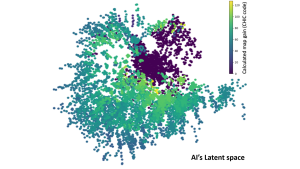
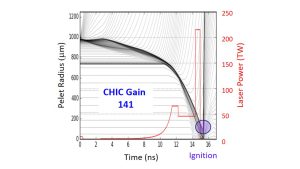
The field is now mature enough to design and optimise laser–target interaction schemes that maximise energy gain. This was recently demonstrated using generative artificial intelligence (AI) to optimise the laser pulse shape for enhanced gain. CHIC generates datasets on which generative AI models are trained to identify optimal laser power profiles. These are subsequently tested through CHIC simulations. This approach saves computing time and efficiently converges toward a reduced set of promising designs that will be tested in upcoming experiments.
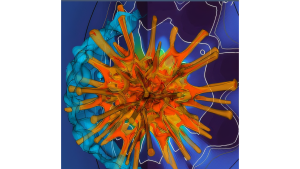
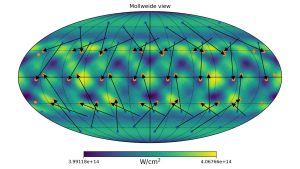
Ultimately, three-dimensional (3D) simulations are required to realistically account for irradiation geometry, target inhomogeneities, and design robust mitigation strategies. Nevertheless, net gain values are typically lower than one-dimensional previsions. In collaboration with LLE, CELIA has conducted simulations with a 3D radiation hydrodynamics code coupled to a ray-based model incorporating cross-beam energy transfer (CBET) between overlapping laser beams. These simulations have been validated against direct-drive experiments at the Omega laser facility and polar direct-drive (PDD) experiments at NIF. CELIA is now developing its own 3D radiative hydrodynamics code based on novel numerical approaches.
Partnership with GenF
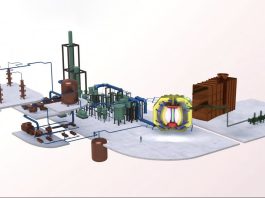
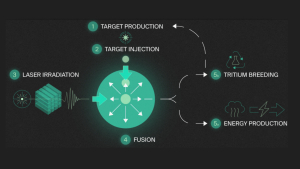
CELIA naturally became a partner of the GenF start-up, which aims to develop an industrial-scale ICF power plant – offering a competitive alternative for next-generation nuclear power by 2050. GenF is partially funded by France’s public investment bank (BPI) under the ‘Innovative Nuclear Reactor’ initiative. The project’s first phase involves defining the reactor design, engineering strategy, and industrial roadmap. The consortium includes Thales, CEA, CELIA, and LULI. Beyond its ICF expertise, CELIA contributes with its know-how in high-average-power laser technology. Achieving economically viable ICF energy production requires laser systems operating at 10 Hz repetition rates. This necessitates effective active cooling for high-energy amplifiers – a domain in which CELIA holds patented innovations. These advances apply to both current validated laser systems and future developments. CELIA also explores cutting-edge approaches in laser pumping and front-end oscillators aimed at improved cost-efficiency and compatibility with LPI mitigation. While not always applicable to current supply-chain-based architectures, this forward-looking research is vital for future ICF systems.
Challenges ahead
ICF presents numerous scientific and technological challenges. It is beyond the scope of this brief overview to address them. On a pragmatic level, scaling up expert staff in ICF and related fields is essential, not only to boost research capacity but also to train the next generation of PhD students, postdocs, and engineers. Research institutions must take the lead in this effort.
At a broader level, public–private partnerships are crucial. One important step toward a viable industrial power plant is the construction of an intermediate facility with several hundred kilojoules of energy, permitting validation of promising target designs and innovative technological solutions needed for the power plant construction. Neither NIF nor LMJ is suitable for direct-drive testing due to their beam geometries, and while the Omega facility demonstrated impressive progress in the direct drive, its 30 kJ capacity falls far short of ignition conditions.
Industrial ICF projects are promising initiators, particularly with a clear 2050 target, but national and European support will be vital. A European institutional partnership will likely be established to address this long-term energy objective.
Please note, this article will also appear in the 22nd edition of our quarterly publication.