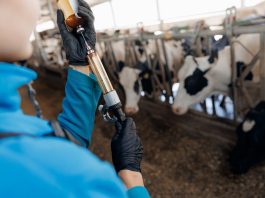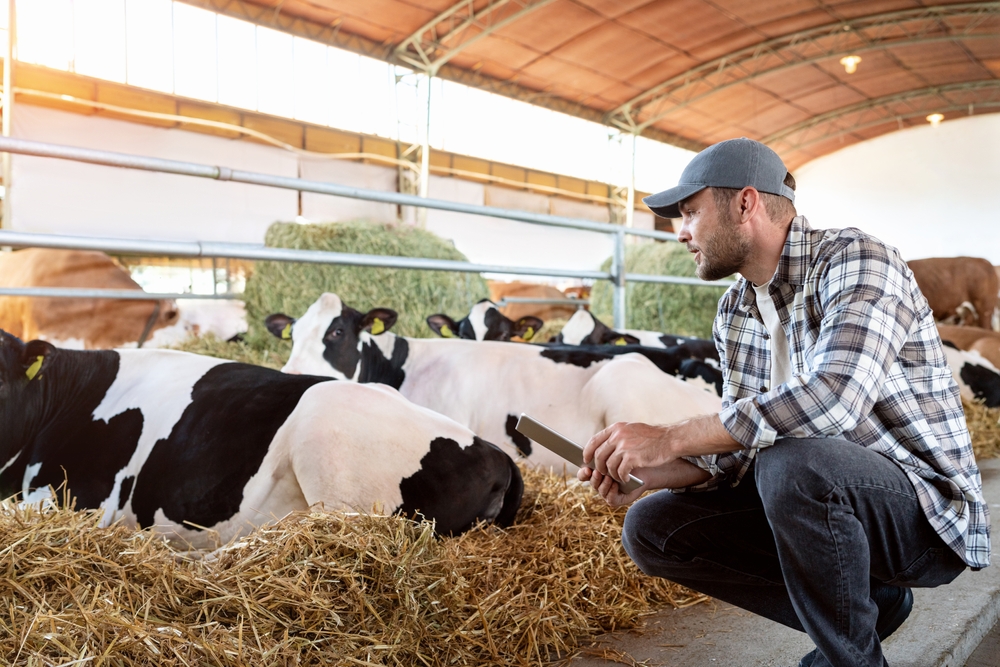
Livestock, especially cows and sheep, emit significant amounts of methane emissions through enteric fermentation during digestion and from manure management.
Globally, animal agriculture contributes about 32% of human-induced methane emissions. This greenhouse gas is 80+ times more potent than CO₂ over a 20-year period, making it a critical climate target.

Studies show that animal health and management practices are deeply intertwined with methane levels. Poor animal welfare, disease, inefficient reproduction, and suboptimal nutrition all reduce productivity and increase methane emissions per unit of output.
Why do healthier animals emit less methane?
Healthy animals tend to reduce less methane emissions due to the following factors:
- Grow faster and reproduce more efficiently
- Require less feed per unit of product (milk/meat)
- Suffer fewer digestive disorders that elevate methane production
New research shows that subclinical illnesses increase methanogenesis due to disrupted gut microbiota and longer digestion times. Moreover, efficient metabolism and reduced inflammation in healthy livestock leads to better energy use and lower emissions per unit.
Precision livestock farming (PLF) can detect early health issues that may otherwise silently increase emissions.
Feeding the future: Diet-based solutions
Nutrition is one of the most effective levers to reduce methane at the source. Research found that:
- Red seaweed (Asparagopsis) reduces methane emissions by over 80% in some trials
- Fat supplements and tannins can reduce microbial methanogenesis
- Improved forage quality leads to better digestibility, hence reduced emissions.
But nutrition must balance emissions control with animal welfare and health. Excessive additives (e.g. saponins, nitrates) may harm gut function or reproduction if improperly dosed.
Smart farming: Monitoring methane emissions with precision tech
Modern innovations can now monitor methane emissions in several ways, including:
- On-animal sensors to measure methane in breath
- Automated feeders and weigh stations to monitor intake/output
- Machine learning models that predict methane output based on live data
These tools are transforming methane monitoring from macro-estimates to micro-behaviour insights. Precision Livestock Farming (PLF) doesn’t just measure; it enables proactive animal health interventions that indirectly reduce methane emissions.
Supporting sustainable, methane-reducing practices
A 2024 global review emphasised that policies supporting animal welfare, pasture regeneration, and breed adaptation are essential. Methane reduction isn’t only about supplements or genetics – it’s about supporting whole-system transitions.
Effective support mechanisms include:
- Incentives for low-methane breeds
- Subsidies for vaccination and veterinary access
- Training in rotational grazing and pasture management
Combining animal health strategies with soil carbon programmes and renewable farm energy further compounds environmental gains.
Combining animal welfare, innovation, and environmental care
The latest evidence shows that animal health is not peripheral—it’s central to methane mitigation. Instead of separating productivity and sustainability, healthier animals bridge both goals.
The new generation of sustainable agriculture must:
- Treat livestock as biological partners, not just methane emitters
- Support farmer education in disease prevention and tech
- Embed welfare into environmental metrics
In essence, the future of farming isn’t just lower emissions—it’s smarter, kinder, and deeply regenerative.