As concerns about toxic “forever chemicals” in drinking water continue to rise, scientists have identified a promising breakthrough: iron powder could offer a safer, cheaper, and more effective solution for removing these persistent pollutants.
In a recent study, researchers found that this common industrial material dramatically outperformed conventional treatment methods in eliminating PFOS – one of the most notorious and long-lasting of the PFAS (per- and polyfluoroalkyl substances) family.
The growing danger of PFOS contamination
PFOS (perfluorooctane sulfonate), widely used for its resistance to heat, water, oil, and stains, has been a staple in products ranging from non-stick cookware and waterproof fabrics to food wrappers and firefighting foams.
Over decades, these synthetic chemicals have made their way into the environment, contaminating soil, crops, and water supplies around the globe.
Known for their chemical stability, PFOS and other PFAS compounds do not degrade easily – hence their nickname, forever chemicals.
Their presence in drinking water has been linked to serious health problems, including liver disease, immune dysfunction, developmental delays, and certain cancers.
Iron powder vs activated carbon: A surprising showdown
To tackle this widespread contamination, most current water filtration systems rely on activated carbon.
This material removes PFOS through adsorption, trapping the molecules on its porous surface. But while effective to a degree, activated carbon comes with cost and efficiency limitations.
Enter iron powder, or microscale zero-valent iron (mZVI) – a substance already used in wastewater treatment for other contaminants.
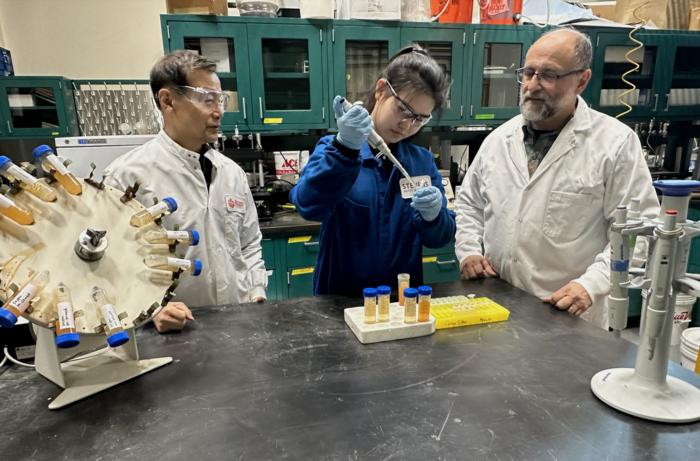
Curious about its potential against PFOS, a research team at Stevens Institute of Technology led by Professors Xiaoguang Meng and Christos Christodoulatos, along with PhD student Meng Ji, conducted a detailed comparison between iron powder and activated carbon.
Their findings were striking. The study concluded that iron powder was 26 times more effective than activated carbon per unit of surface area. This level of performance, coupled with its lower cost, positions iron powder as a compelling alternative for water purification.
Rusted, but still reactive
One of the most surprising discoveries was the durability of iron powder’s performance, even after it began to rust.
Typically, oxidation reduces the reactivity of metals, but in this case, the rusted iron retained and even appeared to enhance its ability to bind PFOS molecules.
This unexpected result suggests that the oxidised surface of the iron continues to contribute to contaminant removal, opening new avenues for research and development.
Paving the way for scalable solutions
The team is now preparing to further investigate why oxidised iron remains so effective. Their goal is to translate these laboratory findings into scalable, real-world solutions that could drastically improve how communities treat contaminated water.
As the urgency to combat PFAS pollution grows, this discovery could mark a pivotal shift in water treatment strategies.
By harnessing the power of iron powder, researchers may have unlocked a cost-effective and robust method for defending public health against one of the most persistent environmental threats of our time.