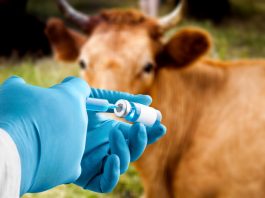
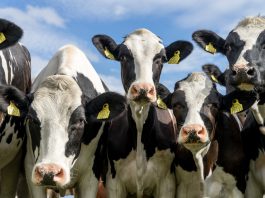
C-Lock Inc.’s GreenFeed technology helps cattle producers optimise herd efficiency and reduce greenhouse gas emissions, contributing to more sustainable beef and dairy production systems.
As the demand for beef and dairy products remains high across the globe, producers are striving to ensure they can meet this demand while raising more efficient herds and sustaining a healthier planet.
How exactly do more efficient cattle herds help ensure a healthier planet? Such animals convert feed more efficiently, require fewer inputs, and produce less waste – including emissions. When producers optimise efficiency, they reduce their environmental footprint per unit of production. It’s not just good business – it’s a critical part of building a more sustainable food system.
Optimising herd efficiency
When it comes to optimising cattle efficiency, it’s essential to measure emissions.
Dr Meredith Harrison, Chief Scientific Officer for C-Lock, Inc., explained: “Efficient animals are more productive and profitable. Monitoring herd efficiency allows for early detection of issues and reduces variability in performance, leading to more predictable outcomes and better use of resources.”
C-Lock Inc. offers the global standard in cattle emissions and efficiency measurement solutions. C-Lock began as a startup in 2005 in Rapid City, South Dakota and established itself as the global leader in cattle emissions research technology in only 20 years. Producers, corporations and scientists in 47 different countries are currently using C-Lock’s GreenFeed technology to research innovative solutions to improve herd efficiency and reduce greenhouse gas emissions from beef and dairy operations.

Scott Zimmerman, President for C-Lock, Inc., explained: “GreenFeed is a precision tool that measures methane, carbon dioxide, and other metabolic gases exhaled by cattle during short visits to a specialised feeding station. It’s a scientifically validated, field-deployable system that allows us to capture real-time, individual animal data on emissions and performance, helping producers, researchers, and corporations better understand and manage the sustainability of their herds.”
Identifying top-performing cattle
According to Harrison, this technology can help identify the top and bottom 25%-performing cattle in a herd. She said: “By tracking metabolic gases on an individual level, GreenFeed reveals metabolic efficiency – how effectively each animal converts feed into production while minimising emissions. This helps pinpoint animals that are not only more productive but also more environmentally efficient, allowing producers to make smarter breeding, culling, and management decisions.”
Harrison said this kind of selection pressure can have a significant impact on the health of the environment.
She explained: “By helping select and manage lower-emitting animals, GreenFeed contributes directly to reducing greenhouse gas emissions from livestock. The exciting thing about genetic selection is these effects are both cumulative and permanent. Based on data collection in a pure-bred Angus herd, residual methane production ranged from -96 to 68 g/d, representing a difference of 164 g/d between the highest and lowest emitters.”
On a global scale, widespread use of this data can lead to more sustainable production systems and support climate-smart agriculture practices that meet both productivity and environmental goals.
Benefitting global research
Scientists at institutions and universities all over the world rely on GreenFeed to bolster their research because it offers accurate, high-resolution emissions data across environments, animals, and research protocols. GreenFeed data enables researchers to investigate the genetic, nutritional, and environmental factors that affect emissions and production efficiency. Because the data is comparable across institutions and geographies, it helps accelerate global climate and livestock research.
Harrison said this research is proving particularly beneficial to feed additive companies. An example of how such research is directly impacting the cattle industry is Bovaer® feed additive developed by DSM and manufactured by Elanco.™ Studies using GreenFeed technology have shown the use of this additive reduces enteric methane emissions by approximately 1.2 metric tonnes (MT) CO2e per lactating dairy cow per year.¹ Elanco also reports that feeding just a quarter of a teaspoon per head per day reduces methane emissions by an average of 30% for dairy cattle and up to 45% for beef cattle.
Harrison said: “The only effective way to validate on-farm methane reduction from methane inhibitors, like Bovaer, is by using non-invasive, flux-based CH4 measurement.”
“For corporations focused on sustainability, GreenFeed provides the trusted data needed to verify environmental progress and report on elusive Scope 3 emissions. Whether it’s part of a supply chain initiative or a corporate sustainability programme, GreenFeed enables transparent, science-based measurement and accountability for livestock emissions reduction.
“GreenFeed helps producers identify which animals are delivering the best return – economically and environmentally. With accurate insights into methane output, feed efficiency, and performance, producers can optimise management, reduce input costs, and demonstrate sustainability leadership, which is becoming increasingly important in today’s marketplace.”
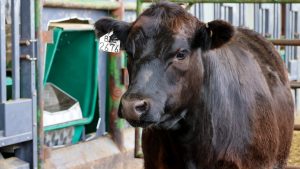
At the national level, empirical GreenFeed is being used to refine IPCC methane prediction equations. Harrison said: “Developing accurate predictions requires high-quality emissions data.” In Ireland, researchers from Teagasc recently evaluated emissions in grazing dairy cows across an entire lactation. Researchers reported that substantial differences in methane emissions can occur when comparing GreenFeed measured methane to methane predicted using international default methane conversion factors. These differences are especially prominent during the spring grazing season.²
Harrison emphasised that this kind of research is critical to quantify methane output from different diets and production stages, which is required to develop accurate national inventories.
Measuring feed efficiency
In addition to GreenFeed, C-Lock Inc. also offers the SmartFeed line of solutions for performance evaluation. Harrison says SmartFeed monitors feed intake, which is an important metric to track herd health, efficiency, and economic returns.
Harrison said: “SmartFeed is our precision feeding system that measures individual feed intake for monitoring performance and animal health. The systems use real-time data monitoring and cloud-based connectivity, so users receive automated reports and email alerts. SmartFeed is used to test different diets, evaluate supplement responses, and improve feed efficiency.” Unlike other intake monitoring systems, SmartFeed offers complete data ownership and transparency.
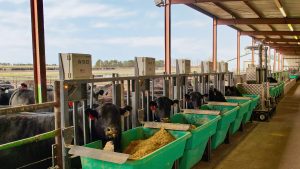
According to Harrison, selecting for improved feed efficiency has been shown to provide significant economic returns to cow-calf producers and feedlot operations by allowing producers to reduce feed costs, more closely monitor herd health, and make better breeding and culling decisions.
She said using both GreenFeed and SmartFeed technologies in tandem can be especially beneficial. The combined power of the technologies is being showcased by Nichols Farms, a seedstock producer in Bridgewater, Iowa that has incorporated GreenFeed, SmartFeed, and SmartScale technologies for progeny testing in their herd.
Harrison said: “Together, SmartFeed and GreenFeed give a full picture of input and output—how much the animal consumes, emits, and how much product it produces. This pairing allows for unmatched insight into feed conversion, nutrient utilisation, and metabolic status, helping producers and researchers fine-tune nutrition, improve genetics, and support overall animal health.”
Learn more about these technologies and how you can leverage emissions and intake data for actionable insights from your herd at c-lockinc.com.
References
- Kebreab, E., et al. A meta-analysis of effects of 3-nitrooxypropanol on methane production, yield, and intensity in dairy cattle. (2023). J Dairy Sci 106(2)927-936.
- Teagasc. “Enteric Methane: Generating New Baseline.” Teagasc, May 2025
Please note, this article will also appear in our Animal Health Special Focus publication.