We examine the evolution of animal husbandry, highlighting the need to adapt reproductive strategies to meet climate change challenges and increasing food security demands for productivity and resilience.
As agriculture evolves amid the twin pressures of climate disruption and food security, animal husbandry finds itself at a crucial juncture. From pastoral traditions to genomic breakthroughs, the journey of reproductive strategies in animal farming reveals much about the balance between heritage and innovation.
Traditional foundations in animal reproduction
Historically, animal husbandry has relied heavily on natural and selective mating practices shaped by regional knowledge and species-specific traits. In cattle and sheep, reproductive efficiency has traditionally been influenced by visually assessed lineage selection, focusing on milk yield, muscularity, or docility. Poultry reproduction often remains rooted in natural mating within small flocks, particularly in subsistence settings, whereas industrial breeding has emphasised rapid turnover and productivity.
More unique systems persist in arid and nomadic regions. For instance, Mongolian herders have maintained traditional breeding practices among camels, sheep, and horses for centuries, optimising animals for endurance and environmental resilience rather than yield alone.¹ These models, while rich in adaptive knowledge, are often slow to scale and inherently constrained by environmental volatility and genetic limitations.
Yet, despite the limitations, these methods continue to offer critical genetic diversity and ecological compatibility, especially for breeds adapted to marginal environments.
Why modernisation in animal reproduction is no longer optional
Today’s livestock farmers confront a range of complex reproductive challenges. Rising temperatures, altered rainfall patterns, and the pressure for year-round production have exposed the fragility of traditional methods. Low conception rates, long calving intervals, and seasonal infertility are now compounded by an urgent demand for disease resilience and reproductive precision.
In dairy systems, for instance, heat stress in cows has been shown to suppress estrus behaviour and reduce conception rates significantly. Buffaloes, with inherently low reproductive efficiency, are particularly susceptible to sub-fertility under heat-stressed and nutritionally imbalanced conditions.² Similar inefficiencies plague goat and swine production, especially where veterinary access and diagnostics are limited.
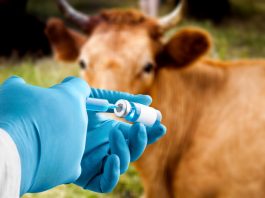
To mitigate these constraints, producers increasingly turn to Assisted Reproductive Technologies (ART). Artificial insemination, embryo transfer, and sexed semen have become widespread tools, allowing more control over genetics, gender ratios, and disease avoidance. These technologies, long established in developed countries, are now seeing expanded uptake in developing agricultural economies through knowledge transfer and public-sector breeding programmes.³
Reproductive challenges and their impacts on farm productivity
The implications of reproductive inefficiency are significant, both biologically and economically. Sub-optimal conception rates not only delay calving or kidding intervals but also strain feed and labour resources. For smallholder farmers, this could mean the difference between financial viability and exit from farming altogether.
Furthermore, species differences amplify these challenges. Swine and poultry, with shorter reproductive cycles, are generally more responsive to intervention. In contrast, camelids, elephants, and other long-gestation species exhibit lower returns on reproductive investment, necessitating careful management of each pregnancy cycle.⁴
Diseases such as brucellosis, mastitis, and reproductive tract infections continue to reduce fertility if not addressed early. Compounding these biological challenges are social and economic ones, such as limited access to artificial intelligence (AI) services in remote areas or reluctance to embrace new methods among traditional communities.
Environmental pressures: Climate, pasture, and fertility
Environmental change is emerging as a critical variable in reproductive success. Temperature extremes can affect hormonal balances in both males and females, impairing spermatogenesis, ovulation, and embryonic development. Poor pasture quality, either from overgrazing or nutrient deficiency, disrupts the energy balance needed to support pregnancy and lactation.
Recent research from Sub-Saharan Africa and South Asia reveals a drop of up to 30% in reproductive success during extended heatwaves, particularly in breeds lacking genetic heat tolerance.⁵ Seasonal droughts also result in increased abortion rates and longer post-partum anestrus periods.
Thus, climate-resilient reproductive planning has become essential. This includes timed AI, use of heat-tolerant sires, and integrated feed-nutrition strategies that align with forage availability.
Promising innovations in animal reproduction
Encouragingly, the future of animal husbandry is being reshaped by a suite of scientific innovations. Among the most transformative is genomic selection, which allows for the early identification of animals with desirable reproductive traits using single-nucleotide polymorphisms (SNPs). By combining pedigree, phenotypic, and genomic data, farmers can make faster, more accurate breeding decisions.⁶
Further along the technological frontier are CRISPR-based gene edits, which offer the potential to eliminate hereditary reproductive diseases or introduce heat-resilience genes, though these technologies remain subject to strict regulatory scrutiny.
Other advancements include proteomics for sperm quality diagnostics and artificial intelligence models that integrate real-time data from wearables, feed systems, and fertility markers to optimise breeding timing and detect health issues early.⁷ Cryopreservation and genetic biobanking have also matured, offering a lifeline for endangered breeds and a buffer against sudden disease outbreaks.
A systemic redesign of animal reproduction systems – one that blends precision technologies with regionally adapted practices – is now underway. Success will depend not only on access to science but also on the capacity to align innovation with ethics, sustainability, and economic reality.
Conclusion
Animal reproduction stands as a cornerstone of global food security and agricultural sustainability. While traditional methods have withstood the test of time, the demands of modern farming necessitate more resilient, efficient, and scientifically informed approaches.
By fostering a synergy between time-honoured practices and state-of-the-art reproductive technologies, the livestock sector can meet the pressing challenges of productivity, climate adaptation, and genetic health. The future of animal husbandry is not about abandoning tradition, but about evolving it responsibly, equitably, and innovatively.
References
- Tumurjav, M. (2015). Traditional Animal Husbandry in Mongolia. Taylor & Francis.
- Hansen, P.J. (2014). Current and Future Assisted Reproductive Technologies. Springer.
- Sirard, M.A. et al. (2021). Ethics and Animal Reproductive Technologies. CSIRO Publishing.
- Lasley, B.L., et al. (1994). The Limitations of Conventional Breeding Programs.Theriogenology.
- Flint, A.P.F., & Woolliams, J.A. (2008). Precision Animal Breeding. Philosophical Transactions B.
- Nayeri, S., et al. (2019). Review of Machine Learning in Animal Breeding. Cambridge University Press.
7.Khare, A., & Khare, V. (2017). Modern Approach in Animal Breeding. Int. J. Livest. Res.
- Hafez, E.S.E., & Hafez, B. (2013). Reproduction in Farm Animals. Wiley.
Please note, this article will also appear in our Animal Health Special Focus publication.