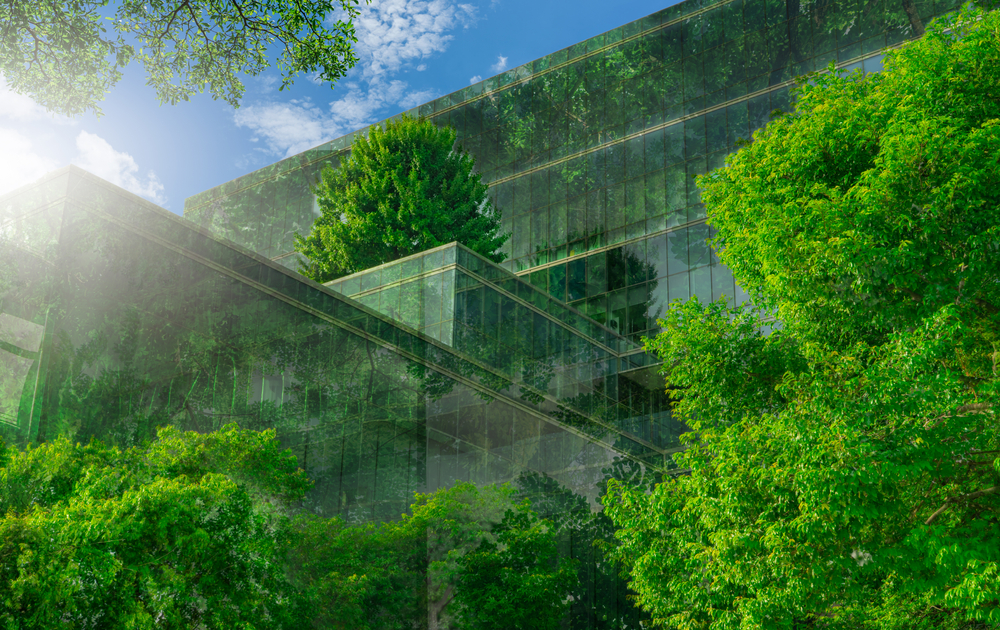
Ellie Gabel explores how living architecture merges biomimicry, biophilic design, and smart materials to create adaptive, low-impact buildings built for resilience and sustainability.
Trendsetters in industry, construction, and energy are innovating past standard sustainable solutions. Energy efficiency and low-waste setups are essential for eco-friendly buildings, but they become more resilient and adaptive when incorporating biomimicry and other advanced techniques.
The strategies create living architecture, converging biological systems with built environments. How far do builders need to go to make this vision a reality?
Defining living architecture beyond biomimicry
Biomimicry draws inspiration from living organisms, such as heat regulation or water filtering, and translates it into practical construction applications.
Living architecture is a construction technique that uses biophilic design, biomimicry, and green building tactics. It cuts resource expenditure to nearly zero by promoting circularity.
Melding them creates a self-repairing, resource-conscious, and flexible structure. The goal is resilience against climate change stressors while improving the life cycle assessment of one of the planet’s most greenhouse gas-emitting industries.
Worldwide, academic institutions are exploring the possibilities. Students at Cornell University are examining whether buildings can behave like organisms for multiple reasons. Their work could benefit fields from construction to medicine.
Core technologies powering living buildings
Living buildings have many of the same elements because they produce low emissions, have migratory functions, and withstand climate stressors.
- Synthetic biologies: The technologies use living organisms for applications like carbon dioxide removal and the construction of computational tools.
- Sensors and artificial intelligence for responsive environments: They can enhance other living building technologies to make them reactive to stimuli based on real-time data.
- Renewable energy: Biomass energy from organic materials could constantly grow and power buildings infinitely.
- Engineering living materials: These include bioconcrete and mycelium insulation, which feature self-healing properties and environmental resilience.
- Biophilic design: The interior uses plants to provide optimal indoor comfort, including cleaner air and better temperature regulation.
Imaginative solutions are vital, but they must work seamlessly with existing technologies, such as lighting fixtures and HVAC systems. Everything must support each other to extend lifespans and save resources.
For example, adorning the home with plants could preserve HVAC systems because they will not need to work as hard. Maintenance costs and burdens are lower, including leaks, which cause 20% of conditioned air to leave the structure.
Pioneering projects and prototypes
Innovators have already set a precedent for living buildings. The Living Architecture project in the European Union is one of the most notable.
It is a bioreactor wall for homes that can collect sunlight, wastewater, and air. Then, the wall converts the resources to be used in the house. Each wall contains a microbial fuel cell, which uses the feedstocks’ metabolic properties to the building’s advantage.
NASA is also developing myco-architecture from fungi, which could eventually build the foundations of homes on other planets.
The agency believes it could someday grow homes with this highly renewable, biodegradable, insulating, and fire-retardant material. The vision is a natural next step for the biobased element.
Urban algae are also a powerful substance. Some next-generation urban locations use them in window panels to develop biomass energy. Others employ them in facades and bioreactive surfaces to sequester more carbon and control heat.
Green building is one of the most notable trends in construction in the last several years. These examples demonstrate how taking early risks provides benefits for determined industry leadership.
Early success is vital for building momentum and helping the construction sector reach net-zero emissions by 2050.
Benefits of sustainability and resilience
Living architecture should be the new standard for construction. Its environmental impact speaks for itself. The designs promote circularity, using as few virgin materials as possible, including water and electricity.
Their advanced carbon sequestration abilities, combined with the prevalence of organic matter, will also make carbon footprints and life cycle assessments for infrastructure the lowest possible.
These buildings will also be more resilient to climate change stressors, such as extreme temperatures and severe weather. Living buildings in cities will combat the urban heat island effect, lowering the adverse impacts of droughts.
They will also manage water control to prevent flooding in regions with heavy rains, filtering water while it slows the flow. Surplus water drips into groundwater reserves, encouraging further circularity.
Policy, standards, and the path to mainstream adoption
Regulatory and safety challenges oppose widespread adoption. Worldwide, policies around living architecture are inconsistent.
They contain regulatory gaps, as institutions covering fire safety, building codes, and even cybersecurity would need to solidify expectations before living architecture becomes commonplace.
The designs have a mixture of flammable, perishable, and hackable objects – a blend of the natural and technological. Standards must be holistic for mainstream adoption to occur.
Several institutions are attempting to establish certification standards. The Living Building Challenge is the most prominent, spearheaded by the International Living Future Institute. However, it is not mandatory.
Policymakers and related industries must continue advocating for regulatory development. This effort demands cross-sector innovation from firms in construction, agriculture, biotech, and urban planning.
Expanding the living world
Remote forests, deep oceans, and mountaintops are only a few places where living things flourish to support ecosystems. In these areas, they live untouched by humans, thriving without intervention.
Living architecture’s transformative potential is one of the most promising prospects of sustainable design. Stakeholders must experiment with these ideas to test their viability at scale and encourage policy standardisation to drastically reduce the adverse effects of built environments.