Spyridon Pantelis, Project Manager at the European Energy Research Alliance, discusses the role of hybrid energy storage in meeting Europe’s complex storage needs.
Meeting the complex demands of the energy transition
As Europe moves toward climate neutrality, energy storage is becoming a critical element in maintaining energy system stability and efficiency.
However, conventional single-technology storage systems often cannot meet the range of functional demands posed by a power system with high shares of variable renewable energy sources, decentralised generation, and electrification.
Hybrid energy storage systems (HESS) combine two or more storage technologies, such as batteries and supercapacitors, thermal storage, compressed air, hydrogen, or flywheels, to leverage their complementary characteristics. These systems can deliver both short- and long-duration services, enabling frequency regulation, peak shaving, backup power, and seasonal energy shifting. This functional flexibility makes HESS a relevant configuration in increasingly complex energy system environments.
A single system for a multi-vector future
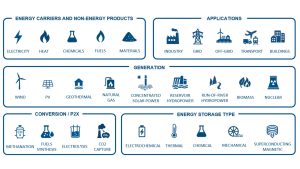
The potential of hybrid storage lies not only in operational efficiency but also in its role in facilitating multi-vector energy systems. The ability to coordinate electricity, heat, and sustainable fuels within a single system supports emerging configurations in several application areas:
- Industrial energy systems
Hybrid storage can enhance process efficiency, mitigate peak loads, and facilitate decarbonisation through the integration of thermal and electrochemical storage. - Grid services and flexibility
By combining technologies with different response times and durations, HESS can address both short-term balancing and medium- to long-term energy shifting requirements. - Remote and islanded systems
In off-grid or weak-grid environments, hybrid storage improves system autonomy and reliability when integrated with local renewable energy production. - Electromobility and transport
HESS can support differentiated charging requirements for various modes of transport. For instance, supercapacitor-battery combinations enable fast-charging, while hydrogen-based storage is suitable for long-haul or maritime applications. - Built environment and district energy
In buildings and thermal networks, combining battery and thermal storage enables more effective load management and supports demand-side flexibility.
Industrial development and policy alignment
Hybrid energy storage also presents industrial opportunities. As highlighted in the Draghi Report on European competitiveness, strengthening clean technology capabilities is essential to reduce external dependencies and support sustainable economic development.
The hybridisation of storage engages multiple industrial domains, ranging from materials science and component manufacturing to systems integration and digital controls.
This cross-sectoral nature is reflected in policy frameworks such as the Net-Zero Industry Act and the Clean Industrial Deal, which promote the development of strategic technologies and seek to expand domestic manufacturing capacity.
Hybrid energy storage aligns with these objectives by stimulating innovation and supporting the development of integrated value chains in areas where European industry is already active.
Energy security and system resilience
The increasing integration of renewables into the grid introduces structural volatility. By 2030, more than half of Europe’s electricity is expected to come from variable sources, necessitating the need for more flexible and distributed storage assets. This has both technical and strategic implications.
The 2025 blackout in the Iberian Peninsula highlighted the vulnerability of interconnected grids under high stress. While no single solution can eliminate such risks, hybrid configurations can improve system robustness by providing layered flexibility, enabling faster response, longer storage durations, and more granular control over energy flows.
Hybridisation also contributes to energy autonomy. By integrating second-life batteries, flow storage, or green hydrogen, systems can be designed to optimise the use of available resources, support sector coupling, and reduce reliance on imported fossil fuels – goals central to the REPowerEU strategy.
Remaining challenges and policy support
Despite the advantages of hybrid storage, several barriers remain. These include the lack of standardisation, limited data on real-world performance across technologies, and financing models that do not yet reflect the full system value of hybrid configurations. Technical challenges related to control systems, interoperability, and lifecycle management are also active areas of research.
Policy instruments are evolving to address some of these gaps. Recent initiatives such as market design reform, flexibility support schemes, and permitting measures under the Net-Zero Industry Act provide early signals that hybrid storage may be eligible for improved investment conditions. Ongoing R&D efforts focusing on materials, digital control, and system integration remain essential.
Supporting the next steps with research-based guidance
To support further deployment and alignment across sectors, the StoRIES project has produced two key resources:
- The Technology Roadmap for Hybridisation of Energy Storage, which outlines technical challenges, integration strategies, and use case typologies;
- The Strategic Research and Innovation Agenda (SRIA), which identifies priority R&D areas, enabling regulatory frameworks, and funding mechanisms.
Both are available to support policymakers, researchers, and industry stakeholders engaged in the development and implementation of hybrid energy storage systems.
Contributors
Ivan Matejak, European Energy Research Alliance
Stefano Passerini, Austrian Institute of Technology
Myriam E Gil Bardají, KIT/ Coordinator of EERA Joint Programme
Energy Storage
Roberto Scipioni, SINTEF Energy Research / Coordinator
Sub-Programme of EERA Joint Programme Energy Storage
Please note, this article will also appear in our European Energy Storage special focus.