The Innovation Platform spoke with Mika-Petteri Kuro, Commercial Director of Wisematic, to discuss the company’s core objectives and its contributions to chip and wafer technologies.
In today’s rapidly evolving technological landscape, the demand for innovative solutions continues to surge. Wisematic, a pioneer in automation technology, stands at the forefront, leveraging 20 years of expertise to deliver cutting-edge systems tailored to the unique needs of its clients.
The Innovation Platform spoke with Mika-Petteri Kuro, Commercial Director of Wisematic, about its tailored solutions for chip and wafer innovations, emphasising flexibility, quality, and the integration of machine vision and robotics to meet the growing demands of modern technology across various industries.
Can you provide an overview of Wisematic, highlighting its primary objectives and key technologies?
Wisematic is a 20-year-old company established in 2005 at Tampere University. As a system integrator, we specialise in various types of automation, including robotics, machine vision sensors, manufacturing component assembly, quality control, and more.
From a technological standpoint, our projects often involve the integration of machine vision and robotics, tailored to the specific requirements of each application. A key aspect of our work is our focus on small-sized components, which can present challenges that many other companies are hesitant to address. At Wisematic, we embrace these specialised needs, ensuring our solutions are customised to effectively meet our customers’ requirements.
Flexibility is a key strength within Wisematic. Our robotic cells are designed to be future-proof, meaning we assess not only the current requirements of our customers’ products but also anticipate future needs. The goal is to avoid creating overly rigid solutions, allowing for adaptability to future changes.
The company takes great pride in its commitment to quality. A customer operating 24/7/365 has our solution in their production process with over 99% availability! This is a phenomenal performance for a complex automation cell including robotics, conveyors, machine vision and high-speed operation. When you order a robot cell from us for assembly or manufacturing, we consistently recommend integrating quality control measures. We frequently utilise machine vision technology, extending beyond visible light to employ shortwave infrared light. This capability allows us to see through silicone layers, making it significantly easier to accurately position chips and perform quality control checks to ensure everything is correctly located and oriented.
Chip and wafer technologies are becoming increasingly integral to society. Can you elaborate on why they are essential to modern technology and how they influence various industries today?
Chips are in constant and growing demand. Every device we use today, whether at home, in our cars, or elsewhere, is equipped with a chip. Comparing modern computers and mobile phones with those from the past, it’s clear that chip performance has vastly improved. Thanks to advancements in chip manufacturing technology, modern chips are much smaller and can execute calculations much more swiftly.
As we look to the future, particularly with the rapid advancements in artificial intelligence (AI) and quantum technology, it’s clear that further developments in chip technology are essential. One promising direction is the use of light for data transmission, which could lead to the development of photonic integrated circuits or chips.
Lasers are increasingly being utilised in a variety of applications, particularly within the automotive sector, where they play a crucial role in the sensors used by autonomous vehicles. Additionally, in countries like Finland, the integration of lasers in space technology is becoming more prominent.
These advancements will undoubtedly impact various industries; however, the increase in technology presents a challenge: as the number of devices rises, so does energy consumption. Unless we develop chips that can deliver equal or better performance while consuming less energy, this consumption will continue to grow. Here, the integration of light once again proves beneficial, and from a manufacturing perspective, new technologies will need to be developed to facilitate these innovations.
What recent innovations in chip and wafer technology has Wisematic introduced? How do these developments set you apart from competitors in the industry?
Recently, we have been collaborating with Tampere University to develop a system that assembles and performs quality control on photonic integrated circuits (PICs). This field is still relatively new, with few companies exploring it, which makes our partnership with the university particularly valuable, as they have facilitated our development to set us apart in the industry.
Additionally, we have developed chip-flipping machines for assembling two-layer laser chips, where the top layer needs to be flipped. These machines can be customised to meet specific customer needs, creating unique solutions that are not readily available off the shelf.
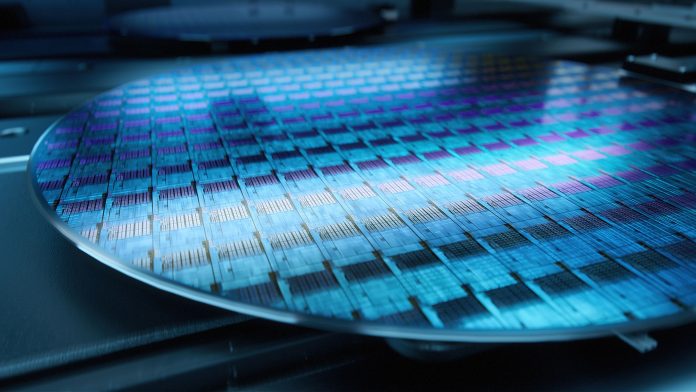
For the wafers, we have a vertical storage, especially good to be used for wafers waiting for the next phase of production or already finalised wafers waiting to be shipped. This automated storage is designed for items like wafer carriers. We have also developed equipment front-end modules with wafer alignment and positioning. These can be placed in front of any process machine as a feeder.
In your opinion, what are the most significant challenges currently facing the chip and wafer industry, and how is Wisematic preparing to navigate these?
There are two main considerations. First, how can we effectively utilise PICs alongside traditional silicon and other semiconductor technologies?
Once we identify these applications, the next step is manufacturing, and that’s where we play a crucial role. Our focus is on developing devices that integrate these chips, including the light components.
The third challenge is the energy, both in the manufacturing of the chips and in the chips themselves. How can we design and build energy efficient chips for the rapidly growing need.
What trends in demand for wafers and chips is Wisematic observing, and what is the company’s long-term vision for adapting to the evolving technology landscape?
In addition to an increasing focus on photonics, there is a push within the US and Europe to establish competitive chip manufacturing capacity. Currently, a large portion of chip manufacturing takes place in China, Taiwan, and Southeast Asia. The EU and the US are pursuing their own chip initiatives to develop manufacturing capabilities within their regions; however, the goal is not just to produce standard chips but to focus on creating specialised chips.
Another important point is that tools for assembling these components are not always readily available, and this is a factor Wisematic is also exploring. Often, the partially now missing but necessary tools include operations with PICs, lasers, double-layer chips and other related items. Our goal is to help companies maintain their automated manufacturing at the increasing pace required by the markets.
Please note, this article will also appear in the 23rd edition of our quarterly publication.