The Fire Industry Association has published its July 2025 update relating to guidance on PFAS in firefighting foams, which sets out the latest developments on UK and EU restrictions and regulations.
Meanwhile, the Department for the Environment, Food and Rural Affairs and the Health and Safety Executive have launched a consultation on UK-specific restrictions for PFAS in firefighting foams, which are expected to take shape in 2026 and beyond.
Transition periods are likely to follow the EU model, with up to ten years for high-risk industrial applications, but much shorter timeframes for general firefighting use.
The hidden dangers of PFAS in firefighting foams
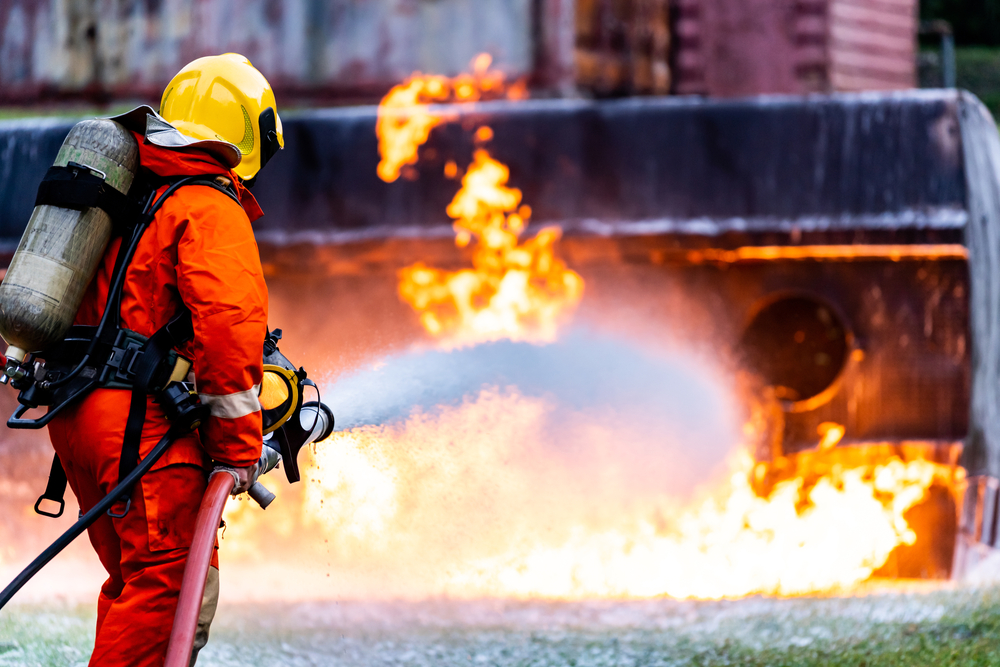
PFAS in firefighting foams are hazardous because they don’t break down easily – leading to long-term contamination of soil and water sources near training grounds, airports, and fire stations.
PFAS exposure has been linked to serious health issues, including certain cancers, liver damage, thyroid disease, and reproductive problems.
Firefighters, in particular, are at heightened risk due to repeated handling and inhalation of PFAS-based foams. Contaminated runoff can also enter drinking water systems, affecting surrounding communities.
Despite their effectiveness in suppressing flammable liquid fires, the lasting environmental and biological impact of PFAS has prompted regulatory scrutiny and a shift toward safer alternatives.
In the UK and the EU, efforts are now underway globally to phase out PFAS-based foams in favour of non-toxic, biodegradable options that offer both fire suppression capabilities and improved safety for people and the planet.
The current state of UK and EU legislation
While there’s currently no legal ban in the UK on PFAS in firefighting foams, the picture is rapidly changing. In particular, the legacy around chemicals like PFOS, PFOA and PFHxS is evolving, all of which are already restricted under REACH and POPs.
Across Europe, the regulatory picture is evolving as well, with new limits on PFHxA and broader proposals targeting all PFAS in firefighting foams, from civil aviation through to municipal FRS use.
These changes may not yet apply directly in the UK, but they’re certainly shaping what is to come.
As the landscape shifts, it follows that end users, manufacturers and fire safety professionals need to prepare for the phase-out of PFAS-based foams and the operational and disposal challenges this brings.