Negotiations for a landmark global plastics treaty have hit a snag, with the latest round of talks concluding without a consensus.
Member states of the Intergovernmental Negotiating Committee (INC) departed Geneva today, following a 10-day session marked by deep divisions and a failure to finalise a draft text for the international legally binding instrument.
Despite the setback, a desire to continue the process was clearly expressed, and negotiators are expected to reconvene at a later, yet-to-be-announced date.
This resumed fifth session, INC-5.2, was a significant gathering, attracting over 2,600 participants, including 1,400 delegates from 183 countries. High-level representatives, ministers, and vice ministers also participated in informal discussions on the sidelines.
The primary objective of the session was to agree on the final text of the global plastics treaty and identify outstanding issues for further work ahead of a diplomatic conference.
However, the talks, which involved four contact groups tackling key areas like plastic design, production caps, and finance, ultimately failed to bridge the gap between opposing factions.
Commenting on the failed negotiations, Inger Andersen, Executive Director of the UN Environment Programme (UNEP), said: “This has been a hard-fought 10 days against the backdrop of geopolitical complexities, economic challenges, and multilateral strains.
“However, one thing remains clear: despite these complexities, all countries clearly want to remain at the table.
“While we did not land the treaty text we hoped for, we at UNEP will continue the work against plastic pollution – pollution that is in our groundwater, in our soil, in our rivers, in our oceans and yes, in our bodies.”
The great divide: Production vs pollution management
The core disagreement that has plagued the global plastics treaty negotiations from the start remains a fundamental ideological split.
One group, comprising around 100 nations, advocates for tackling plastic pollution at its source by implementing caps on plastic production.
This faction argues that a significant reduction in the amount of plastic being created is the only way to effectively address the crisis.
On the other side of the debate are several major oil-producing nations, including Saudi Arabia and Russia. They argue that plastics, derived from fossil fuels, are a crucial part of their future economic plans, particularly as the world transitions away from petrol and diesel-powered vehicles.
This group, often backed by plastic producers themselves, insists that the solution lies not in curbing production but in improving waste collection and recycling infrastructure.
They push for the treaty to focus on managing the pollution that already exists rather than reducing the initial output. This fundamental difference in approach has consistently stymied progress and prevented consensus on proposed texts.
The journey so far
The journey toward a global plastics treaty began with a historic resolution adopted at the UN Environment Assembly in March 2022.
This resolution set in motion the INC process, with the goal of creating a legally binding instrument to tackle plastic pollution, including in the marine environment.
Over the past few years, the committee has held several sessions in various global locations: INC-1 in Punta del Este (2022), INC-2 in Paris (2023), INC-3 in Nairobi (2023), and INC-4 in Ottawa (2024).
The starting point for the recent Geneva talks was a Chair’s Text from the previous session in Busan, Republic of Korea (INC-5.1).
The Chair subsequently released a Draft Text Proposal and a Revised Text Proposal during the session, but despite intensive engagement from all sides, members were unable to reach a consensus.
The deadlock has left the future of the treaty in limbo, pending the scheduling of a resumed session.
Industry reaction
The plastics industry is calling on member states to use future rounds of talks to secure a global consensus and create policies that will help tackle plastic pollution, stating this is a critical moment to establish a unified approach and enable frameworks to address this pressing environmental issue.
Commenting on the failed global plastics treaty talks, Virginia Janssens, Managing Director at Plastics Europe, said: ”We hear and share society’s concerns and are disappointed by the inability to agree on a legally binding global agreement on plastics pollution in Geneva.
“Nevertheless, we would like to recognise the tireless work of the Chair and UN member states’ negotiating teams. We applaud the decision and political will to continue negotiations and build much-needed global consensus and enabling policy frameworks.
Plastic pollution is a global – not regional – challenge, and we urge all UN member states to resume multilateral efforts as soon as possible.
“We believe the agreement needs measures promoting sustainable production and consumption, effective waste management for the 2.7 billion people who currently live without them, and to ensure reporting frameworks that enable a just transition to a circular economy.
“We want end-of-life plastic to become a circular feedstock and commodity with real value rather than waste that is littered, landfilled or incinerated.
Why a plastics treaty is urgently needed
Curbing plastic pollution is not merely an environmental preference; it’s a critical necessity for the health of our planet and its inhabitants.
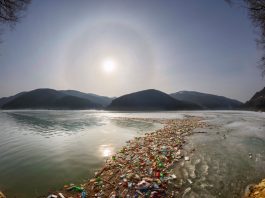
Plastic waste, much of it single-use, permeates every corner of the globe, from the deepest oceans to the highest mountains.
This ubiquitous pollution has devastating consequences. Marine life often mistakes plastic debris for food, leading to internal injuries, starvation, and death.
Microplastics, tiny plastic fragments that result from the breakdown of larger items, are now found in our food, water, and even the air we breathe, with potential long-term health effects still being studied.
Moreover, the production of plastic is intrinsically linked to the fossil fuel industry, contributing to greenhouse gas emissions and exacerbating climate change.
A legally binding international agreement is essential to create a unified global framework that goes beyond voluntary commitments.
Such a treaty could set enforceable targets for reducing plastic production, standardising recycling processes, and ensuring accountability across the entire plastic life cycle.
Without a coordinated global effort, the plastic crisis will continue to escalate, threatening ecosystems, human health, and the very stability of our environment.
The urgency of the situation makes a successful global plastics treaty an absolute imperative.