
Microplastic pollution, once thought to be a primarily marine problem, has now been confirmed as a global air quality issue.
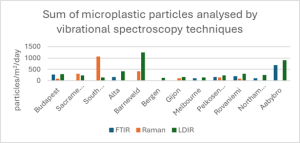
A groundbreaking international study led by the Eurofins Environment Testing microplastics peer group has uncovered widespread airborne contamination, with urban areas recording up to 1,300 microplastic particles per square metre per day.
These tiny plastic fragments, measuring less than 5 millimetres, are now known to travel through the atmosphere, carried by wind and air currents, reaching even remote regions far from cities.
More concerningly, research has detected microplastics in human lungs, blood, and breast milk, raising urgent questions about long-term health impacts.
The PlasticDustCloud project
The PlasticDustCloud project represents one of the most comprehensive and harmonised investigations of airborne microplastics to date.
Between July and August 2024, researchers collected samples from 12 sites across nine countries and three continents, including cities such as Melbourne, Sacramento, Budapest, and Bergen, as well as rural reference sites in Finland and Norway.
Sampling was carried out using a standardised wet-dry deposition method involving funnels and glass bottles. This unified approach allowed scientists to compare results across regions, ensuring consistency and reliability directly.
What the data revealed about microplastic pollution
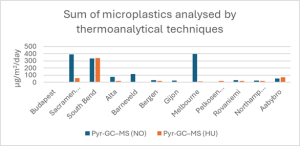
The study found stark variations in microplastic deposition rates depending on the site and detection technology used.
Results ranged from a median of 143 particles per square metre per day to 3,110 micrograms per square metre per day.
Key findings include:
- Deposition rates: Up to 1,300 particles/m² per day (spectroscopy) and 3.1 mg/m² per day (spectrometry).
- Polymer composition: Polyethylene (PE) and polypropylene (PP) dominated, reflecting global plastic production trends.
- Particle size: Most particles were under 100 µm, small enough to enter the human respiratory system.
- Additional sources: Tyre wear particles were detected at levels up to 304 µg/m² per day, highlighting the role of road traffic.
Interestingly, even adjacent sampling points sometimes showed significant differences, underscoring the uneven distribution of airborne microplastics and the challenges of accurate measurement.
Advanced testing methods
To ensure robust results, samples were analysed in Eurofins’ state-of-the-art laboratories using a suite of complementary techniques.
Vibrational spectroscopy methods such as FTIR, LDIR, and Raman were employed alongside thermoanalytical technologies like Pyrolysis-GC/MS and TED-GC/MS.
Strict quality assurance protocols were applied throughout, although the study emphasises that no single analytical method can capture the full picture of microplastic pollution.
A call for coordinated microplastics action
The discovery of microplastic pollution in the air adds a new dimension to global environmental challenges.
Unlike marine or soil contamination, airborne microplastics can be directly inhaled, exposing humans to potential health risks. Their ability to carry hazardous chemicals makes them particularly concerning.
As cities expand and plastic production continues to rise, experts warn that airborne exposure could become an increasingly significant public health issue.
The PlasticDustCloud project highlights the urgent need for standardised global monitoring protocols to better track, compare, and ultimately mitigate this invisible form of pollution.
As evidence mounts, the message is clear: tackling microplastic pollution requires urgent, coordinated action before the problem becomes as inescapable in the air as it already is in the oceans.