Dr Ivan Kourtchev from Coventry University’s Research Centre for Agroecology, Water and Resilience, discusses the growing concern over forever chemicals in the UK.
Found in everyday products and industrial applications, these persistent substances raise serious questions about their long-term impact on health and the environment.
Dr Kourtchev offers expert insights into how these chemicals behave, why they are so difficult to manage, and the challenges of tackling their widespread presence across the UK.
Can you explain what forever chemicals are and why they’re called that?
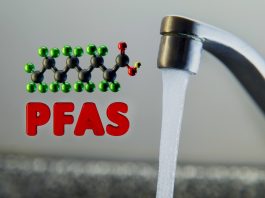
Forever chemicals are a term used to describe a large group of manufactured substances, also known as PFAS, which stands for per- and polyfluoroalkyl substances. They’re used in everyday products like non-stick cookware and waterproof clothing.
They’re called forever chemicals because they don’t easily break down in the environment or in our bodies. They can persist for years, even decades, which raises concerns about their potential health effects.
What industries and products are they most commonly used in?
They’ve been used in a huge range of applications – everything from pizza boxes and non-stick cookware to waterproof materials like Gore-Tex used in outdoor clothing.
Some of these chemicals have been phased out, but others have been reintroduced. For example, industries used to rely on long-chain PFAS, which were found to be very toxic. They then substituted them with shorter-chain PFAS, assuming they’d be safer.
But later studies showed that the shorter-chain versions can be just as harmful – perhaps a bit less persistent in the environment, but still potentially toxic. There are more than 5,000 known PFAS compounds, but only two or three are currently being regulated.
What are the potential health implications of these chemicals?
Based on the scientific literature, PFAS have been linked to hormone (endocrine) disruption, suppression of the immune system, and several types of cancer.
The challenge is that most of this data comes from just a small subset of PFAS that have been studied — and we know there are thousands more that haven’t been tested.
So there could be many effects we don’t even know about yet, given how many of these chemicals exist.
How do these forever chemicals end up in our water systems? Are there particular entry points that are especially concerning?
In my research group, we study wastewater treatment systems, which are often seen as repositories for liquid waste. We also investigate the atmospheric fate of PFAS, an area that is not only under-researched, but also largely neglected by regulators, as most existing regulations focus on water and soil. Unfortunately, current treatment technologies aren’t designed to remove PFAS effectively.
In some cases, treatment processes can actually break long-chain PFAS into shorter-chain forms, which are still not removed and continue into the water stream. So, PFAS can pass straight through treatment plants and enter rivers, lakes, and other water bodies.
You mentioned that treatment systems can’t currently remove them — are water companies developing new technologies to tackle that?
Yes, absolutely, and I don’t think we should blame the water industry — they’re under significant pressure to meet regulations, and as new evidence emerges, they’re actively developing better techniques.
Some companies are experimenting with carbon-based methods that can absorb PFAS. Because PFAS are water-repellent, they tend to stick to surfaces — like algae or other materials in the water rather than staying dissolved.
So, water companies are now working on absorption and filtration techniques to capture them. But the main challenge is that PFAS are incredibly stable.
Traditional treatment systems were never designed to deal with chemicals like these, which means they often slip through the process. We’re still in the early stages of tackling this environmental threat, so it’s not just about blaming water companies — they need support.
A recent BBC report suggests that around six million people in the UK could be at risk of PFAS in their drinking water. Are there certain regions more affected, or is this a nationwide issue?
The Environment Agency published a report last year identifying more than 10,000 potential PFAS ‘hotspots’ across the UK.
It’s not confined to one area – contamination can occur anywhere. For example, one major source is aqueous film-forming foams used in firefighting. Older versions of these foams contained PFAS, so areas near airports or firefighting training sites are often contaminated.
So, certain industries and sites should be prioritised when tackling contamination?
Exactly, and this isn’t just a UK problem – it’s global. For instance, in North Carolina in the US, one company was accused of contaminating large areas with PFAS. People living near affected plants had much higher PFAS levels in their blood compared to the general population.
Because PFAS accumulate in our bodies over time, even small, continuous exposures can become significant. For one common PFAS compound – perfluorooctanoic acid (PFOA) – the estimated half-life in humans is up to three years. That’s a long time for something potentially harmful to stay in your system.
Short-term exposure might not cause immediate effects, but long-term, consistent exposure through contaminated water or air could lead to serious health issues.
How would you assess the UK’s response compared to other countries? Do we need stronger regulation or more government support?
We definitely need more testing. If you look at global PFAS pollution maps, you’ll see many red zones across Europe. But in some areas, there’s no data — not because PFAS aren’t present, but because no one’s measuring them. So the first step is investment in monitoring. Without evidence, governments can’t act.
The UK is catching up, but countries like the US are further ahead because they’ve gathered more data. Once they had that evidence, they introduced stricter regulations — and many US states have now banned the production of certain PFAS compounds. By 2030, several companies have committed to stopping PFAS manufacturing entirely.
Therefore, we need to follow that example — conduct more testing to understand the scale of the problem, and then build regulations around the evidence. But it’s a massive challenge. For example, a report from Belgium, one of the most PFAS-contaminated countries in Europe, estimated that cleaning up all affected land would cost more than the country’s entire GDP.
Realistically, can we ever completely tackle this issue, or is it more about mitigation now?
That’s a very good, and also quite philosophical, question. I don’t think we should aim to eliminate PFAS entirely – they do have valuable uses, particularly in medicine, for example, in implants where stability is essential.
They were designed to be durable — that’s both their strength and their flaw. So rather than banning all PFAS, we need to strike a balance: restrict their use to essential applications and prevent unnecessary use in everyday products.
Simply replacing one group of chemicals with another won’t solve the problem. We need smarter regulation and a better understanding of the alternatives.