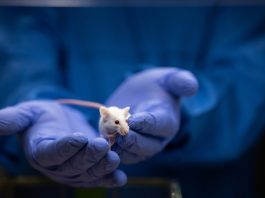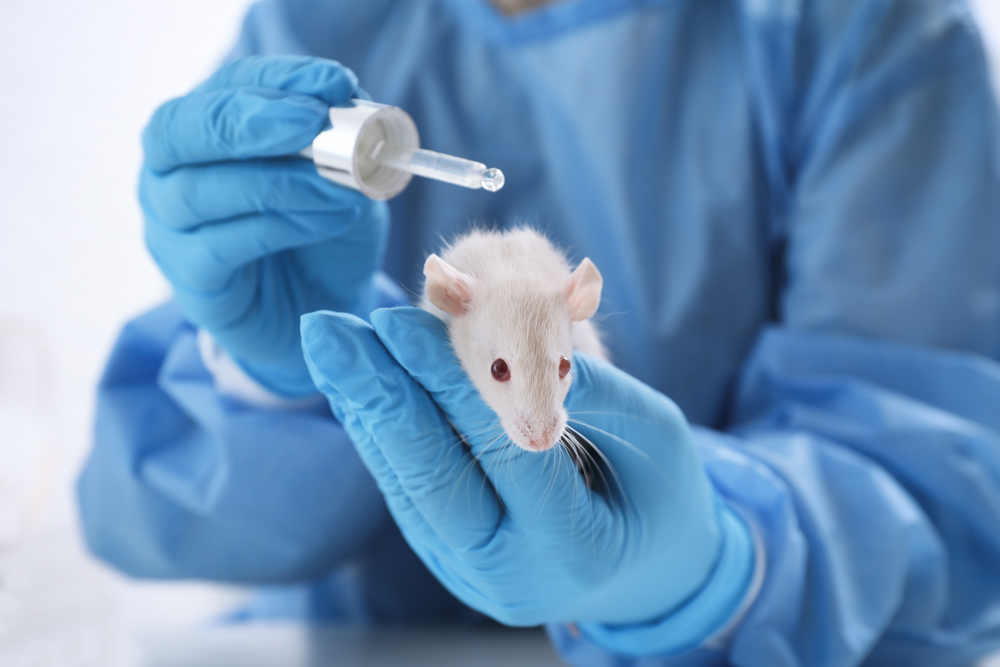
The UK Government has announced a new £60m strategy to replace animal experiments with cutting-edge human-based technologies.
Unveiled by Science Minister Lord Vallance, the plan aims to phase out animal testing more rapidly, marking one of the most ambitious roadmaps of its kind worldwide.
The comprehensive strategy outlines a vision to transition towards safer, more ethical, and scientifically advanced alternatives while maintaining the highest standards for public health and environmental safety.
Commenting on the landmark initiative, Lord Vallance said: “Nobody in our country of animal lovers wants to see suffering, and our plan will support work to end animal testing wherever possible and roll out alternatives as soon as it is safe and effective to do so.
“This is a roadmap which will ensure government, businesses and animal welfare groups can work together to find alternatives to end animal testing faster and more effectively.”
A scientific turning point
Animal testing has long been used to assess the safety of medicines, vaccines, and chemicals.
However, the new UK plan signals a shift toward human-relevant, non-animal research methods that promise to revolutionise scientific testing.
The initiative emphasises that animal use will only be replaced where proven alternatives can deliver equally reliable results.
Backed by £60m in funding, the government will establish a national hub to connect researchers, regulators, and industry.
This hub will accelerate the development and approval of non-animal testing technologies, while a second centre will help streamline the regulatory pathways needed to bring these innovations to market.
Harnessing innovation: From AI to organ-on-a-chip
At the heart of this new strategy lies cutting-edge innovation. British scientists will be supported to adopt transformative tools such as:
- Organ-on-a-chip systems: Miniature devices built with human cells to replicate how real organs function. These chips can simulate complex processes like metabolism and disease progression, allowing drugs and chemicals to be tested safely and efficiently.
- Artificial intelligence (AI): Advanced machine learning models can analyse vast datasets to predict how new medicines will interact with human biology, cutting down the need for animal testing at early research stages.
- 3D bioprinting: Researchers are developing lifelike human tissues, from skin to liver, for testing toxicity and drug effects, offering realistic and repeatable models that outperform traditional animal-based experiments.
Together, these innovations promise not only to reduce reliance on animals but to deliver faster, more accurate insights into human health and disease.
Key milestones for a future free from animal testing
The roadmap sets a clear timetable for phasing out animal testing across several areas of science.
By the end of 2026, all regulatory tests involving animals to assess skin and eye irritation or skin sensitisation will cease. By 2027, the practice of testing the strength of Botox on mice will end, replaced by DNA-based lab methods that detect contamination in medicines.
Further ahead, by 2030, the UK aims to drastically reduce pharmacokinetic studies on dogs and non-human primates – studies that track how drugs move through the body.
These milestones are part of a broader commitment to align innovation, safety, and compassion within scientific research, reinforcing the UK’s status as a global leader in ethical science.
Building on a strong foundation
The new strategy builds upon two decades of progress led by the National Centre for the Replacement, Refinement and Reduction of Animals in Research (NC3Rs).
This pioneering organisation has already delivered alternative testing models in vaccine research and toxicology, supported by millions in government funding.
The latest plan was developed in consultation with life sciences experts, animal welfare organisations, and industry leaders.
It represents a joint effort to fulfil the government’s manifesto pledge to improve animal welfare while advancing the UK’s position at the forefront of biomedical innovation.
Investing in the next generation of science
Alongside the £60m national investment, an additional £15.9m from the Medical Research Council (MRC), Innovate UK, and the Wellcome Trust will fund five major research teams.
These teams will develop human in vitro disease models – laboratory-grown systems that mimic conditions in the liver, brain, cancer cells, pain pathways, and blood vessels.
Early-career researchers will also receive training in these new methods from next year, ensuring that future scientists are equipped to work without animals.
Industry support
The RSPCA has cautiously welcomed the strategy to replace the use of animals in research and testing, describing it as a “significant step forward” for both science and animal welfare.
However, the charity is now calling on Ministers to ensure the plan’s proposed actions are fully implemented – a move that could significantly reduce and ultimately replace the use of thousands of animals in harmful experiments across the UK each year.
Barney Reed, Science and Policy Manager – Animals in Science, RSPCA, said: “Huge momentum has been building in recent years, with complex innovative technologies and new approaches enabling better, more human-relevant science to be done without harming animals.
“This strategy sets a clear ambition towards eliminating animal use and supports increased access to the infrastructure, collaborations and resources required to facilitate the further development and uptake of non-animal methods. This will help UK scientists to embrace the high-quality, ethical science needed in a rapidly changing world.
“If supported and implemented effectively, the strategy should create a good foundation for accelerating the replacement of animals, which will be positive news for animals, science and society.”
Global leadership and accountability
Oversight of the new animal testing phase-out strategy will fall to a high-level committee chaired by Lord Vallance, supported by ministers, regulators, and funding bodies.
The government will publish key performance indicators in 2026 to track progress and maintain transparency.
Further commitments include publishing updated research priorities every two years and ensuring that scientific journals highlight available alternatives. These measures aim to position the UK as a global leader in the regulation and adoption of non-animal testing methods.
As technology and ethics converge, the UK’s roadmap marks a decisive moment in the global movement to end animal testing – proving that scientific excellence and compassion can advance hand in hand.